
Futures Trading: Risks and Drawbacks for New Traders

Futures trading is attractive because of the diverse array of commodity and financial products with futures contracts and the very liquid market in many futures. Futures traders can make profits on short- to medium-term moves in commodities like corn, soybeans, oil and gasoline, as well as stock indexes, interest rates, currency exchange and bonds. For new or unfamiliar traders, however, there are some distinct disadvantages to futures trading.
Danger of Leverage
Futures contracts can be bought or sold with a margin deposit that is typically 5 to 10 percent of the contract value. This means that futures provide a leverage ratio of from 10-to-1 to 20-to-1 on the price movement of the underlying commodity or instrument. If a trader picks the wrong direction for a futures contract, he can lose a large portion or all of the margin deposit in a very short time. The high level of leverage offered by futures trading is a double-edged sword, and the trader must be able to monitor her trades at all times and be ready to close the trades before losses get too large.
Complicated Products
Futures contracts are complicated and can be difficult for new traders to understand. Each contract has a different size and different price movement amounts. For example, a corn contract is for 5,000 bushels of corn and one tick in price change is worth $12.50; crude oil is for 1,000 barrels and a tick is $10; 10-year Treasury note contracts are for $100,000 and a tick is worth $15.625. Traders also have to understand final trading dates and possible delivery options. Futures are also traded only with brokers that are registered with the Commodity Futures Trading Commission, and cannot be traded with regular stock brokers.
Price Limits
Many commodities have a daily limit on how much the price can change. If a commodity value is changing rapidly, it will quickly reach the limit price each day and traders will not be able to continue trading. A futures trader who is caught on the wrong side of a trade making limit moves every day may be stuck in the contract with few options to stop the losses.
Large Margin Deposit for New Traders
Futures contracts are for large amounts of the underlying commodity or instrument. Even though the margin requirement is a small percentage of the contract value, the dollar amount can be large for new investors. For example, the margin deposit on a S&P 500 contract is $28,125. Even the e-mini S&P 500 contract requires an initial deposit of $5,625. These amounts can be too large for the new trader trying to learn futures trading.
-
Futures Scalping Strategies: A Guide to Profiting from Small Movements
If you’re going to scalp futures—meaning, try to profit from very small movements—you want to find the times when products are moving fast so you can move in and out quickly and close positions before
-

Automatic Trading Risks: Understanding Potential Pitfalls
Many investors like to use automatic trading methods to trade the financial markets. While automatic trading is popular, it is also very risky to the investor. Here are a few of the risks associ
investing
- Understanding the Drawbacks of Financial Intermediaries
- Stock Options: Risks & Disadvantages for Employees & Companies
- Dow Futures: Understanding and Trading the Dow Jones Index
- PO Box Drawbacks: Risks and Limitations for Businesses & Individuals
- Understanding S&P 500 Futures: A Beginner's Guide
- Soft Commodity Markets: A Guide to Trading Cocoa, Coffee & More
- Silver Futures Trading: A Beginner's Guide to Investing
- CFD Trading: Risks & Rewards - A Comprehensive Guide
- Bitcoin Futures Trading: Understand How It Works & Profit
-
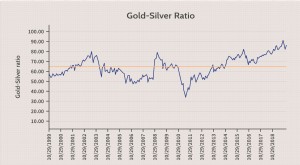 Gold-Silver Ratio Trading: Strategies & Profit Potential
For the hard-asset enthusiast, the gold-silver ratio is common parlance. For the average investor, it represents an arcane metric that is anything but well-known. The fact is that a substantial prof...
-
Silver Futures Trading: A Comprehensive Guide for Investors
After gold, silver is the most invested precious metal commodity. For centuries, silver has been used as currency, for jewelry, and as a long term investment option. Various silver-based instrumen...