
SEP IRA Rollover: Understanding Rules & Tax Implications
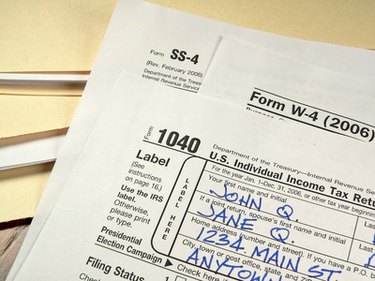
The Internal Revenue Service (IRS) does not allow you to borrow money from your Simplified Employee Pension Individual Retirement Account (SEP IRA) or to use it as loan collateral. However, the IRS permits you to roll money from your SEP IRA into another qualified retirement plan. You are allotted 60 days to complete the transfer. What you do with the money during that time is up to you. However, properly complete the rollover, otherwise you will hamstring your retirement account and potentially owe significant penalties.
Step 1
Withdraw money from your SEP IRA by filling out the appropriate forms from the financial institution that has custody of your account. Provide your account number, name, address, Social Security number and how you want the money disbursed to you. Most financial institutions can directly deposit it into your bank account or issue you a check.
Step 2
Put the money you receive toward whatever purpose you need. The IRS does not require you to document how the money was used between the time you receive it and the time you redeposit it.
Step 3
Deposit the money into a tax-deferred retirement account within 60 days. You can put the money back into the same account or into a different tax-deferred account, a traditional IRA, for example.
Step 4
Use IRS form 1040 or 1040A to report the rollover as a nontaxable distribution. As of 2010, the amount is reported on line 11a of form 1040A or line 15a of form 1040. Write "Rollover" next to the amount.
Tip
You will receive only 80 percent of the withdrawal amount because 20 percent will be withheld for tax purposes. However, you are responsible for redepositing the entire amount. For example, if you request $20,000, you will receive $16,000 and redeposit $20,000.
Warning
The IRS will consider any amount that you fail to redeposit within 60 days as a distribution from your SEP IRA.
-
Transferring Funds from PayPal to Your Credit Card: A Step-by-Step Guide
Withdrawing funds from your PayPal account is easy. Transferring money out of a PayPal account is easy. Withdrawals are available through check and bank transfer. Because your credit card may
-

Send Money from Bangladesh: Reliable & Easy Options
How to Transfer Money From Bangladesh Although you'll need to watch for travel advisories, a trip to Bangladesh can be a great cultural experience. You can easily send money from the U.S.
investing
- How to Access Funds from Your Rebate Card: A Simple Guide
- Vanguard 401(k) Loan: A Comprehensive Guide
- Understanding 403(b) Loans: A Comprehensive Guide
- ESOP Loans: Borrowing from Your Retirement Account - Benefits & Risks
- Wire Money from Your Checking Account: A Quick Guide
- Savings Account Withdrawal Methods & Limits | [Bank Name/Financial Institution]
- Withdraw PayPal Funds: A Comprehensive Guide to Bank Transfers & Checks
- Merrill Lynch Retirement Account Withdrawal: A Step-by-Step Guide
- IRA Loans: What You Need to Know & What's Allowed
-
 Mutual Fund Withdrawal Guide: A Step-by-Step Approach
Mutual funds are a popular investment vehicle among all types of investors and savers. They can help a portfolio grow, they can supply income, and they can help an individual save for retirement. Inve...
-
 Locate Lost 401(k) Funds: A Comprehensive Guide
401(k) funds are protected by law, even if the employer declared bankruptcy. If you need to track down money from an old 401(k) account, no central agency exists with information on all 401(k...