
Day Trading Explained: Strategies, Risks & How to Get Started


Many different techniques may be used be utilized by the day trader, but the goal is always to profit off intraday volatility, generally the most high-risk and unpredictable sort of investing. Based on personal resources and risk tolerance, day traders may attempt to stake a large amount of money on a small move, or a small amount of money in pursuit of a large percentage move.
Traditionally, day traders buy and sell stock, ending the day owning nothing. But in practical applications, many traders may utilize options or futures with a day trading approach in conjunction with other investment strategies. Contrary to the popular conception of the individual day trader in a home office, most day trading is conducted by professional traders in large banking operations.
There's no doubt the explosion of computers and communications technology have made day trading possible and helped to stoke its popularity. Computers not only allow traders to receive accurate real time information even when they're far from the exchange itself, computers have reduced the settlement period it takes for exchanges to effectuate trades, freeing a trader's capital for reinvestment much more quickly.
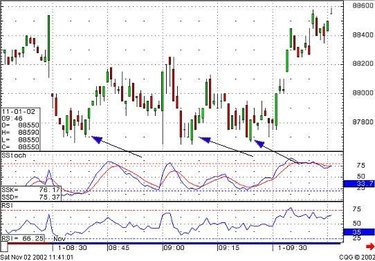
Most common day trading techniques involve chart-based technical analysis to inspire trades. The tactics find prices that act as crucial pivot levels, or patterns that suggest future price changes. While many longer term strategies also employ chart-reading, day traders utilize much short time frames for their charts.
Another form of day trading is based on volume of trades. Momentum chasing is essentially nothing more than "following the herd," piling onto a popular trade for no reason other than that it's popular. For reasons divorced from whatever fundamental factors that might be driving other traders, momentum day traders look to identify intraday moves early on and capture as much of the move as possible before selling.

Because day traders are not interested in ownership of the underlying company, they are occasionally criticized for skewing market action with their trades. Similar criticisms were leveled at short sellers and oil speculators during the historic market volatility of 2008, but the general consensus emerged that higher volume of trades encourages liquidity and that all market participants should be able to realize rewards if they take the appropriate risks in accordance with the laws governing the exchanges.
The Securities and Exchange Commission (SEC) calls day trading "an extremely stressful and expensive full-time job." Despite the fact that most individual day traders are eventually wiped out completely, losing all their investment capital, it's highly unlikely day trading, especially since it is a profit center for large banking interests, will ever cease entirely.
-

Second Mortgage Explained: How They Work & Benefits
How Does a Second Mortgage Work? Many people opt to take a second mortgage out on their homes to help with emergency expenses. Second mortgages can be a way for many people to adjust their fina
-

Understanding Restricted Driver's Licenses: Types, Requirements & Benefits
Tip Restricted licenses work by allowing drivers to operate vehicles during certain times and for specific purposes. Drivers who have committed multiple infractions, or who have been convicted of driv
investing
- Navigating Day Trading Penalties: A Comprehensive Guide
- Starting a Day Trading Business: A Comprehensive Guide
- E-Trade: Online Brokerage & Investing Services - A Comprehensive Overview
- Investing Explained: A Beginner's Guide to Growing Your Wealth
- Understanding Futures Day Trading: A Comprehensive Guide
- Understanding Ultrafast Stock Trading: Strategies & Mechanics
- Trading Simulators: A Comprehensive Guide for Stock Market Practice
- Options Trading Leverage: A Comprehensive Guide for Option Sellers
- Trading Leverage: A Comprehensive Guide to Risks & Benefits
-
 Understanding Ledgers: A Simple Guide to Accounting Records
How Does a Ledger Work? Ledgers are simply running records of credits and debits. We use a ledger every time we enter checks or deposits in our checkbooks or deposits and withdrawals in a sav...
-
Understanding Home Equity: A Simple Explanation
What is Equity The equity in your property is the appraised value minus the payoff amount of your mortgage or mortgages. When a buyer buys a home, there is an appraisal done on that home to fin...