
Options Strategies for Low Volatility: Navigate Calm Markets
The stock market ebbs and flows—not just in price, but also in volume and magnitude. Some periods are highly volatile, with lots of price action and price fluctuation. Some would call these markets exciting, while others would call them nerve-racking. Several options strategies are designed for such volatile trading environments.
Other periods are quite the opposite. When volatility is low, things can seem dull. Stuck in the mud. In the doldrums. Think holiday markets and the dog days of summer rolled into one. Some options strategies are designed for such markets. But before we continue, a note of caution: there are no guarantees with these or any trading strategies. When options prices are relatively cheap, it’s typically a reflection of low price action and market calm.
5 Strategies for Low-Volatility Markets
Lower vol usually means lower options premiums. That can make credit strategies (those in which premium is collected up front) less attractive—but all debit strategies are not created equal. Forget about straight long options for the moment. You might look for debit strategies where time decay is positive (i.e., time decay is working for, not against, your trade). Keep position sizes small. Add duration to strategies with a deferred expiration date to give the underlying stock some time to move in favor of the strategy.
Here are five options strategy ideas designed for lower-volatility environments: two bullish, two bearish, and one neutral. So wake up, grab a cup of coffee, and let's take a look.
Bullish Strategy No. 1: Long At-the-Money (ATM) Call Vertical
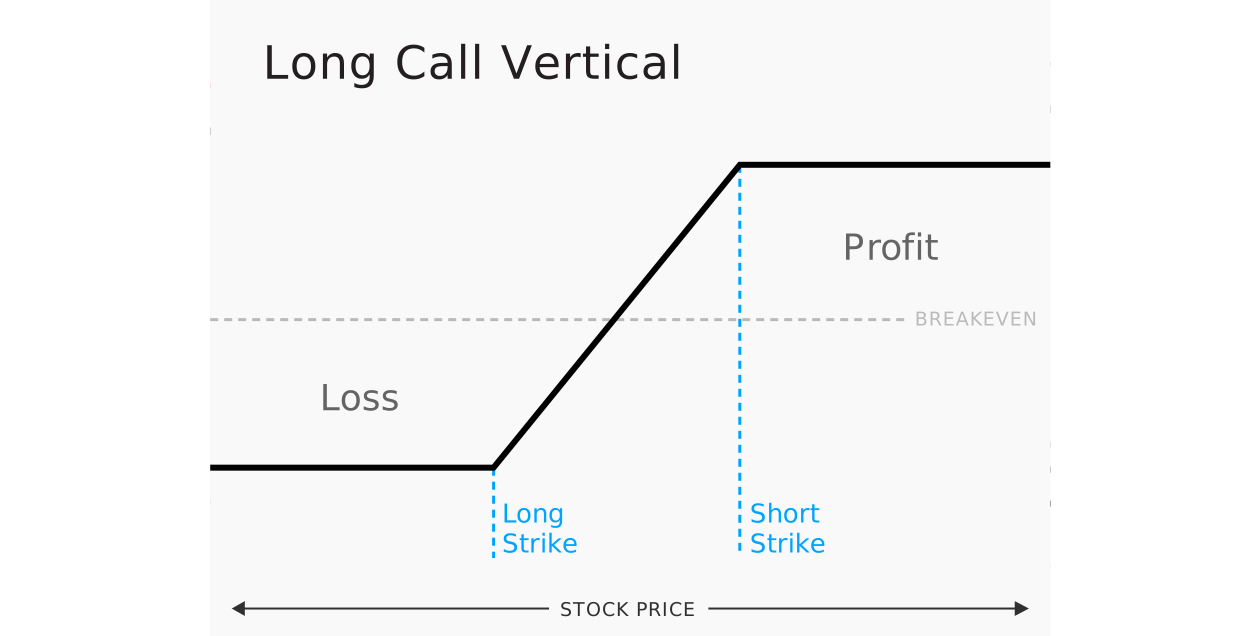
- STRUCTURE: Buy a call that’s one strike in the money (ITM); sell a call of the same expiration that’s one strike out of the money (OTM)
- CAPITAL REQUIREMENT: Lower; depends on the difference between strikes
- RISK: Defined
Consider creating a vertical where the debit is less than the intrinsic value of the long call. That will make the time decay, or theta, positive for this debit position. Consider looking at expiration dates 30 to 60 days out to give the position more duration. Max profit is usually achieved close to expiration or if the vertical becomes deep ITM. Consider taking less than the max profit ahead of expiration if available.
Bullish Strategy No. 2: Long OTM Call Calendar
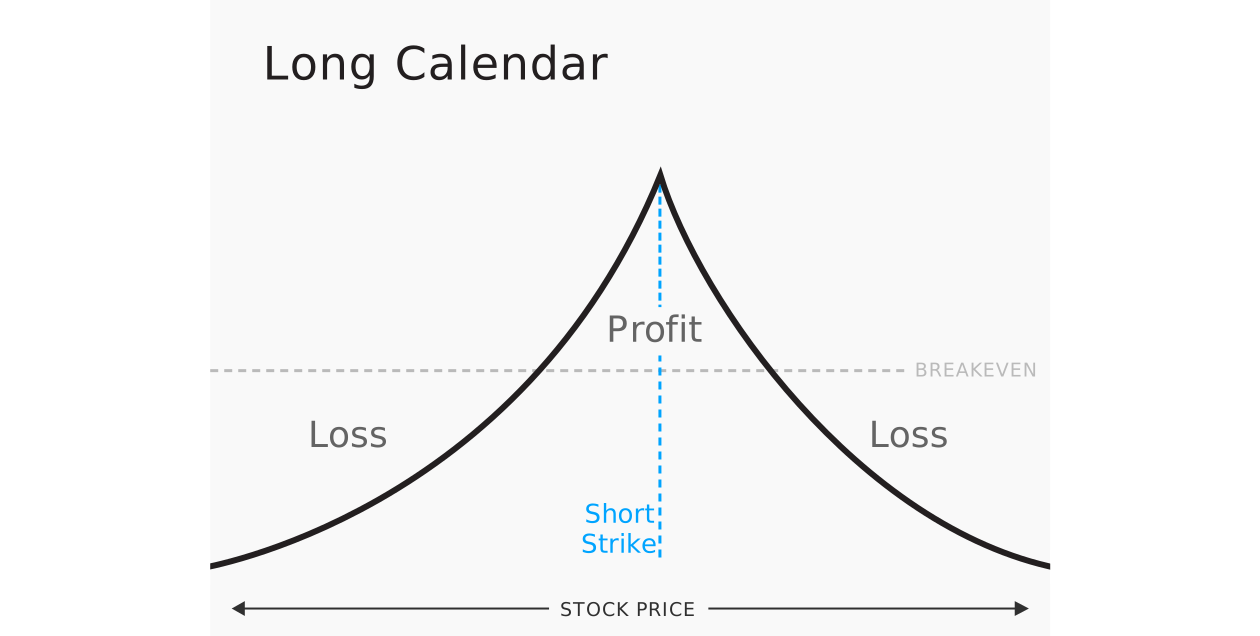
- STRUCTURE: Buy a back-month OTM call, sell a front-month call of the same strike
- CAPITAL REQUIREMENT: Lower
- RISK: Defined
Because calendar spreads maximize their value when the stock is at the calendar’s strike price near expiration, this bullish strategy has an “up to this price, but not much more” bias. Lower vol can make calendar debits lower. One strategy is to look for a short option between 25 and 40 days to expiration and a long option between 50 and 90 days to expiration. Consider looking for a calendar that can be profitable if the stock stays at its current price through the expiration of the front-month option, and has approximately 1.5 times the debit price for max profit if the stock is at the strike price at expiration.
Bearish Strategy No. 1: Long ATM Put Vertical
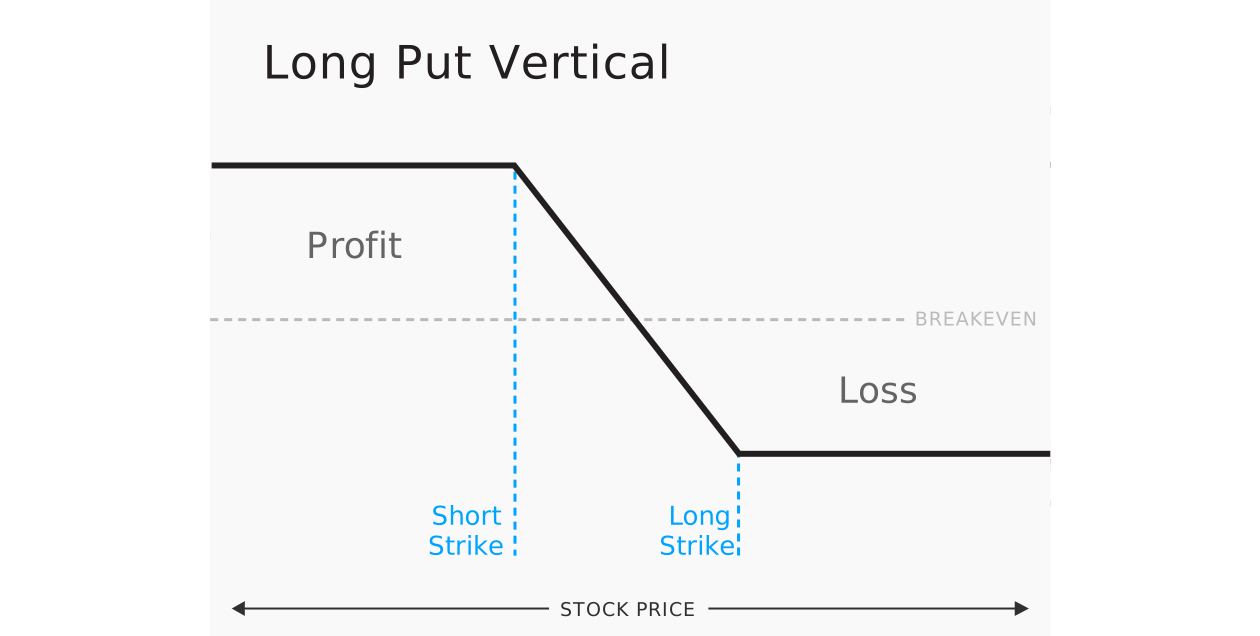
- STRUCTURE: Buy a put that’s one strike ITM; sell a put of the same expiration that’s one strike OTM
- CAPITAL REQUIREMENT: Lower
- RISK: Defined
You can create vertical spreads where the debit is less than the intrinsic value of the long put. That should make the time decay positive for this debit position. Consider looking at expiration dates 30 to 60 days out to give the position more duration. Max profit is usually achieved close to expiration or if the vertical becomes deep ITM. Consider taking less than the max profit ahead of expiration if it’s available.
Bearish Strategy No. 2: Long OTM Put Calendar
- STRUCTURE: Buy a back-month OTM put, sell a front-month put of the same strike
- CAPITAL REQUIREMENT: Lower
- RISK: Defined
Because calendars maximize their value when the stock is at the calendar’s strike price near expiration, this bearish strategy has a “down to this price, but not much more” bias. Lower vol can make calendar debits lower. Put calendars can benefit from an increase in vol if it increases on a drop in the stock price. Consider looking for a short option between 25 and 40 days to expiration and a long option between 50 and 90 days to expiration. Look for a calendar that can be profitable if the stock stays at the current price through the expiration of the front-month option, and has approximately 1.5 times the debit price for max profit if the stock is at the strike price at expiration.
Neutral Strategy: Short Straddle
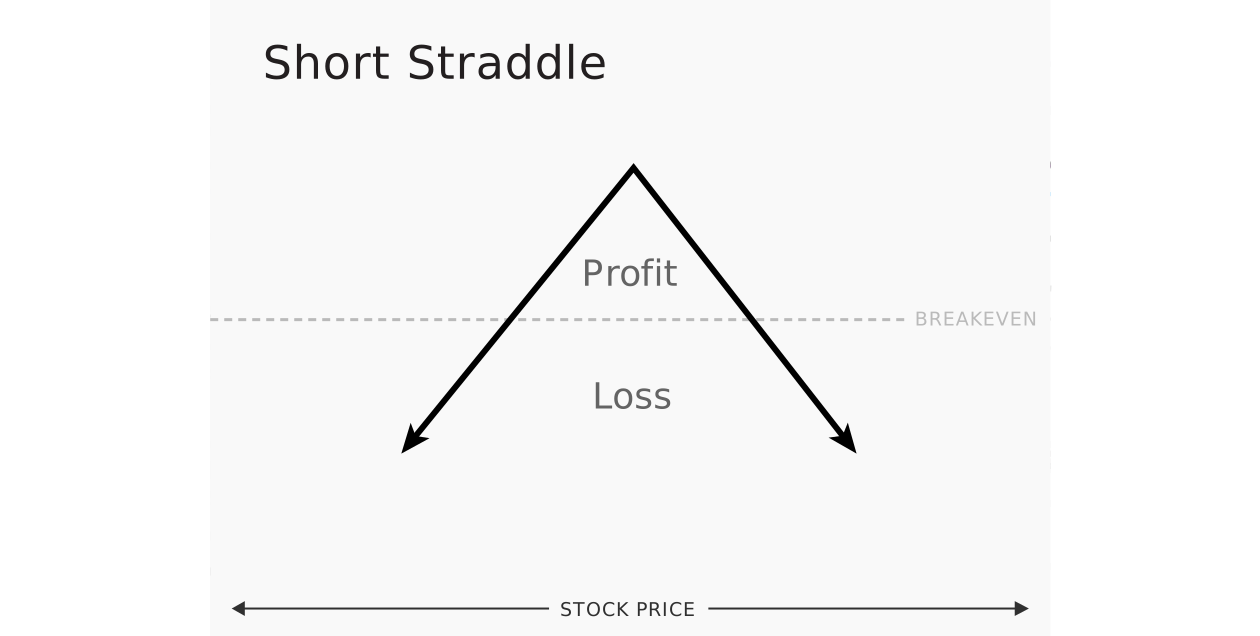
- STRUCTURE: Sell an ATM put; sell an ATM call
- CAPITAL REQUIREMENT: High
- RISK: The risk of loss of a short straddle is unlimited. Naked option strategies involve the highest amount of risk and are only appropriate for traders with the highest risk tolerance.
Shorting an ATM call and put can generate a large credit even in a low-vol environment, but it requires greater confidence that the stock price won’t change much between now and expiration. Consider selling options closer to expiration—between 20 and 35 days—to maximize positive theta. And consider buying back the short straddle before expiration if profit is available.
Let’s face it: Periods of low volatility can be, in a word, boring, especially if you’re an active trader who thrives on price action. But when low volatility rears its head, and the trading screens resemble paint drying, experienced option traders can consider these strategies as a way to seek opportunity amid the lull.
Are options the right choice for you?
While options trading involves unique risks and is definitely not suitable for everyone, if you believe options trading fits with your risk tolerance and overall investing strategy, TD Ameritrade can help you pursue your options trading strategies with powerful trading platforms, idea generation resources, and the support you need.
Learn more about the potential benefits and risks of trading options.
Doug Ashburn is not a representative of TD Ameritrade, Inc. The material, views, and opinions expressed in this article are solely those of the author and may not be reflective of those held by TD Ameritrade, Inc.
-

Options Trading Basics: A Beginner's Guide to Calls & Puts
In order to understand the basics of how to trade options, you must understand the concept of an option contract, the basic mechanics of a call option and a put option, and when each type is use
-

Call Options: Understanding the Fundamentals and Bullish Strategies
Buying call options is bullish, by nature, representing an optimistic view on the rising price of underlying shares. With market news dominated by unprecedented short squeeze phenomena, recent tech
Option
- Bitcoin & Altcoin Investing Strategies: A Beginner's Guide
- Navigating Bear Markets: 8 Investment Strategies for Protecting Your Portfolio
- 5 Beginner-Friendly Options Trading Strategies
- Commodity Options: A Beginner's Guide - 4 Essential Tips
- Understanding American Options: Strategies & Expiration
- Call Options: A Beginner's Guide to Profitable Buying Strategies
- Understanding Options Trading: 3 Strategies for Potential Profits
- Bollinger Bands: A Guide to Futures & Options Trading Strategies
- Navigating Market Volatility: Essential Trading Strategies for Investors
-
Call Options: A Beginner's Guide to Leveraged Investment Strategies
This article is a start in learning to make money with call options. Call options afford the investor with great flexibility to make leveraged investment returns. Some of the benefits include th...
-
Options Strategies for Managed Futures Accounts: A Comprehensive Guide
Managed futures accounts are a great way for any investor to diversify a portfolio. Most experts agree that up to twenty percent of an investment portfolio should be allocated to risk capital. O...