
Incentive Stock Options (ISOs): A Comprehensive Overview
Incentive stock options, or ISO's, are a type of benefit that many companies offer their employees. This type of stock option program provides employees with tax advantages and several benefits. Incentive stock options are a type of stock option that are reserved only for employees of the company. In most cases, they are reserved for upper-level executives in the company.
What is it?
An ISO is essentially a contract that is offered to the executive as a way to allow them to purchase a certain amount of shares of stock at a certain point. The executive can exercise the contract and purchase these shares at a specified price regardless of what is going on in the market. Individuals can sometimes take a substantial profit from the market.
Tax Benefits
Incentive stock options vary from traditional stock options because they allow individuals to take advantage of a nice tax benefit. With other types of stock options, you have to pay income tax on the amount of money that you make from the transaction. However, with incentive stock options, you will not have to pay tax at the regular marginal tax rate if you handle it correctly.
With incentive stock options, you can get out of paying income tax and instead pay capital gains taxes on the amount. If you were in the highest tax bracket, as many company executives are, this could potentially save you 20 percent in taxes. The highest tax bracket is 35 percent while long-term capital gains are taxed at 15 percent. In order to take advantage of this tax benefit, you have to hold the shares for least one year after they are issued. You also have to wait two years from the date of grant of the shares in order to take advantage of the tax benefit.
Risks
Even though this type of stock option can be beneficial, there are some risks. To begin with, since you have to hold the stock for an extended period of time, you could take some serious losses. For example, if you exercise the stock and then over the next year, the company declines rapidly in value, you could lose a significant amount of money in the stock market. Having to hold stocks for an extended period of time exposes you to additional risk. Because of this, many people end up selling the stock quickly and simply paying the extra tax on the difference.
Some investors prefer to lock in profits right away instead of speculating on the price of the stock over the course of the next year. As an investor, you have to decide whether you want to gamble on the price of the stock or if you want to go ahead and sell it. This can be a tough decision depending on the strength of the company that you work for.
-
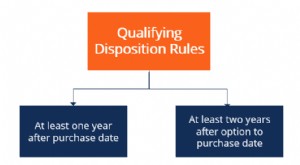
Understanding Qualifying Dispositions: Tax Benefits for Stock Sales
Qualifying disposition is a tax term used in the U.S. that refers to a sale or other disposition of shares that receive favorable tax treatment for the individual disposal of the stock.Qualifying disp
-

Exercising Stock Options: A Guide to Maximizing Your Potential
If you have been offered stock options by your employer, it’s tempting to see them as a ticket to riches. For some, this has been true, but it turns out that getting stock options is only the start. H
Option
- Stock Options: Risks & Disadvantages for Employees & Companies
- Stock Grants vs. Stock Options: Understanding the Difference
- Stock vs. Stock Options: Understanding the Key Differences
- Understanding Stock Options: A Beginner's Guide to Puts & Calls
- Understanding Incentive Stock Option (ISO) Tax Implications
- Understanding Stock Options: A Comprehensive Guide
- Understanding Incentive Stock Options (ISOs): Requirements & Tax Benefits
- Index Options Trading: A Comprehensive Guide for Investors
- Understanding Incentive Stock Options (ISOs): A Comprehensive Guide
-
Employee Stock Options (ESOs): A Comprehensive Guide
Employee stock options (ESO) are one form of compensation corporations give to executives and senior employees. Unlike salary or bonuses, the value of a stock option depends on the price of the compan...
-
Options Trading: A Beginner's Guide to Buying & Selling
How to Trade Options. Options are contracts that allow the buyer the right to buy or sell an asset for a guaranteed price. The most common underlying asset is stock. The price per share of an option i...