
The Power of Patience: How Waiting Fuels Ambition
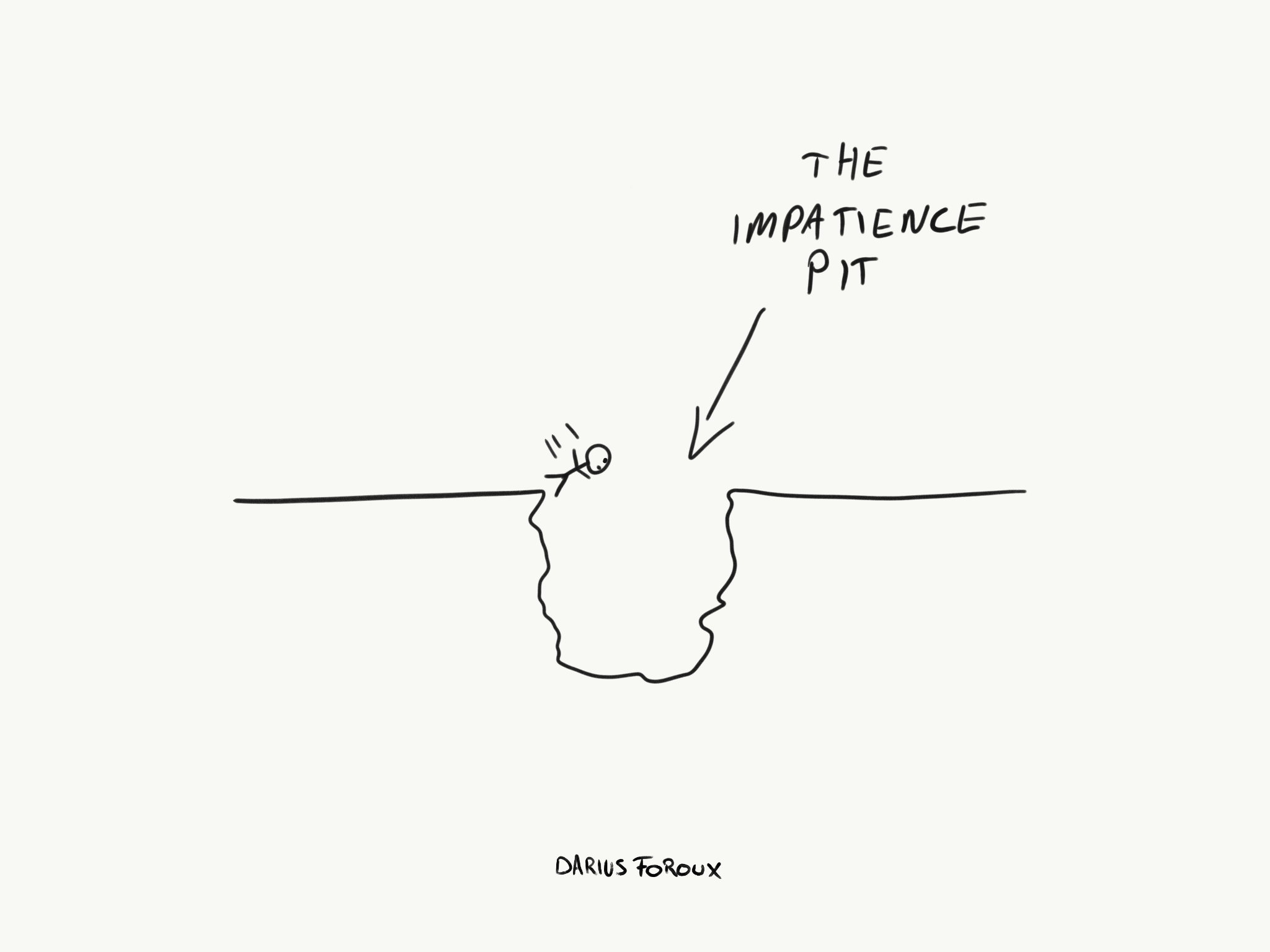
One of my mentors is an art dealer. He specializes in art from the middle ages. Last time we met, he showed me a part of his personal collection. Impressed by the size of the collection, I asked how long it took to accumulate everything.
He said “45 years,” and then he laughed when I looked surprised. He continued:
And waiting is one of the hardest things in life. But if you take a close look around you, you see many examples of people who waited for the right opportunity.
Take all the investors who bought stocks and real estate during the financial crisis that started in 2008. That recession lasted for several years. Recently, I spoke to someone who invested a big chunk of his assets in the stock market between 2009 and 2011.
He saved most of his money in the years that led to the crisis. Not because he predicted the global financial crisis that was sparked by subprime mortgages, but because he simply didn’t know what to do. So he spent his time learning about investing.
He also didn’t follow the market. Instead, he saved his money — and wasn’t tempted to invest it just because “the economy is great.”
But that’s not what most people do in prosperous times. When we see that the economy is growing, we think it’s the right time to invest and spend.
We feel optimistic and we trust the market. So what do we do? We look for “good” investments. All of us turn into part-time investors.
What’s even better, we make poor decisions without reading a single book on investing or without getting advice from knowledgeable people. It’s pretty much become standard human behavior in the 21st century.
Benjamin Graham, author of The Intelligent Investor, and mentor to Warren Buffett wrote this in 1949:
In other words: The long-term investor always wins because of one reason.
Patience
It’s not only crucial for building wealth. When you want to learn skills and do good work, impatience is one of your biggest enemies.
Leonardo da Vinci, who’s considered as one of the greatest artists in history, understood the danger of impatience.
In Mastery by Robert Greene, I read that Leonardo’s motto was ostinato rigore, which translates as “stubborn rigor” or “tenacious application.”
Every time he worked on a project, he reminded himself that he would approach his work with the same vigor and tenacity that he always showed. Leonardo never overlooked the details of his work. That takes patience.
Find pleasure in pain
So how do you apply patience to your life? One thing I’ve found useful is to adopt the same mindset as Leonardo.
If your work is not hard, you’re not doing great work.
That’s a perfect way to measure your own work on a daily basis. And journaling is an essential tool for that. There’s nothing else I can think of that is so effective in providing you with daily feedback.
Having a mentor comes very close. However, the problem is that you often can’t speak to your mentor every day. But your journal is always there.
When you’re trying to achieve your goals, improve yourself, and live a better life, there are moments you want to speed things up.
The book you’re writing, the presentation you’re making, the business you’re building, things can’t happen fast enough. There’s nothing wrong with wanting things to happen fast. In fact, that’s one of the main reasons people and companies innovate.
But we have to realize there’s a difference between a desire to achieve things and impatience. The former helps you, the latter harms you, especially your creativity.
Like Robert Greene writes in Mastery:
Big splashes don’t happen. Overnight success doesn’t exist. We have to remind ourselves of that whenever we’re impatient. It happens to every ambitious person.
People who never do anything with their lives don’t suffer from this. Only the people who work hard and try to make an impact do.
Look at it this way. You’ve spent enough time getting where you are — don’t screw it up by wanting to go too fast. Spend more time on your work. Take pride in it. That’s the only way we can do truly great work.
-

Average Monthly Electricity Cost for a Single Person: 2024 Estimates
As a single person, you're well aware of who is responsible for the charges on your electricity bill. So when your bill is unusually high, you may begin to wonder whether or not your electricity u
-
The Power of Patience: How Waiting Fuels Ambition
One of my mentors is an art dealer. He specializes in art from the middle ages. Last time we met, he showed me a part of his personal collection. Impressed by the size of the collection, I asked how l
Personal finance
- Understanding the Key Elements of Creditworthiness
- Understanding Heir Rights & Estate Laws: What You Need to Know
- Unemployment Benefits for the Homeless: Eligibility & Resources
- Food Budget for One Person: A Comprehensive Guide
- Proxy Agreement: Definition & Legal Authorization
- The Psychology of Gift-Giving: How Giving Impacts the Giver
- The Richest Person in History: A Look at Wealth and Power
- Save Money on Gas: Expert Tips to Reduce Fuel Consumption
- National Debt Per Capita: A Global Overview & Analysis
-
 Personal Loan Balance by Age: What's the Average?
Many or all of the products here are from our partners that pay us a commission. It’s how we make money. But our editorial integrity ensures our experts’ opi...
-
 Auto Insurance Coverage: Protecting Your Car vs. Yourself
Since this tree certainly didnt carry its own insurance, we hope the driver had comprehensive coverage (which applies to the car). See more car safety pictures. Just like cars themselves, car ...