
Understanding Credit Scores: Impact & Importance
You might be asking yourself: does credit score matter? And the simple answer is “yes”. Your credit score can impact whether you’re approved to open credit cards in your name, or if you can secure student loans, auto financing or home loans at competitive rates.
Your credit score may even determine whether you’re approved to rent an apartment or secure a job with certain employers. So don’t listen to those that say that credit score doesn’t matter, chances are they might be in financial difficulties themselves.
Here’s a look at which factors in your financial life play a role in how your credit score is calculated, and which aspects of it may never play a role in your credit score.
How Your Credit Scores Are Calculated
FICO and VantageScore are two of the most popular credit scores — but since many credit scores are industry-specific, you may have more than 50 possible credit scores. Those scores may vary slightly, but most are based on a few specific pieces of criteria, including:
- Payment history. Hopefully, you will never miss a payment. If you do, pay what you owe as soon as you realize the due date has passed. The longer your payment becomes past due and the more frequently you miss the payments, the more negatively they may impact your credit score. Missed payments could remain on your credit report for several years.
- Balances on your credit accounts. The amounts of your account balances are the second most important factor in your credit score calculation. High credit balances (compared to your available credit line) may cause lenders to believe you are a higher-risk borrower who is financially reliant on credit.
- The length of your credit history. The longer you’ve owned credit in your name, the more beneficial it may be to your credit score. The credit or loan accounts you’ve owned the longest may contribute the most to a positive credit score.
- New credit. If you apply for and/or open too many new accounts in a short period of time, it may negatively impact your credit score. (This is true even if you apply for a new credit card account at a store to receive a store discount, and never intend to use the card).
- Your credit mix. Credit cards are considered revolving credit: You are given a line of credit, and choose how much of it you use. Once you make a payment, you’ll have more available credit (up to your credit line). A car, student or home loan, is an installment account; you don’t have the ability to borrow more just because you’ve made a payment. Your credit score may be positively impacted when you own a mixture of both types of credit.
What Is (Usually) Not Included in Your Credit Score
Your credit score helps lenders, creditors, landlords and some employers see how much risk they might take on by doing business with you, based on how you’ve managed credit. When your credit history and credit scores are positive, you may be offered more competitive rates and terms on loans and credit products.
That said, a creditor or lender must report account information to the credit bureaus in order for it to appear on your credit history (which then factors into your credit score). For that reason, you may have financial accounts that will never show on credit report, including:
- Your debit card activity. A debit card draws funds from your bank account when you make a purchase. It is not a line of credit, and isn’t reported to the credit bureaus or included in your credit score.
- Monthly utility, rent or cell phone bills. Many utility providers or landlords will not report monthly account activity to a credit bureau — unless you don’t pay, and the account is turned over to a collections agency. (In turn, the collections agency may report the unpaid account to the credit bureaus, which could negatively impact your credit score).
- Your income. The income you earn is not included in your credit history, or part of your credit score.
- Your spouse’s credit activity (unless it’s on a shared/joint account). Your credit history (and credit score) is based on your social security number. Even if you get married, you maintain your own credit history and credit score.
Credit scores can be complicated, but when you separate the facts from the myths, you’re empowered to take the necessary steps to build a positive credit score. And always remember that credit history impacts your credit score. Use these basic tips to start taking control of your credit — and your financial life.
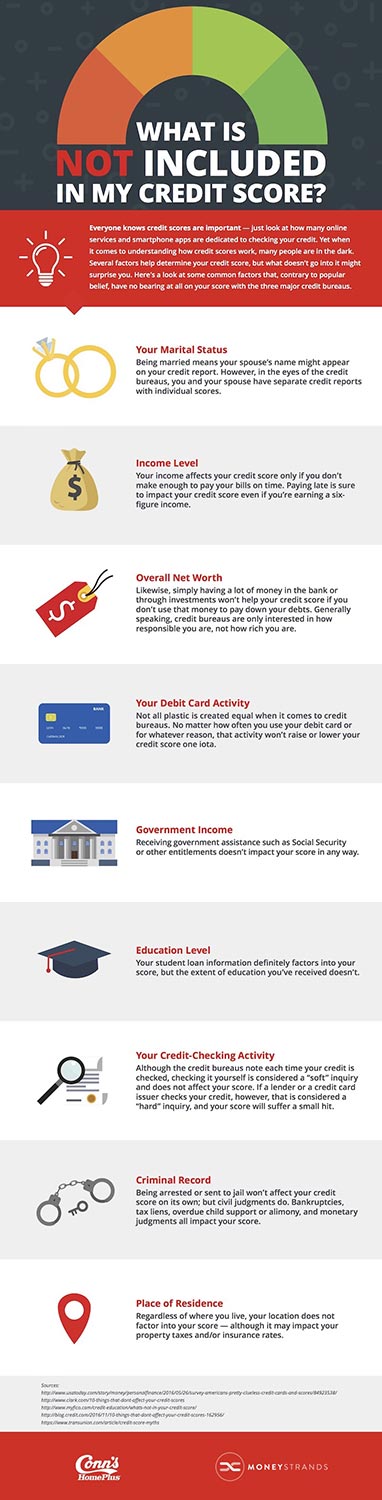
This infographic was designed by the Conn’s Homeplus team.
-

Understanding Credit Scores: What They Are & Why They Matter
Despite the impact that credit scores can have, many people misunderstand what they are and how they are calculated. Your credit affects every aspect of your life in ways that you may not expect. F
-

Cosigning Explained: Risks, Responsibilities & How It Impacts Your Credit
Personal finance
- Understanding the R9 Credit Score Code: What It Means & Implications
- Understanding Credit Scores: What They Are & Why They Matter
- Understanding FICO Scores: Your Key to Creditworthiness
- Understanding Bad Credit Scores: What You Need to Know
- Understanding Credit Score Drops: Impact & What to Do
- Understanding Credit Scores: What's Average & How to Improve
- Understanding Credit Scores: History, Average & Importance
- Understanding the Highest Possible Credit Score (850)
- What is e-OSCAR, and How Does It Work?
-
 Rapid Rescore: Understanding the Process & Impact on Home Loans
Buying a home is probably the largest purchase you’ll likely make in your lifetime. So it comes as no surprise that the entire process can be a stressful situation. After all, how often do you...
-
 Understanding Fair Credit Scores: What They Mean & How to Improve
When you need to apply for a new type of financing, whether it’s a credit card or a car loan, you might start paying attention to what kind of credit score you have. After all, lenders use that numb...