
Rising Gas Prices: Impact on Lower-Income Households - [Year]
![Rising Gas Prices: Impact on Lower-Income Households - [Year]](https://www.etffin.com/Article/UploadFiles/202206/2022061010591037.jpg)
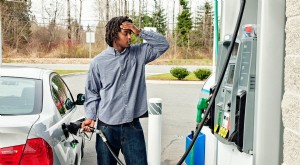
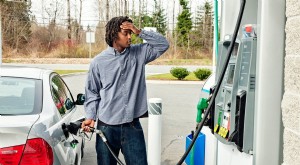
Low-income drivers stand to get hurt the most if gas prices keep rising.
Key points
- Gas prices have soared due to general inflation coupled with the war in Ukraine.
- New data finds that rising gas prices could force lower earners to pay as much as 25% of their wages for fuel.
Everyday living costs have been up since the start of the year due to general inflation. While consumers may be resigned to paying more at the supermarket and spending more on utilities and apparel, there's one expense that's been rising at an even more drastic pace: gas.
Gas prices have soared in the wake of the Ukraine conflict. And unfortunately, prices could continue to climb heading into the peak driving season of summer.
Rising gas costs can impact consumers across a range of incomes. But new data reveals just how much they might hurt lower-income drivers.
When gas becomes downright unaffordable
At this point, it's reasonable to think that gas could reach a national average of $5 a gallon this year -- particularly at the start of summer. And if that were to happen, lower earners would really feel the pain.
According to data by car ownership app Jerry, with gas at $4 per gallon, households earning less than $40,000 a year spend 8% to 20% of their post-tax income on gas. If the price per gallon were to rise to $5, some of those same households might spend up to 25% of their post-tax income on gas. And that's a blow many can't afford.
Not surprisingly, Jerry says that people living in rural areas might be affected higher gas costs more so than those living in areas where there are more options to shop around. Also, many rural drivers rely on their vehicles heavily to get around town, and they tend to be farther away from stores and amenities, thereby necessitating the need for even more fill-ups.
How to cope with rising gas costs
The advice to simply drive less isn't useful for all households -- especially those who rely on their vehicles to get to work or who live in areas where a car is an absolute necessity due to a lack of public transportation. But those who can't cut back on driving might be able to drive more strategically. That could mean changing errand schedules so stores can be visited on the way home from work, as opposed to having to make a separate trip.
Using the right credit cards could also help drivers reap modest savings by snagging cash back on their purchases. Some gas credit cards offer 3% cash back at the pump or more, so it's worth looking at different offers.
Additionally, you can see if your local gas stations offer a discount for cash fill-ups. While credit card cash back can help offset higher costs at the pump, discounts for paying in cash might surpass those rewards. Also, some gas stations offer loyalty programs. Signing up for one could result in savings over time.
Unfortunately, gas prices could continue to climb steadily before tapering off or decreasing. And what's worse is that lower earners stand to get hurt by rising costs even more. At some point, prices are apt to come down. But a lot of families might really struggle until that happens.
Personal finance
- Earned Income Tax Credit Extension: Potential Relief for Lower-Income Families
- Navigating High Gas Prices: 3 Effective Ways to Save Money
- New Bill Aims to Provide Financial Relief for Low-Income Families
- Surging Gas Prices: Ukraine Crisis & What to Expect
- Navigating High Gas Prices: 3 Essential Changes I've Made
- Government Aid: New Bills Aim to Provide Direct Payments to Help with Rising Costs
- Rising Gas Prices: Proven Strategies to Save Money at the Pump
- Travel Trends: Will Gas Prices & Inflation Curb Summer Travel?
- Gas Prices at $6/Gallon: Impact on Low-Income Households & Financial Strain
-
 Boosting Income: A Personal Story of 25% Growth During the Pandemic
Many or all of the products here are from our partners that pay us a commission. It’s how we make money. But our editorial integrity ensures our experts’ opi...
-
 Homeowner Stimulus Checks: Potential New Government Funding Available
If you're a homeowner, you may ...