
Major Credit Score Mistakes: What to Avoid
 Credit adviser Nicole Atchison of Consumer Credit Counseling Service counsels Worldy Armand in Boston, August 2004. See more debt pictures.
Credit scores are something of an obsession in developed nations. There are ways to improve them (like paying bills before their due dates), but this takes time and perseverance. You can also seriously damage your credit score -- this can happen quickly, sometimes with only a misstep or two.
Debt Image Gallery
A cottage industry has grown to help people figure out how to navigate the difficult waters of borrowing money without harming their credit further down the road. Books and radio shows have been developed to help people live debt-free altogether. Web sites -- including HowStuffWorks -- dole out advice on how to improve credit scores. Media outlets run stories on everyday people who've been plunged into credit nightmares.
Even with all the credence that's given to credit scores, some studies have suggested that the numbers might not always accurately reflect a person's credit worthiness -- and some of the research is pretty startling. For instance, if your local library engages a collections agency to retrieve a book you never returned, your credit score can drop as much as 100 points [source: CBS4]. That's a pretty significant amount, considering credit scores range between 300 and 850 points.
Even in the domain of credit card companies, there are strange and surprising ways to damage your credit score -- even when you're making a concerted effort to do the opposite. Curbing excessive spending by canceling a credit card can damage your credit score, especially if the card carries a high limit and a low balance [source: BankRate]. This is because credit bureaus use the ratio between your available credit and how much you owe to help determine your credit score. Getting rid of a card with a high limit and no balance can increase your debt-to-credit ratio.
There are myriad ways to turn your sunny credit outlook into a quagmire, but what is the absolute worst thing you can do to your credit score? Find out on the next page.
Damaging Your Credit Score
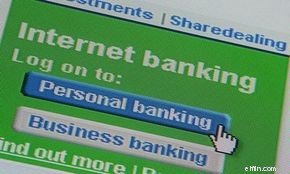 Automatic bill paying and online banking are two ways to help ensure bills don't go unpaid or are paid on time.
Credit scoring is based on a mathematical algorithm that can be, at times, a little wacky. The company responsible for creating the industry standard for credit models, Fair Isaac Corporation, constantly tweaks scoring formulas as problems with the system emerge. But inevitably, problems still arise.
For example, in the early 1990s, it became evident that the credit scores of people who contacted their former creditors to rectify old debt were actually suffering as a result. Scoring is based in part on how recent a debt is -- old debts affect scores less negatively than newer ones. Simply by contacting a creditor or collection agency, old debt that has been languishing and neglected can suddenly reflect new activity. As such, some scoring formulas calculate that same old debt as a recent one -- and your credit score can fall [source: Weston].
So you can see that credit scoring can be tricky. This, in turn, makes it pretty tricky to determine what will damage a credit score the most. Some consumer counselors and industry experts suggest not living and dying by your credit score. Rather, take steps, like paying bills on time and keeping your debt low, to clear credit clutter from your mind [source: BankRate]. But some months are better than others, so if you have to choose between paying a bill and putting more than you'd like to on your credit card, which should it be?
Since 35 percent of your credit score is based on credit history, the worst mistake the average person can make is to make late payments. Fair Isaac Corporation says that having late credit is as bad as it gets as far as single credit mistakes go [source: Kiplinger's]. Experian, one of the three major credit reporting bureaus, says that when someone makes a late payment, he or she is effectively telling future creditors to expect problems collecting the money they're owed [source: Experian]. The combination of showing you aren't timely in making your payments and the effect it can have on lowering your credit score makes late payments a bad idea credit-wise.
Paying late is problematic in other ways, too. Not making payments for six months leaves credit card companies with the option of writing off your debt as a lost cause. This is called a charge-off. In a charge-off, the company generally closes your account and turns your account over to their collections department or an independent collection agency. But the charge-off still shows up on your credit report and negatively impacts your score. What's more, it can stay on your credit history for seven years before it can no longer be reported [source: Weston]. And remember the catch-22 we discussed earlier: Making restitution on charge-offs can further lower your score by causing debts to appear more recent than they actually are.
A closed account means you still owe what you did before, but no longer have a credit limit. This has a further negative impact on your credit score. While payment history makes up 35 percent of your score, that debt-to-credit ratio mentioned on the last page makes up 30 percent of your score [source: Lending Tree]. Left with the debt and lost available credit from a charge-off, the negative credit score from a poor credit payment history is compounded even more.
So paying your bills late -- or not at all -- can create a domino effect that wreaks havoc on a credit score. The good news is that while a history of late payments can hurt your credit the most, it can also be among the easiest pitfalls to avoid. Simply paying bills on time can keep a credit score fairly high.
Sources
- Anderson, Jessica. "In search of a perfect credit score." Kiplinger's Personal Finance. December 2007. http://www.kiplinger.com/magazine/archives/2007/12/perfect-credit-score.html?kipad_id=8?kipad_id=8
- Lewis, Ericka. "Overdue library books can hurt credit score." CBS4. May 16, 2006. http://cbs4denver.com/local/Colorado.News.Denver.2.549282.html
- Pender, Kathleen. "When you get 'goodbye letter' from lender, call to verify." San Francisco Chronicle. September 11, 2007. http://www.sfgate.com/cgi-bin/article.cgi?file=/c/a/2007/09/11/BUVUS2U88.DTL&type=business
- Taggart, Gregory. "Cancel a card, hurt your credit score." BankRate.com. November 14, 2006. http://www.bankrate.com/brm/news/cc/20061114_cancel_card_credit_scorea3.asp
- Weston, Liz Pulliam. "When paying bills can hurt your credit." MSN Money. http://articles.moneycentral.msn.com/Banking/YourCreditRating/WhenPayingBillsCanHurtYourCredit.aspx
- "Do late payments affect a credit score?" Experian. http://www.experian.com/consumer/credit_score_faqs.html#21/Tips-to-raise-your-credit-score.aspx
- "Know your score." CBS News. March 24, 2008. http://www.cbsnews.com/stories/2008/03/23/business/main3960888.shtml
- "Tips to raise your credit score." Lending Tree. March 3, 2008. http://www.lendingtree.com/smartborrower/Credit-scores
-

Credit Unions vs. Banks: Which is Right for You?
Photo: fotoipsak
-

Understanding Average Credit Scores: What You Need to Know
You have more than one credit score — and they might not all be the same. That makes trying to pinpoint the average credit score a challenge. But when people talk about average cre
Personal finance
- Equifax Data Breach: What You Need to Know & Protect Yourself
- 7 Proven Ways to Improve Your Credit Score – Expert Strategies
- Unlock Your Potential: 21 Life-Changing Questions to Ask Yourself
- The Power of Single-Tasking: Achieve More by Focusing on One Goal
- Boost Your Credit Score: Why It's Crucial Now (2022 Update)
- Unlock Financial Opportunities: The Benefits of a High Credit Score
- Understanding Your Credit Score: How to Check & What You Need to Know
- Understanding the Highest Possible Credit Score (850)
- Understanding Credit Scores: What's the Best Score & Why It Matters?
-
 American Express Cards for New US Residents: No Credit Score Needed
The redesigned Green from Amex card. If you’re just moving to the United States, it’s likely that you’re learning a lot about how things are done and what you need in order to thrive in our country. ...
-
 Bankruptcy & Credit Scores: Understanding the Long-Term Impact
Though filing for bankruptcy will hurt your score initially, sometimes its the best choice in the long haul. One morning, you spotted a cobweb, its gossamer strands gathering dust, resting in ...