
Bear Funds: Understanding the Risks and Potential Rewards
Bear funds have become a more readily available investment choice in recent years. Many investors have begun to include them in their portfolios as a result. Here are the basics of bear funds and whether you should consider investing in them.
What Are Bear Funds?
A bear market is one that is declining. A bear market fund is one that is designed to profit from a decline in the markets. Therefore, if the stocks that make up the fund go down, you actually make a profit overall. This is accomplished by short selling stocks and by using derivatives to set up reverse positions from what most investors are used to. Many times, these funds are tied to a particular financial index. If the index goes down, the fund profits. Sometimes, they even use leverage to double the returns in the portfolio. Therefore, if the fund goes down 1 percent, you actually make 2 percent in your account.
Hedging
One reason to consider investing in this type of fund is to hedge your account. Combining this type of investment with traditional long investments can be a great way to protect your assets and your investment dollars. When you use this type of investment along with your other investments, you can achieve growth in your account regardless of which way the market moves. By using a leveraged bear fund, you can actually secure your account funds with only half of what you have invested in the opposite direction. If the market goes down, you get two times the movement in your account. Therefore, you will not have to invest an equal amount of money in each type of investment.
Timing
When considering investing in this type of security without hedging your account, you will want to make sure that the timing is perfect. You need to have good reason to be confident that the market will decline in the immediate future. You need to get in at the top of the market and then sell when it is near its lowest point. Historically, the market has always trended upwards over the long term. Therefore, although the market might be down during the short term, you should not think that it will continue to go down for long. Betting against the market for the long term is a losing proposition that will eventually end up in your losing your investment dollars. Therefore, investing in a bear fund without hedging your account is a strategy that should usually be reserved for advanced traders that have a good feel for when the market may go down overall.
Investment Consideration
As an investor, you need to decide if this is something for you to pursue. Perhaps its greatest value as an investment is as a way to hedge your account. This strategy can be implemented by any investor as a safety net in his or her account. However, if you are going to utilize this as an individual investment strategy, you need to be careful and focus on the timing of it.
-
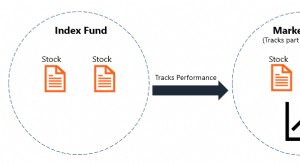
Index Funds Explained: A Beginner's Guide to Tracking Market Performance
Index funds are mutual fundsMutual FundsA mutual fund is a pool of money collected from many investors for the purpose of investing in stocks, bonds, or other securities. Mutual funds are owned by a g
-

Fund of Funds Investing: Diversify & Minimize Risk
The fund of funds investment strategy is a popular strategy that is designed to minimize risks and increase potential gains. The idea behind a basic mutual fund is that a fund manager is going t
Public investment fund
- Eco-Friendly Period Products: Benefits & Sustainability Explained
- Emerging Market Funds: Investment Potential & Risk Assessment
- Country Mutual Funds: Assessing Risk & Potential Returns
- Understanding Mutual Funds: A Beginner's Guide
- Hybrid Cars: A Comprehensive Cost-Benefit Analysis
- Navigating Market Downturns: Should You Redeem or Stay Invested?
- Understanding Mutual Fund Risks: A Comprehensive Guide
- Understanding the Current Market: Is a Bear Market Here?
- Understanding Mutual Fund Risks: A Comprehensive Guide
-
Efficient Market Hypothesis (EMH): Understanding Investment Prices
The efficient market hypothesis assumes that reasonable investors will set reasonable prices for investments based on known information. The hypothesis basically means, left to their own device,...
-
Market-Neutral Funds: Understanding a Low-Correlation Investment Strategy
The market-neutral fund is one that has picked up steam in recent years with investors. The market-neutral fund aims to eliminate correlation to the traditional stock market while attempting to ...