
Systematic Withdrawal Plan (SWP): A Comprehensive Guide
Just like you are allowed to invest a fixed amount every month in the mutual fund of your choice with a Systematic Investment Plan (SIP); you can also withdraw your investment in the same manner. Read this post to know what Systematic Withdrawal Plan (SWP) is and how it works.
If you are planning to invest in mutual funds and researching about the same, you might surely have heard about SIP. It is an investment option that allows you to invest a fixed amount in the mutual fund scheme of your choice on a fixed date every month.
But while a lot of investors do know about SIP, not many understand what SWP or Systematic Withdrawal Plan is. Let us have a detailed look at what it is and how it works-
Systematic Withdrawal Plan (SWP) is the exact opposite of SIP. SIP allows you to invest a fixed amount every month. SWP, on the other hand, enables you to withdraw a fixed amount from your mutual fund investment every month. Apart from monthly withdrawals, you can also set quarterly, half-yearly, and yearly withdrawals.
For instance, let us consider that you have invested Rs. 5 lakhs in a mutual fund scheme and it has grown to Rs. 6.5 lakhs after a few years. You can then enable SWP to withdraw a fixed amount, like Rs. 10,000 or Rs. 20,000, from your investment at regular intervals.
Let us assume that you have 1000 units of a particular mutual fund scheme and its Net Asset Value (NAV) is now Rs. 100. You now want to withdraw Rs. 5,000 every month from this investment through SWP
In the first month when the NAV of the scheme is Rs. 100, 50 fund units will be debited from your mutual fund account and redeemed at the price of Rs. 100 per unit, accounting to Rs. 5,000, as you requested. Now, the total number of units in your account will be 950 (1000-50).
In the next month, let us assume that the NAV of the scheme rises to Rs. 125. Now to complete your SWP request, your fund house will redeem 40 units from your account as the NAV is now Rs. 125, and you have requested a monthly withdrawal of Rs. 5,000. The updated fund balance will be 910 (950-40).
As you can see, every withdraw reduces the number of fund units in your account. More units are redeemed if the NAV falls, and fewer units are redeemed if the NAV rises.
Taxation in SWP is similar to the tax slab of mutual funds .In the case of debt funds, investments held for more than 36 months will attract LTCG (Long-Term Capital Gains) tax at 20% with indexation.
For a holding period of fewer than 36 months, the capital gains will be added to the taxable income of the investor.
In the case of equity funds, LTCG at 10% is applicable for investments held over 12 months. STCG (Short-Term Capital Gains) tax at 15% is applicable below 12 months.
Systematic Withdrawal Plan (SWP) can come in handy in various scenarios. For instance, it can be used by/for-
-
Retirees as a pension income
-
Working professionals looking for an additional source of income
-
Monthly loan EMI payments
-
Homemakers for monthly expenses
-
Insurance premiums
-
Any financial goal that requires payment in a phased manner
But do remember that one should select the SWP amount very carefully. The SWP amount and withdrawal frequency should be such that you only withdraw the returns generated from your investment and not the invested capital. Your corpus will deplete sooner than expected if you start withdrawing the invested capital.
Consult an investment advisor or a reputed fund house to help you with the decision.
-

Non-Profit Business Plan: A Comprehensive Guide
A non-profit business plan is simply a roadmap for a non-profit organizationTypes of OrganizationsThis article on the different types of organizations explores the various categories that organization
-

Automatic Investment Plans: A Simple Guide to Effortless Investing
An automatic investment plan allows individuals to have a certain amount of money transferred from a bank account to an investment account on regular intervals. For example, an individual with a
Public investment fund
- Systematic Withdrawal Plans (SWPs): A Retirement Income Strategy
- Comprehensive Financial Planning: Your Path to Financial Security
- Trading Plan: A Comprehensive Guide to Successful Trading
- Business Plan: Definition, Importance & Funding Options
- Contingency Planning: Understanding & Managing Risk
- Comprehensive Marketing Plan: Definition, Elements & Strategy
- Profit Sharing Plans: A Comprehensive Guide for Employees & Employers
- DB(k) Plans: A Hybrid Retirement Solution for Employers & Employees
- Dividend Mutual Fund vs. Systematic Withdrawal Plan (SWP): Which is Right for You?
-
Understanding TDA Retirement Plans: A Guide for Nonprofits
A TDA, or tax deferred annuity, is a tax-favored retirement plan that allows an employee of a nonprofit organization to contribute money pre-tax toward retirement. Over 156 million people had a TDA re...
-
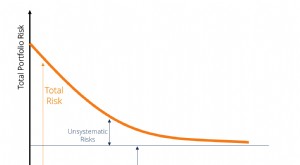 Understanding Systematic Risk: Factors Beyond Your Control
Systematic risk is that part of the total risk that is caused by factors beyond the control of a specific company or individual. Systematic risk is caused by factors that are external to the organizat...