
Social Security Benefits for Self-Employed: Earning Credits & Retirement

Points, better known as credits, are calculated by the Social Security Administration for each taxpayer, including self-employed persons, based on yearly earnings. Once a taxpayer achieves a minimum number of total credits, he can access his earned Social Security benefits. Self-employed persons can earn enough points to access Social Security retirement and disability and leave survivorship benefits to loved ones. The number of credits required to access these benefits varies per type of benefit. Self-employed persons between the ages of 31 and 42 can collect disability benefits with 20 total credits and retirement benefits with 40 total credits.
Step 1
Earn at least the minimum total gross income required to earn up to four credits per year. Between one and four points are given based on a minimum amount of total earnings per year. Each year this amount changes. In 2010, the minimum total gross income that had to be reported on federal taxes to earn one Social Security point was $1,120. The minimum income required to earn the maximum four credits was $4,480.
Step 2
File federal self-employment taxes each year. Self-employed persons can only gain Social Security credits based on filed federal tax forms each year. Some common tax forms required for self-employed persons may include a 1040, 1040 Schedule SE (Self Employed) and Schedule C (Profit or Loss from Business).
Step 3
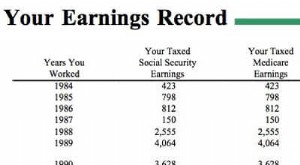
Calculate the total number of credits earned overall and the total number of credits required to have earned your Social Security benefits. For example, suppose that over the course of your working life, you have earned eight Social Security credits according to your Social Security statement. According to Social Security, you need 40 credits to earn full retirement benefits, and if you are between age 31 and 42, you need 20 credits to earn your disability benefits. Based on earning four credits per year, you have eight more years of working required (if you earn four benefits per year) before you can collect retirement benefits and three more years of working before you can collect disability.
Tip
The total number of survivorship benefits a deceased person must have earned before her surviving spouse and children are eligible to receive survivorship benefits is six credits. These six credits must be earned at least three years before the person's death.
-

Social Security Benefits: How Long Do Approvals Take?
Social Security pays three kinds of benefits: retirement, disability and survivors. Each application process requires completing forms and waiting for approval. Social Security disability takes longer
-
Check Your Social Security Benefits Online: Estimator & Information
Last week, I drove out to the box factory to see my brother Jeff and my cousin Nick. Ostensibly, I made the trip to check up on Moms financial situation. Really, though, it was an excuse to spend
retirement
- Social Security Benefits for Veterans: Maximizing Your Entitlements
- Social Security Blackout Period: Understanding Survivor Benefit Eligibility
- Social Security & Caregiver Support: Resources for Unpaid Care
- Manage Your Social Security Disability Payments: Direct Deposit Guide
- Social Security Death Reporting: Survivor Benefits & How to Claim
- Understanding Social Security Benefit Calculations: A Comprehensive Guide
- Social Security Application Guide: A Comprehensive Overview
- Understanding Social Security Benefits: Eligibility & How They Work
- Social Security Benefits: Eligibility & Application Guide
-
 Social Security Retirement Age: When to Claim Benefits & Maximize Payouts
Every worker at some point starts to think about retirement and applying for Social Security benefits. The big question is: When should you start collecting Social Security? Generally, the key to that...
-
 Social Security Survivors' Benefits: A Comprehensive Guide
When someone dies, the surviving family members have a range of financial responsibilities to attend to during the grieving process. One of those responsibilities is making sure that the Social Secur...