
COVID-19 Relief Payments Significantly Reduced U.S. Poverty Rate in April & May
Even in the middle of the coronavirus pandemic, the U.S. poverty rate fell by 2.3 percentage points in April and May, researchers from the University of Chicago and University of Notre Dame estimated.
The poverty rate fell from 10.9 percent in January and February to 8.6 percent in April and May, according to the researchers' analysis of data from the Census Bureau's monthly household survey.
"You can ask, 'How could that be?'" researcher Dr. Bruce Meyer, who teaches public policy at the University of Chicago, told FOX Business. "The answer is the stimulus checks, the supplements to unemployment insurance and the expansion of unemployment insurance to people who have not been covered in the past."
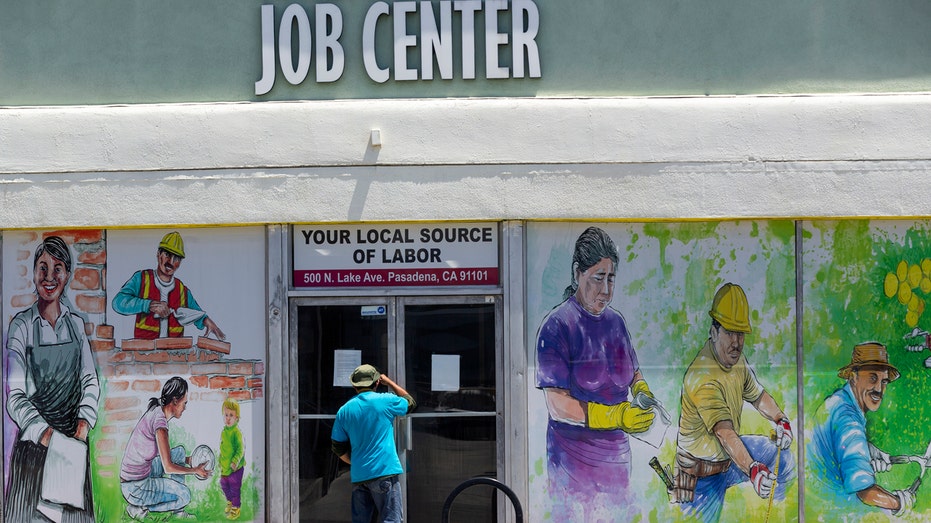
In this May 7, 2020 file photo, a person looks inside the closed doors of the Pasadena Community Job Center in Pasadena, Calif., during the coronavirus outbreak. (AP Photo/Damian Dovarganes, File) (Associated Press)
Under the CARES Act, the federal government sent one-time payments of up to $1,200 to individuals making less than $75,000 a year, as well as bumped up unemployment insurance benefits by $600 per week.
"That doesn't mean there aren't individuals who have seen their incomes fall quite dramatically in this pandemic," Meyer said. "More people had income gains than income losses."
The U.S. unemployment rate reached its highest rate since the Great Depression in April, 14.7 percent, and remains in the double digits. However, poverty declined for all age groups, according to the researchers.
The researchers' analysis should help policymakers in the future, Meyer said.
"It makes the most sense to provide more targeted aid to those who are really suffering hardship, and that would be the unemployed," he said. "The current expansion of unemployment insurance was done very crudely, I am told, because state unemployment insurance directors argued they didn't have the ability to calculate supplements to benefits as a share of past earnings."
GET FOX BUSINESS ON THE GO BY CLICKING HERE
"By now I think we should expect state offices to do that so we can target the benefits better," Meyer said. "You don't want to discourage people from returning to work."
The researchers also found no meaningful differences in poverty decline between states that issued state of emergency or stay-at-home orders early versus late.
CLICK HERE TO READ MORE ON FOX BUSINESS
-

Understanding the U.S. Unemployment Rate: Why It Impacts You
Many or all of the products here are from our partners that pay us a commission. It’s how we make money. But our editorial integrity ensures our experts’ opi
-

U.S. Unemployment Rate Drops to 6.2% in February: Recovery Update
The U.S. unemployment rate has slowl
Savings
- COVID-19 Relief Payments Significantly Reduced U.S. Poverty Rate in April & May
- COVID-19 Threatens Social Security Benefits: Expert Analysis
- Coronavirus Tax Relief: State-by-State Deadline Extensions
- Coronavirus Stimulus Checks: Understanding Your Relief Funds
- Coronavirus Mortgage Relief: Options & Assistance Programs
- Coronavirus Unemployment Benefits: Extended Relief in $1.9 Trillion Stimulus
- U.S. Unemployment Rate Drops to 6%: Implications for Economic Relief
- April Unemployment Rate Surges: Economic Outlook & Analysis
- U.S. Unemployment Drops to 5.8% in May with 500K+ Jobs Added - Economic Recovery
-
 Navigating Retirement Savings During Coronavirus: Strategies for Financial Security
Get all the latest news on coronavirus and more delivered daily to your inbox. Sign up here. The past month during the coronavirus pandemic has been a rollercoaster ride for investors. And amid t...
-
 Coronavirus Tax Relief: What You Need to Know - Credit Karma Tax
This article was fact-checked by our editors and Christina Taylor, MBA, senior manager of tax operations for Credit Karma Tax®. The financial impact of the COVID-19 pandemic has sp...