
Simple Moving Averages (SMAs): A Beginner's Guide
Moving averages are a continuously updated average, updated normally every day or unit of period. Simple moving averages are a common technical trading tool for investors and traders. Some of the basics of simple moving averages include the following: trending, support and resistance, average prices.
Trending
A moving average line can tell you whether or not the stock is in an uptrend or downtrend, you would need a short period moving average for this. A short period for simple moving averages could be a 5, 10, or even a 20 day moving average. This period would provide a trending line when used as a technical trading tool. When compared to the stock price, the short moving average can prove to be very insightful. The concept is very simple, when the moving average line is pointing up, the stock is in an uptrend. When the moving average line is pointing down, the stock is in a down trend.
Support
A longer period for simple moving averages could be a 40, 50 or 200 day moving average. This period would be helpful in finding an approximate price level for finding a support level. When compared to the underlying stock price the support moving average can become a very significant indicator for traders and investors. The support line is the level that should not be breached which is below the stock price. Theoretically, support is the level where demand meets supply, anything below the support level means that that there is an oversupply. If the moving average line is above the stock price that makes it a resistance level.
Resistance
The moving average line that is used to estimate the support level is also used to estimate the resistance level. The resistance line is the level that should not be breached unless a new trend is unraveling. After resistance has been broken, it is fair to say that there is a new bull cycle in the works. Theoretically, resistance is the level where supply exceeds demand, when it is broken demand exceeds supply.
Average Prices
Simple moving averages can also be used to find out the average prices that have been trading. Average prices pinpoint spots of congestion in trading that are normally revisited until a major event driven catalyst moves the stock price in a definite direction up or down. A very short period is used to define recent average prices that should be revisited. A very short period of one day or five days could be used as a technical gauge for this practice.
With all of these resourceful technical tools coming from one moving average indicator, it's no wonder why it is so important to learn about simple moving averages. Keep in mind, that you can use more than one moving average line at a time. This helps to gauge momentum as well as accomplish the aforementioned indicators using different moving average periods.
-

KAMA: Understanding Kaufman's Adaptive Moving Average for Trading
Kaufman’s Adaptive Moving Average (KAMA) was developed by American quantitative financial theorist Perry J. Kaufman in 1998. The technique began in 1972 but Kaufman officially presented it to th
-

MACD Indicator: A Comprehensive Guide to Trading Signals
Summary: Referred to as MACD (mak-dee) and used as a key indicator in technical analysis of stocks and commodities Tracks the path of short-term versus long-term moving averages and seek
Stock basis
- Moving Average (MA): Understanding and Using a Key Technical Indicator
- Simple Moving Average (SMA): Definition & Trading Uses
- Simple vs. Exponential Moving Averages (MA): A Comprehensive Comparison
- Simple Moving Average (SMA): A Comprehensive Guide for Investors
- Understanding Moving Averages: A Guide for Investors
- Adaptive Moving Average (AMA): A Trading Signal Explained
- Understanding the Limitations of the Simple Moving Average (SMA)
- Exponential Moving Average (EMA): A Comprehensive Guide
- Mastering Moving Averages: 2 Proven Strategies for Trading Success
-
 Double Exponential Moving Average (DEMA): A Trading Guide
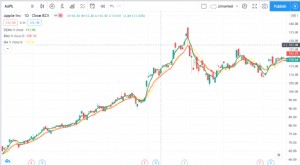
Double exponential moving averages (DEMA) are an improvement over Exponential Moving Average (EMA) because they allocate more weight to recent data points. The reduced lag results in a more responsive...
-
 Exponential Moving Average (EMA): Definition & Trading Uses
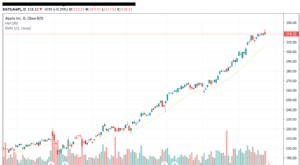
The Exponential Moving Average (EMA) is a technical indicator used in trading practices that shows how the price of an asset or securitySecurityA security is a financial instrument, typically any fina...