
Discounted Cash Flow (DCF) Analysis: A Comprehensive Guide
There are many ways to assess the value of a company. While there can be many reasons to evaluate the value of a company and/or its assets, many investors have started looking at this aspect before making investing decisions.
Business valuation methods include market capitalization-based valuation, time-revenue method, book value, liquidation value, earnings multiplier, and the discounted cash flow method.
In this article, we will be focusing on the DCF model (DCF: Discounted Cash Flow) and look at why it is preferred by many business evaluators.
What is DCF?
DCF stands for Discounted Cash Flow. This is a business valuation method that allows you to assess the current value of a company and/or its assets.
Sounds complicated? Let’s try again.
Discounted Cash Flow is when a company’s free cash flow is discounted back to today’s value.
Still unclear? Let’s break it down and start with the basics.
What is Cash Flow?
Cash Flow is the money generated by the company that is available to be reinvested in the business or distributed to investors.
What is Free Cash Flow?
Free Cash Flow or Unlevered Free Cash Flow is the cash left over after the company deducts operating expenses and CapEx (capital expenditures). This cash flow is available to both debt and equity investors.
As an investor, this is an important metric in evaluating the value of a company because net revenue and accounting profit do not offer a clear picture of the economic value of a company.
What is Discounted Cash Flow?
With a clear understanding of Cash Flow and Free Cash Flow, let’s look at what is Discounted Cash Flow?
Discounted Cash Flow is a method of calculating the present value of a company (or even an investment) based on the projected cash flow in the future. DCF valuation is based on the concept of the time value of money.
Time Value of Money:
A Rupee today is worth more than a Rupee tomorrow because you can invest it and earn more money on it.
The DCF method of finding the value of an investment or a company can be used by anyone who is paying money today with the expectation of receiving higher returns in the future. Hence, there are two assumptions that form the foundation of discounted cash flow techniques:
- As time passes, a company or an asset will make money.
- Time Value of Money
Therefore, in simple words, to calculate the present value of a company/asset, you need to adjust for the diminishing value of money. This is Discounted Cash Flow.
The DCF Method
The formula to calculate DCF is as follows:
DCF = CF1 / (1+dr)1 + CF2/ (1+dr)2 +…..+ CFn/ (1+dr)n
Where,
- CF –is the total cash flow for a given year. CF1 is for the first year, CF2 is for the second year, and so on.
- dr –is the discount rate or the target rate of return that you are looking for from the investment. It is the weighted average cost of capital (WACC).
In other words, DCF is the sum of all future DCFs that a company or an investment is expected to produce. Let’s understand this further using an example:
Let’s say that a company offers you Rs.15000 in three years and asked how much you are willing to pay for the offer. To give the right answer, you need to calculate the value of Rs.15000 today. This can be done by using the DCF method.
If you offer to pay Rs.10000, then you are expecting a return of 14.47% in three years. If you increase the offer to Rs.12000, then the expected rate of return drops to 7.72%.
Hence, the DCF method allows you to translate future cash flows to their present value. It takes into consideration the compounded rate of return that you can achieve with your funds.
How can DCF help investors?
As an investor, you can use DCF valuation in the following scenarios:
If you are planning to buy a business, real estate property, or invest in shares and want to project and discount the expected cash flows, you can use the DCF method.
If the investment is priced below the sum of the discounted cash flows, then it can be taken as an indicator of an undervalued investment. This makes it a potentially rewarding investment. However, if it is priced higher than the sum of the discounted cash flows, then the investment might be overvalued.
The DCF method is appropriate for larger companies with steady growth. Avoid using this method for smaller companies or any company that is experiencing volatile or rapid growth. Also, avoid using it for companies that are exposed to seasonality or cyclicality. Some sectors where DCF analysis can prove useful are oil, gas, utilities, etc. where growth is stable over time.
Pros & Cons using DCF analysis
Benefits
Here are some advantages of using the DCF model for assessing the value of a company/investment:
- Helps calculate the intrinsic value of a company
- You don’t need data of peer companies to estimate the value of the target company
- DCF can be calculated in Excel. You don’t need any additional tools.
- For investments, this method can be used to calculate the Internal Rate of Return (IRR) to help you make investing decisions.
- It can be a handy tool during mergers and acquisitions
Downsides
Here are some disadvantages of using DEC valuation:
- The time and effort required to project various parameters like operating cost, revenue, CapEx, investments, etc. A small deviation in any of these values can result in a huge change in the valuation of the company.
- Typically, the DCF method is used to project for a period of around ten years. Getting accurate projections for such a long tenure can be difficult especially since the Indian economy is volatile and cyclical.
These cons make the DCF model prone to errors. Also, estimating the WACC accurately can be a challenge. Given the sensitivity of the model to changes in assumptions, using this model effectively requires a lot of factors to be accurate.
Summing Up
While the DCF method is a good way to estimate the value of a company, it is important to ensure that the projections and assumptions are as accurate as possible. We hope that this article explained the concept of Discounted Cash Flow clearly.
Happy Investing!
Disclaimer: The views expressed in this post are that of the author and not those of Groww
-

Understanding Cash Flow Statements: A Comprehensive Guide
Cash flow is the amount of money coming in and going out of a company or organization during a specific accounting period.As a tool, cash flow is used to determine the solvency of a company such as h
-

Cash Flow Loans: Fueling Business Growth & Overcoming Short-Term Needs
A cash flow loan provides a temporary influx of cash in order to meet current demands on a business. These demands may arise due to a slow sales cycle, the need for expansion or even delayed pay
Stock investment skills
- Inventory Valuation: Methods, Importance & Impact on Your Business
- Financial Close Process: Definition, Importance & Best Practices
- Progress Invoicing: Boost Cash Flow & Project Success
- Understanding Cash Flow: A Comprehensive Guide
- Understanding Time Horizon in Investing: A Comprehensive Guide
- Understanding Risk Tolerance: Definition & Importance for Investors
- Understanding Corporate Culture: Definition, Impact & Change Strategies
- Financial Literacy: Understand & Improve Your Money Management
- Understanding Interest Rates: Definition, Types & Impact on Your Finances
-
 Understanding Incremental Cash Flow: A Business Guide
Incremental cash flow refers to cash flow that is acquired by a company when it takes on a new projectProject ManagementProject management is designed to produce an end product that will make an impac...
-
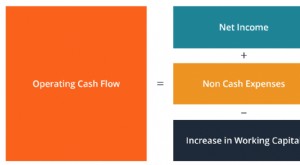 Understanding Operating Cash Flow (OCF): A Comprehensive Guide
Operating Cash Flow (OCF) is the amount of cash generated by the regular operating activities of a business within a specific time period. OCF begins with net incomeNet IncomeNet Income is a key line ...