
Colombia's Emerging Market: Economic Overview & Key Indicators
Colombia meets the criteria of an emerging market economy. The South American country has a much lower gross domestic product, or GDP, per capita than the United States and other developed countries. Its Human Development Index, or HDI, which measures a country's quality of life by using criteria such as health care and educational opportunities, hovers well below the minimum threshold for consideration as a developed country. Compared to developed nations, higher levels of poverty and political instability plague Colombia, and the country's business and industrial activity is also lacking.
Typical of emerging market economies, however, the area in which Colombia far outperforms the U.S. and other developed countries, is economic growth.
Emerging Market Economies Versus Developed Economies
Emerging market economies exist in countries that, while not yet developed, are considered by economists to be on the fast track toward development. A developed country must meet several criteria. First, its GDP per capita, calculated by dividing GDP by current population, must exceed $12,000, though the world's most advanced economies have per capita GDPs that are much greater, often in excess of $30,000.
Second, a developing country must have a high HDI. This metric quantifies the advancement of a country's educational opportunities, health care, and quality of life. As of 2020, Norway has the world's highest HDI, at 0.957, while the U.S. comes in 17th, at 0.926. The generally accepted minimum HDI threshold for qualification as a developed country is 0.8.
Developed countries also have low birth rates. Because fewer babies and infants die in developed countries, families do not need to have more children to account for some not making it. Due to clean water, access to healthy foods and widely available medical care, developed countries have higher life expectancies than developing countries.
A person can identify a country as an emerging market economy when the above metrics don't meet the standards for classification as a developed country but are still much higher than most developing and underdeveloped countries. Emerging market economies also stand out for their high growth rates; while they are not as prosperous as developed countries, the rate at which their prosperity is growing is often much higher.
How Colombia Compares
Colombia meets every criterion of an emerging market economy. Its GDP per capita, at $6,428.676 as of 2019, falls well below the developed country threshold but ranks much higher than most of its peers in the developing world. Its 2020 HDI was 0.767; again, insufficient for a developed country but not far behind. The country has broad strides still to make in education, health care, and quality of life. Over the years, however, Colombia has made improvements in these areas in step with its economic growth.
The biggest marker of Colombia as an emerging market economy is its strong economic growth rate, which was 3.3% as of 2019.
-
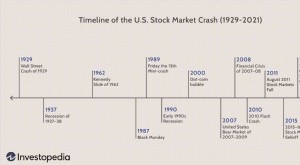
Understanding Stock Market Crashes: Causes & Historical Examples
What Is a Stock Market Crash? A stock market crash is a rapid and often unanticipated drop in stock prices. A stock market crash can be a side effect of a major catastrophic event, ec
-

Free-Float Methodology: Understanding Market Cap Calculation
What Is Free-Float Methodology? The free-float methodology is a method of calculating the market capitalization of a stock market indexs underlying companies. With the free-float methodology, m
stock market
- Emerging Market Funds: Investment Strategies & Potential
- Understanding the EMBI: A Guide to Emerging Market Bond Performance
- Investing in Emerging Markets: Risks & Opportunities
- Emerging Market ETFs: Invest in Global Growth & Diversification
- Understanding Emerging Market Economies: Growth & Investment
- Navigating Emerging Market Investments: Risks & Rewards
- Understanding Russia's GDP: Key Components and Emerging Market Potential
- Thailand's Economic Growth: A Deep Dive into GDP & Development
- Mexico's Economic Status: Emerging Market or Developing Nation?
-
Understanding Equity Markets: A Comprehensive Guide
What Is an Equity Market? An equity market is a market in which shares of companies are issued and traded, either through exchanges or over-the-counter markets. Also known as the stock market, ...
-
 Stock Market Volatility: Understanding Economic Threats & Protecting Your Portfolio
We live in one of the most challenging, uncertain times in the history of the world. When we see instability, chaos, or widespread catastrophes — like the COVID-19 pandemic or political upheaval — ...