
FBI Alert: Cryptocurrency ATM Scams Targeting Victims
Scammers are increasingly using cryptocurrency ATMs and QR codes to siphon payments from victims, according to the FBI.
The FBI warned scammers have been instructing victims to withdraw money from their fiat accounts and then use the money to buy cryptocurrency from an ATM, in a public service announcement.
When the victim uses the machine to buy virtual currency, it asks them to scan a QR code representing a destination address for the funds. The machine offers to print out a paper wallet - a QR code the victim can scan and use to store their withdrawn cryptocurrency.
However, the scammers generate a QR code representing a cryptocurrency address in their own wallet and give this to the victim to scan instead.
"Often the scammer is in constant online communication with the victim and provides step-by-step instructions until the payment is completed," the announcement said.
The approach works for any online scam requiring payments between victims and gives the scammer three advantages.
First, it's relatively frictionless compared with older methods, such as sending money via Western Union or obtaining gift cards.
Second, scammers can receive the payments anonymously anywhere in the world.
Finally, the payments are irreversible. "Once a victim makes the payment, the recipient instantly owns the cryptocurrency, and often immediately transfers the funds into an account overseas," said the Bureau. "This differs from traditional bank transfers or wires where a payment transaction can remain pending for one to two days before settlement."
The FBI said criminals use this approach in scams, including online impersonation, in which they pretend to be an institution demanding payment. They also use it for romance schemes, where they build a personal relationship with the victim and ask them to send money.
Another common attack is lottery fraud, where victims believe they won a lottery prize and send fraudulent administrative fees to the scammer in a bid to retrieve their fake prize.
The Federal Trade Commission (FTC) warned earlier this year of an uptick in cryptocurrency fraud, with losses almost tripling in the fourth quarter last year.
The FBI's 2020 Internet Crime Report tracked $246.2 million in fraudulent virtual currency payments last year. That was an increase of 54.5% from $159.2 million in 2019.
-

Understanding Cash Equivalents: Definition & Examples
Cash includes legal tender, bills, coins, checks received but not deposited, and checking and savings accounts. Cash equivalents are any short-term investment securities with maturity periods of 90 da
-

Liquid Assets: Definition, Importance & Examples | [Your Brand Name]
Having ready access to cash is a huge component of one’s financial health. Cash and cash equivalents offer a level of financial flexibility that’s important for both individuals and businesses. So liq
Blockchain
- ATM Usage Declines in Australia Despite 50-Year Anniversary
- Benefits of Cryptocurrency: A Comprehensive Overview
- The Future of ATMs: 6 Key Innovations Transforming Banking
- Cryptocurrency Fraud: 4 Emerging Tactics Criminals Are Using
- Centralized Cryptocurrency Exchanges: A Comprehensive Guide
- AI, Blockchain & Cryptocurrency: Shaping the Future of Fintech
- Top Countries Embracing Cryptocurrency: A Global Overview
- Leading Banks Explore Cryptocurrency and Blockchain Integration
- FTC: Cryptocurrency Fraud Soars – A Warning for Investors
-
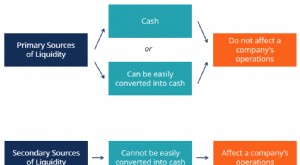 Understanding Corporate Liquidity: Sources and Types
For a company, its sources of liquidity are all the resources that can be used to generate cash. There are generally two major classes of sources of liquidity for a company:The primary sources of liqu...
-
 Understanding Accounting Transactions: A Comprehensive Guide
Accounting transactions refer to any business activity that results in a direct effect on the financial status and financial statementsThree Financial StatementsThe three financial statements are the ...