
Counter Checks at Banks: What You Need to Know
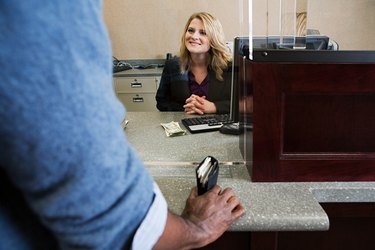
Counter checks, often called starter checks, are given to customers by bank tellers. They are primarily used when a person opens up a new checking account. A bank also gives counter checks to customers when they run out of regular checks. Counter checks have a high rate of fraud, and institutions should be careful when accepting them.
Tip
Counter checks are blank checks that do not have the account holder's imprinted name and address information at the top and, sometimes, also lack the account number. They are used when a checking account holder runs out of imprinted checks or before checks are imprinted for a new account.
Description of Counter Checks
A counter check is a blank check that does not contain a check number, a person's name or address. Many counter checks also do not have an account number pre-printed on them. Counter checks do have the bank's routing number on the bottom of the check.
Uses for Counter Checks
If a customer runs out of checks and needs one immediately, the bank may provide the customer with a counter check. Sometimes the bank imprints the customer's account number on the bottom, other times the customer must write it in.
When a person opens a new checking account, the bank generally gives the customer a small book of counter checks. The book may contain approximately five to 10 counter checks and are often called starter checks. These checks do contain the customer's account number and the bank's routing number but the customer's name and address is not printed on them.
Writing Counter Checks
When a customer uses a counter check, the customer must fill in his name and address. He can also fill in his phone number, driver's license number or Social Security number. The customer must also choose a check number for each check written, which is handwritten at the top of the check.
As soon as a customer opens a checking account, the bank typically orders official checks for the customer. When these arrive, the customer should destroy any remaining counter checks and begin using the official checks. The official checks have the customer's name and address printed on them. They also have the bank's routing number, checking account number and are in sequential check number order.
Problems with Counter Checks
Many retail places will not accept counter checks because they are not official checks. Typically, counter checks are accepted for payments by utility companies and loan companies. Many recipients of counter checks feel that there is a higher risk involved when accepting these types of checks because the person does not have an established account yet.
-

Original Bank Statement: Definition & How to Obtain
Many adult consumers have at least one bank account for saving money, writing checks or keeping money safe until using it to pay bills. Banks issue statements for their customers to keep records and t
-

Understanding Financial Barriers: How Costs Impact Your Lifestyle
Married couple meeting with a financial advisor Standard of living often depends on the amount of money a person has to spend and invest. Many common activities that can improve one's sta
budgeting
- Understanding Bank Drafts: Types, Security & How They Work
- Commercial Bank Functions: Services & Lending Explained
- Benefits of Using Checks: Convenience, Security & Record Keeping
- Understanding Third-Party Checks: What You Need to Know
- Understanding Royalty Checks: A Comprehensive Guide
- Understanding Duplicate Checks: Security & Convenience
- Understanding Tier 2 Bonds: A Guide to Bank Capital
- Understanding Bank Reserves: A Comprehensive Guide
- Understanding Holdover Checks: What They Are & Why They Happen
-
Understanding Bank Loans: Types, Terms & How They Work
Banks don't make money by taking your deposits and holding onto them until you need the cash. They make money largely through loans. A bank loan is an arrangement in which a bank gives you money t...
-
 Understanding Bank Adjustments: What They Are & Why They Happen
Everyone occasionally makes mistakes, even the friendly experienced professionals at your local bank branch. Sometimes, even the technology they use creates errors. When that happens, your bank will m...