
Understanding Third-Party Checks: What You Need to Know
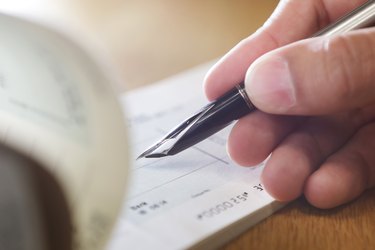
Third-party checks are checks written to one person but signed over to another to deposit or cash. Because checks are becoming less common, many people who receive them might want to use them to pay others, rather than cash them or deposit them.
Understanding how to accept or sign over a third-party check will help you make the correct transaction and ensure there are no problems later.
Read More: How to Endorse a Check
Two-Party Check Transactions
Most check transactions are simple. Someone owes you money, writes you a check and then you deposit the check or cash the check and get the money for it right then. You can pay someone using a paper check, or use an e-check if you have your checking account set up to do so, or if using a website or phone app that uses e-checks.
Third-Party Checks
What's the difference between a two-party check and a third-party check? Let's say Bob Smith owes Maria Gonzalez $100. He can pay her with a $100 check tied to his checking account, creating a two-party check transaction.
In another scenario, Bob runs into Maria, who says, "Hey Bob, do you have the $100 you owe me?" Bob only has $60 in cash on him, but he has a $40 check that Hank Jones has given him. Bob says, "Maria, I only have $60 in cash, but I can sign a $40 check over to you that Hank wrote me." Maria agrees and Bob endorses the check to himself, then makes it payable to Maria. This creates a third-party check.
Maria takes the $60 in cash and the $40 third-party check, which she endorses to herself and deposits or cashes.
Read More: How to Cash a Third-Party Check
Endorsing Third-Party Checks
In order to create a third-party check, the person to whom the check is written must first endorse it. This means signing his name on the back of the check in the correct area (usually identified with a signature line). Under the endorsement, he then writes, "Pay to" or "Pay to the Order of" and writes the name of the person who now gets the check. That person then endorses the check by signing her name on it.
In the scenario above, Bob has a check made payable to "Bob Smith," which was given to him by Hank Jones. Bob turns the check over and signs his name on it. Under that, he writes, "Pay to Maria Gonzalez." Maria then writes her signature underneath. She can then cash it or deposit it.
You can use this process when you receive checks from a business, or want to pay a business using a third-party check. You can also create fourth-party (or more extended) checks. This was a common occurrence during friendly poker games, where the same check kept getting passed around as players used it as payment. Most banks limit the number of parties who can endorse a check.
Read More: Can I Endorse Over a Business Check to My Personal Account?
Problems With Third-Party Checks
Some people are hesitant to accept third-party checks, especially if they don't know the person who wrote the original check (which might bounce). What if Hank's check bounces? Will Bob honor the bad check fee Maria gets charged? Will Hank reimburse Bob for the fee?
Some banks and other businesses refuse to take third-party checks. You might also have to wait longer for your money because your bank needs to verify the transaction with an extra step. In some cases, you can't deposit a third-party check electronically, or you might not be able to cash a third-party check, but only be able to deposit it.
-

Understanding Check Deposit Hold Policies: A Comprehensive Guide
Teller counting money in drive through bank window The regulations that govern the availability of funds for checks you deposit in a bank are numerous and complex. In addition, almost every r
-
Checks as Payment: Are They Considered Cash?
Many merchants refuse to accept personal checks as payment. Although nearly everyone knows that money itself is cash, many people are unaware that many forms of payment count as cash equivale
budgeting
- Understanding Bank Drafts: Types, Security & How They Work
- Counter Checks at Banks: What You Need to Know
- Understanding Check Countersignatures: What You Need to Know
- Benefits of Using Checks: Convenience, Security & Record Keeping
- Understanding Royalty Checks: A Comprehensive Guide
- Understanding Duplicate Checks: Security & Convenience
- Understanding Checks: Meaning, Use & Financial Transactions
- Cashing a Third-Party Check: What You Need to Know
- Understanding Holdover Checks: What They Are & Why They Happen
-
 Potential Second COVID-19 Stimulus Checks: What to Expect
Most of those eligible have received their $1,200 tax-exempt checks from the federal government now. The stimulus, approved as part of the CARES Act in late March, proved a welcome, if one-time, cushi...
-
 Consequences of Depositing a Fraudulent Check: Legal & Financial Risks
If you don’t write or receive many checks — check payments account for just 8.3% of non-cash payments made — you may not think too much about the potential consequences of depositing ...