
Cashing a Bad Check: Fees, Consequences & Your Rights
According to a recent Federal Reserve Payments Study, released in 2016, Americans wrote (and subsequently cashed) 17.3 billion checks for more than $27 trillion in 2015. And if those checks don't clear the bank account of the person who wrote them, the charges will add up. According to CNN, Americans paid $15 billion in fees in 2016 for writing a check that bounced or causing an account to overdraft. But mistakes happen, and if you've cashed a bad check at a check cashing place, you're not alone. However, even though you might not have known the check was bad, you still could find yourself on the hook for the fees and funds.
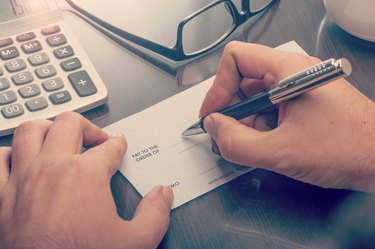
What Happens First?
While policies vary from location to location, when you cash a bad check at a check cashing place, you can expect to be notified by letter, email or phone call. You provide this contact information when you first cash a check there. It is in your best interest to respond to this notice as soon as possible so you can minimize non-sufficient fund (NSF) fees and the company's penalties. Although the check cashing place could go after the person who wrote the check, they can also go after you as well. Because you endorsed it, and received the money, you are more than likely the one who will be contacted first if it bounces.
Can I Be Held Criminally Liable?
The owner of the check cashing place has options for pursuing you for the money if you do not rectify the situation. Even though you may feel as if it is not your fault that the check bounced — you cashed it in good faith — it is still your responsibility to handle it with the check cashing location. You can try to recuperate your losses from the person who wrote the check to you later. However, in the meantime, you need to make sure things don't get worse with payer.
If you don't settle things with the company that cashed the check, you could be sued in civil court for the amount of the bounced check, plus possible damages. The burden of proof in a civil case lies on the defendant, or in this case, you, and it could be hard for you to prove that you are not liable for repaying the money. You could wind up with a judgment against you, levies placed on bank accounts, property seized or wages garnished.
Depending upon the amount of the check, it could become a criminal issue, especially if you were aware the check was bad when you cashed it. If the payer has reason to believe you are guilty of fraud or larceny, then he can file a complaint with police. If you know you're in the right, it's in your best interest to respond to any correspondence from the check cashing place, or go there in person to discuss the matter.
-
Consequences of Unpaid Bills: What to Expect & How to Manage
Paying bills shouldnt be neglected. Every month, most people take money out of their paychecks or other income sources and send it where it needs to go. Utilities, rent, car payments, mortgag
-
Cashing Checks: A Comprehensive Guide to Check Cashing Stores
Woman signing check Check cashing stores and services are common options for households the Federal Deposit Insurance Corporation refers to as unbanked and underbanked. The types of checks ac
budgeting
- Cashing a Check Under 18: Requirements & Options
- Understanding Cash Bonds: What Happens After Release?
- Handling Fraudulent Checks: What to Do & How to Prevent Them
- Stop Payment on a Check: How It Works & What to Know
- Understanding the Check Clearing Process: From Cash to Funds
- Understanding Home Refinancing: Benefits & Process
- Disclaiming Retirement Assets: Understanding Your Options & Implications
- Bounced Check: What to Do and What Happens Next?
- What Happens to My Debt After I Die? Understanding Estate & Debt Transfer
-
 Consequences of Depositing Counterfeit Money: Legal Risks & Penalties
At the time of the Civil War, as much as one-third of the currency in the U.S. was counterfeit, according to the Federal Reserve Bank of San Francisco. Counterfeiting is still a problem in 2011, and t...
-
Employer Issued a Bad Check? Here's What to Do
Though uncommon, it is possible for an employer to write a bad check. This unfortunate situation is more common for a small company that writes standard business checks to workers instead of official ...