
Stop Payment on a Check: How It Works & What to Know
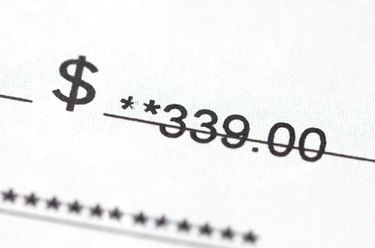
If you've ever written a check that seemed to get lost in the mail, then you've probably had to put a stop-payment order on the check. A stop-payment order allows you to cancel the check before it is cashed.
Placing a Stop-Payment Order
The best way to place a stop-payment order on a check is to go directly to your bank. Make sure you have all the information you'll need regarding the check, including the number, date, the amount of the check and to whom it was written. There are forms you'll have to fill out for your bank. You can also issue a stop-payment order by phone. However, you should follow up your verbal request with a written one within 14 days or the original stop-payment request will become invalid.
Be Mindful of Dates
Most banks will honor a check as long as it's presented within six months of the date it was written. Just to be safe, however, assume that your check is still viable even if it was written more than six months ago. Banks have been known to honor checks as much as 18 months later. You may renew the stop order after the first six months.
Fees and Charges
Although the process of placing a stop order on a check is simple, it can be expensive. Each bank has its own fees and they vary from region to region. As in the case of a bounced check, the bank is taking on a potential risk or liability for its customer in the event that the check is presented within the six-month time frame. The majority of banks charge $25 to $35, which falls in line with most bank overdraft penalties.
-

What Happens to Outstanding Debt After Death? Legal & Financial Implications
Will your debt continue to haunt you from beyond the grave? Find out what exactly happe
-

Debt After Death: What Happens to Your Debts?
Typically when someone dies, their personal debt does not get passed on to surviving family members. Typically when someone dies, their personal debt does not get passed on to surviving family
budgeting
- Handling Fraudulent Checks: What to Do & How to Prevent Them
- Certified Checks: Can You Stop Payment?
- Lost Check in the Mail? When to File a Stop Payment
- Cashing a Bad Check: Fees, Consequences & Your Rights
- Understanding the Check Clearing Process: From Cash to Funds
- Understanding Home Refinancing: Benefits & Process
- Stop Payment Orders: Definition, Process & How to Request
- Stop Orders: A Comprehensive Guide for Investors
- What Happens to My Debt After I Die? Understanding Estate & Debt Transfer
-
 Check Fraud Prevention & Recovery: Protect Yourself from Check Scams
You may not pay your bills by check — but you can still be the victim of check fraud. Even as fewer people are using paper checks, check fraud continues to thrive in the United Sta...
-
 Understanding Car Totals: What Happens Next & Your Insurance Options
Totaling a car can be a scary — and expensive — situation. A car accident can be someone’s fault or just plain bad luck, like if a tree falls on your vehicle. But no matter how it ...