
Chase Cash Advance: Options, Fees & How to Access
You can get a cash advance on a Chase Bank or other credit card by using the card at an ATM. You will likely be charged a fee as well as interest. Some banks may also give you special checks, commonly known as convenience checks, that you can use to take out an advance on a credit card account.
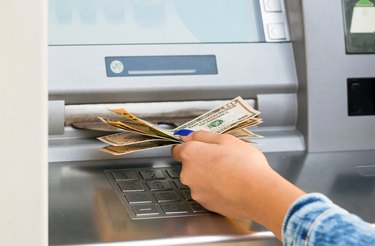
ATM Cash Advances
You can generally take out a cash advance on a credit card by using an ATM, similar to how you'd withdraw money from a checking account or a prepaid card at an ATM. A cash advance allows you to borrow money from the credit card company with interest charges that will begin racking up as soon as you receive the money. That means that even if you pay back the advance in full at the end of the billing cycle, you will still owe some interest charges for the time you had use of the borrowed funds. Your bank will usually charge a fee for the service, as well as the interest for the loan. You may also be charged a fee for using the ATM if it's not your bank's ATM. You generally need a PIN to get a cash advance on your credit card, just as you do to use your debit card to get cash. If you don't know your PIN or need to set a new one, contact your bank for help.
You will usually have a maximum cash advance limit on your credit card, which may be lower than your spending limit for ordinary purchases. Call your bank to find out if your account is eligible for cash advances, what the fees and interest rates are and what your cash advance limit is. You can also stop by a bank branch with any questions. The information might also be available on your monthly statement, on paperwork you received when you opened the account, or on your bank's website or mobile banking app.
It's worth estimating how much a credit card cash advance will cost before taking out the funds. Consider if there's a cheaper way to get the cash you need.
Convenience Checks
Sometimes credit cards issue what are called convenience checks that you fill out and use to borrow money from your credit card account. These also usually come with fees and interest charges, so it's worth estimating how much it will cost to use these checks before doing so. Read the information that came with the checks for information on fees and limits or contact your bank with any questions.
-

Unemployment Benefits: A Guide to Cashing Your Check or Debit Card
States issue unemployment payments via check, debit card or electronic deposit. Cash the unemployment checks at your personal bank or another location. Some states, like Indiana, have a bank associate
-
Cashing Checks from Out-of-Town Banks: A Comprehensive Guide
Cashing out of town checks can be difficult if the drawee bank does not have a branch in your local area. Customers with existing accounts in good standing are often able to cash out of town checks ag
budgeting
- Prepaid Credit Card Cash Advances: What You Need to Know
- Credit Card Cash Advances & Debit Transactions: Fees & Interest Explained
- Discover Card Cash Advance: Accessing Funds & Options
- American Express Cash Advance: A Comprehensive Guide
- Visa Cash Advance: Understanding Fees, Rates & How to Access Funds
- CareCredit Cash Advances: What You Need to Know
- Cashing a Bank Draft: A Step-by-Step Guide
- Chase Bank Account Number Lookup: Online & On Documents
- Create a PayPal Account Without a Credit Card: A Simple Guide
-
Cashing a Third-Party Cashier's Check: A Comprehensive Guide
Federal regulations define cashier's checks as next-day availability items, which means that these checks are cash equivalents and not subject to holds. A third-party cashier's check involves ...
-
California EBT Card: Application & Benefits Guide (2024)
The Electronic Benefit Transfer (EBT) system provides public assistance benefits to California residents. Benefits are deposited electronically onto a Golden State Advantage EBT card that allows you t...