
Credit Card Cash Advances: Hidden Costs & How They Work
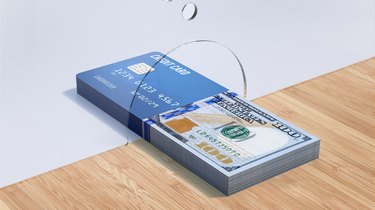
Taking a cash advance against your credit card may seem like a quick and convenient way to pay for a purchase, but you should think twice before doing it because the costs for this convenience are expensive.
Here's how cash advances work and the fees and interest costs you'll pay.
How to Get a Cash Advance
You can get cash against your credit card by withdrawing the money from an ATM, writing a convenience check that may have come with your credit card or by going to your bank and asking the teller to make an advance against your credit card.
Your credit card may have a cash advance limit that is less than the amount of credit on your card. You can find out if your credit card has a cash advance limit by referring to your billing statement.
Another possibility is that your credit card may treat some transactions as a cash advance even if you don't physically receive cash. For example, if you use your credit card as backup overdraft protection for a checking account, the amount advanced to cover your overdraft will be considered as a cash advance. In addition, money orders, wire transfers and purchases of cryptocurrencies with your credit card could also be treated as cash advances.
Consider also: How to Get a Credit Card With a $5,000 Credit Limit
What Are the Fees and Interest Rate for a Cash Advance?
Cash advances cost more than regular purchases through your credit card. There is a fee for a cash advance that may be a flat rate or a percentage of a cash advance, whichever is higher. In addition to paying a cash advance fee and interest, you'll also pay an ATM fee if you use one to get your cash advance.
Unlike normal credit card transactions, cash advances don't have a grace period. Interest begins to accrue immediately on the day the cash advance is taken. You'll pay interest on a cash advance even though you may pay your balance in full before the due on each billing cycle.
Consider also: Credit Cards: How Do They Work?
In addition, you'll be charged a higher interest rate than the rate you're charged for purchases. To reduce the interest you pay on a cash advance, you'll need to pay it off as soon as possible, even though that may be before you receive your billing statement. Otherwise, you'll be compounding the interest charges into the next billing cycle.
Because of the fees and high total interest costs, cash advances are expensive and should only be used in case of emergencies.
Interest begins to accrue immediately on the day the cash advance is taken.
For example, suppose you need access to a quick $500 in cash. If you go to an ATM, you could wind up paying $5 in ATM fees and a cash advance fee of 5 percent or $25, for a total of $30 in fees. In addition, you could be paying an annualized percentage rate (APR) of 25 percent in interest cost even though your credit card rate on purchases may be only 20 percent.
Consider also: Can the 15/3 Credit Card Hack Save You Money?
What are the Costs for Charging a Purchase on Your Credit Card?
Unlike the fees charged for cash advances, you are not charged a fee for using your credit card to make a purchase. Instead, the credit card companies have contracts with the sellers and charge them a fee for using their services.
In addition, you can avoid paying any interest at all on your purchases if you pay off the balance on your credit card before the next billing cycle due date. Credit card companies offer a grace period between the time you make a purchase and the payment due date.
If you do not pay off the credit card balance by the due date, you will be charged interest on the outstanding balance for the next billing cycle. However, the interest rate charged for purchases will be substantially less than the interest rate charged for cash advances.
-

Understanding Credit Reporting Agencies: Equifax, Experian & TransUnion
Equifax, Experian and TransUnion are the three major consumer credit reporting agencies that operate in the United States. All three companies are for-profit enterprises that function to earn revenue.
-
Savings Accounts: Benefits, Risks & How They Work
Some employers offer an automatic savings plan. Saving money allows you to prepare for large purchases, like buying a home or paying for college, but it can also come in handy in everyday cir
budgeting
- Benefits of Borrowing Money: Smart Debt for Long-Term Gains
- Cashing a Check from the Same Bank You Owe - What to Expect
- MoneyGram vs. Money Order: Key Differences & How They Work
- Cash Budget: Benefits & How to Limit Expenses - [Year]
- Banks vs. Credit Unions: Key Similarities Explained
- Benefits of a Bank Account: Security, Convenience & Financial Growth
- Cashing Checks at the Post Office: What You Need to Know
- Common Causes of Financial Problems: Understanding & Avoiding Them
- Is Your Bank Holding You Back? Discover Better Banking Options
-
 Credit Score Boost: The Importance of Paying Off Credit Cards in Full
Banks, credit unions and credit card companies look at your credit score before they consider giving you credit. Each institution wants to see a high credit score. Your use of revolving credit factors...
-
 Smart Finances: Why Financial Responsibility is the New Attraction
Image Credit: @micki/Twenty20 For more than half of Americans, Valentine's Day is a day to spend big — in 2018, an average of $143.56, according to estimates. It's an occasion for expensi...