
Amazon Selling Strategies: A Beginner's Guide to Launching Your Business
Too many people are scared to take on, or won’t even look at, selling on Amazon as a new way to do business. It is pretty intimidating if you consider its meteoric rise from bookstore to worldwide sales giant.
Before I go any further, let’s start here: Amazon is not going to steal your items.
Amazon buys certain items from me, and their employees pick those items up at the factory in China.
The items go from “mine” to “Amazon’s” as they cross the threshold of the dock doors and into the container.
If Amazon doesn’t pull the run around in that situation, they are not going to do it to you.
The two most common reasons I run into (sans paranoia) for not jumping on Amazon are:
- Lack of time.
- Channel conflict (i.e. creating a channel that leads to pricing problems across all other distribution channels).
Amazon is viewed as too overwhelming with the kicker that it could disrupt existing ecommerce or traditional sales channels.
This is ludicrous, of course.
As expansive as the Amazon ecosystem is, the decision to sell on Amazon doesn’t have to be an all or nothing choice.
This same logic would have prevented Columbus from setting sail because he wouldn’t have time to map the entire world.
True, Amazon can be a lot of work, but do it right and it’s clear sailing.
It’s also worth mentioning that if your brand is of any decent size, the reality is that someone will be selling it on Amazon anyway.
The question for most companies is not whether they will have an Amazon presence, but rather what sort of presence will they have to protect their brand.
So, let’s dive into your options.
Cost and Time Effective Strategies to Start Selling on Amazon
1. Dip just your toe in.
No one says you have to offer all your products on Amazon.
Familiarize yourself with Amazon by starting with just a few products.
Putting up a few products at the get-go allows you to learn some of the administrative processes so you can ultimately streamline or eliminate them.
It is likely you are coordinating Amazon with outside systems, training people for these new activities or going through an Amazon-specific process for the first time. Give yourself a chance to be successful by understanding what you are doing before you try to improve it.
For anyone still not sold on diversifying to Amazon, remember this: The reality is that your competitors are already selling on Amazon.
How do you make sure your brand is part of the Amazon customer consideration set? If you’re not selling on the Marketplace, your competitors are eating up Amazon customer demand – more than 200MM active customers and over $100B of sales annually.
It’s worth it to have even a few products on there as an additional sales channel.
2. The Folding Chairs and Tables example.
A great example of this “just dip your toe in” approach is the online store Folding Chairs and Tables.
They sell custom folding chairs and tables, and launched on Amazon with one product before the 2016 holiday — a bundled chair and table package that combined their website best sellers.
They sold out and ended up having to remove their Amazon listings for a period of time due to the high orders.
Over time, they were able to restock at appropriate levels factoring in the added volume from Amazon and are now having great success on both Amazon and their webstore across a variety of SKUs.
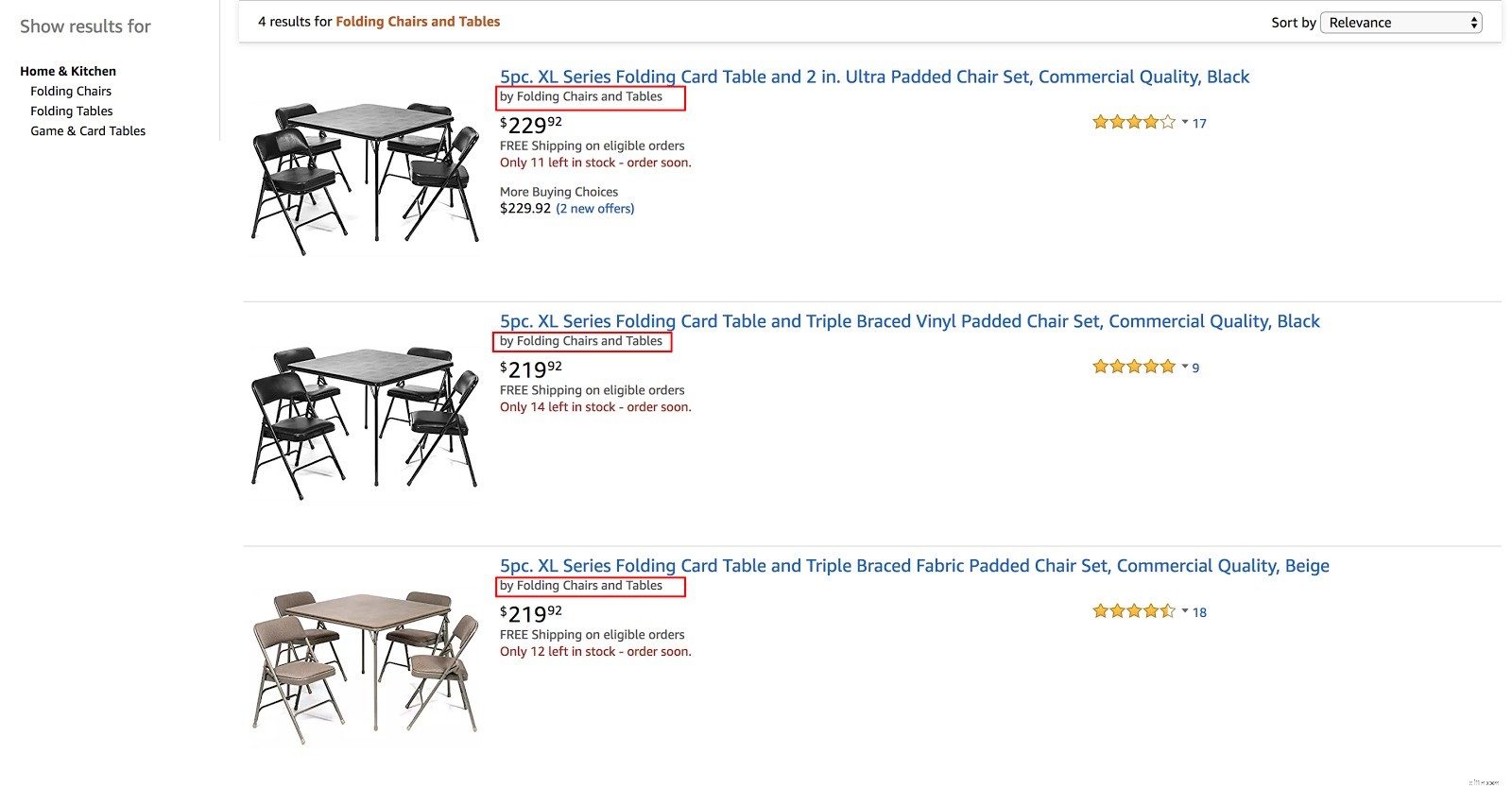
This is the benefit of going slow – you can pull a listing down, readjust back office and manufacturing needs and then get back up, running and making money FAST.
3. Reinvent your brand for Amazon.
If conflict and time are a concern, another strategy is to sell your products under a new brand name.
They can be the identical items sold on your site, product bundles or variations available only on Amazon.
This allows you to gain access to Amazon’s massive customer base and try different prices or packages without affecting your standard products and established brand.
Plus, you can put up these items without worrying about how it affects your entire catalog, which should speed up any internal approval process.
“Amazon Only” brands give you new freedoms to cater to specific markets, and are an excellent way to test for new products.
Let’s take a closer look at that Folding Chairs and Tables example – notice how all items they are selling on Amazon are sets, or bundled?
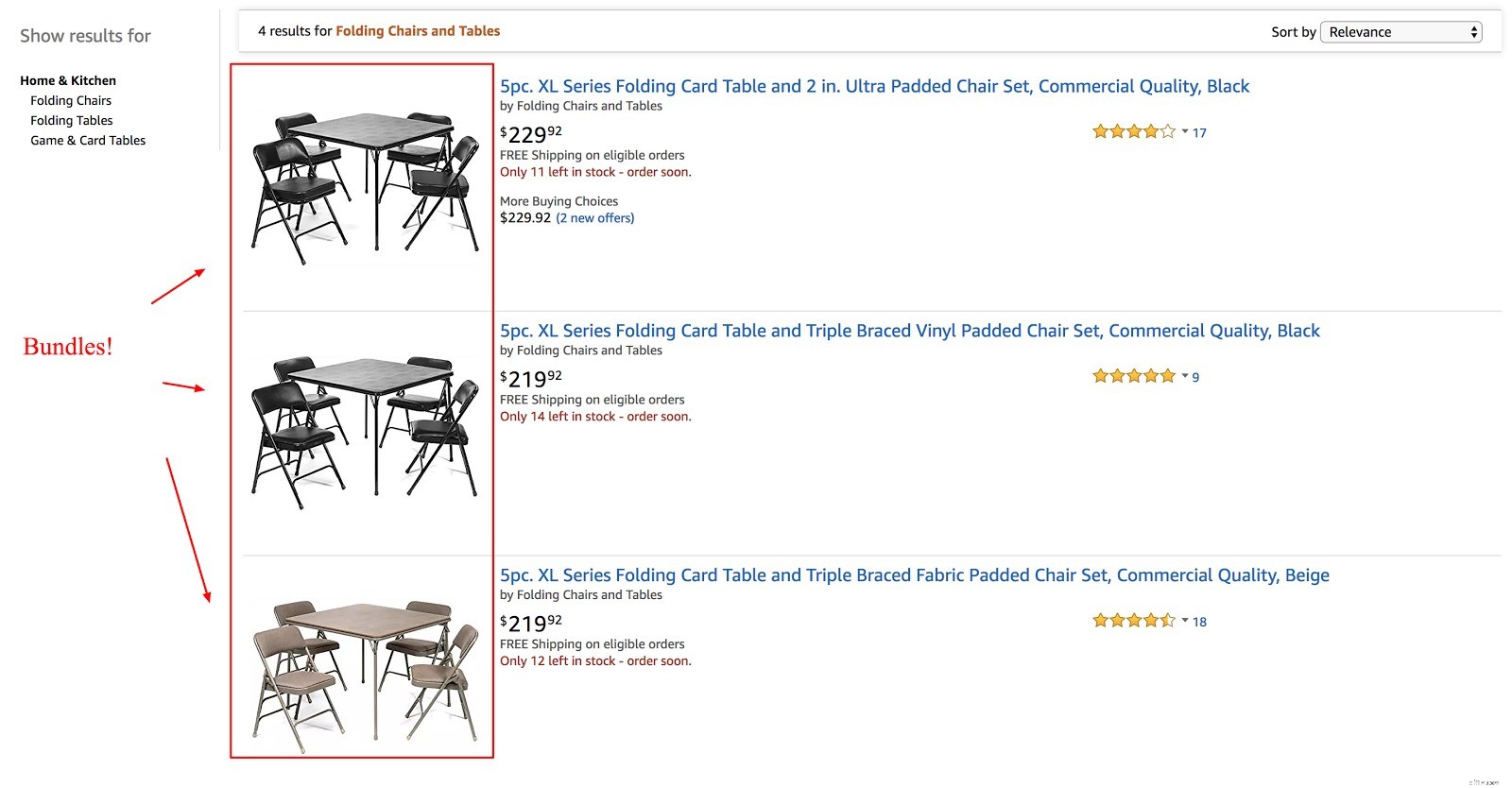
This is not how they sell on their main site.
Instead, on Amazon, they sell bundled chair and table sets – while on their web store, they sell individual items (often at bulk for B2B) with financing options.
Two strategies; two strong revenue channels.
4. Make others do the work.
Expedited shipping, feedback, ratings, optimization and sponsored search are often new frontiers for your business.
These are all legitimate and demand a new Amazon seller’s attention, but wonderfully there are many solutions to these problems.
Outsourcing the activities that are highly unlikely to be your strength is not only affordable but also quite effective.
Thousands of Amazon professionals are available for $3-$10 per hour.
In the same way, Amazon lets you outsource the promotion and customer acquisition of your products, and services like Freeeup, Upwork and Lancer let you outsource the activities that are unique to the Amazon marketplace.
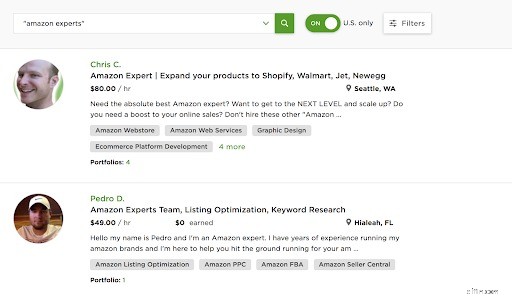
Example of freelance experts on Upwork
No one knows the business better than the business itself.
Joining Amazon can be intimidating, but by sculpting how one enters the Amazon marketplace in a way that fits your goals and company structure, it can be done with limited risk.
Once the business is up and running, many programs can be used to simplify the selling process.
-

COVID-19 Impacts: Temporary Closure of Chinese Restaurants
What's your go-to order at your favorite Chinese restaurant? (For your faithful scribe, it's chicken noodle soup with plenty of crispy noodles, then beef with broccoli for the main.) Being coo
-

IRA Investment Guidance: How Much Do You Need?
When it comes to choosing IRA investments, many people are unsure how much guidance they should get from a financial advisor. Here are a few things to consider about how much you should defer to
Business
- Beginner's Guide to Stock Market Investing: Essential Advice
- Navigating an Audit: A Comprehensive Guide for Businesses
- Emergency Cash: 25 Legitimate Ways to Get Money Fast
- Protect Your Peace: Strategies for Dealing with Hateful People
- Protect Your Brand: Combating Amazon Counterfeit & Fraud
- Maximize Amazon Profits: A Guide to Earning $5,000/Hour
- Unlock Amazon Sales: Why Your Products Need an Amazon Presence
- Amazon Advertising & PPC: A Comprehensive Guide for Beginners
- Nonprofit Accounting Guide: Essential Steps & Best Practices
-
 Unlock Savings: How Bill Negotiators Can Lower Your Monthly Expenses
When it comes to budgeting, you can say one thing for bills: At least they're basically consistent, even if they add up. Bills, however, have a little more wiggle room than you might expect — and ...
-
Amazon Sales Growth: 55 Essential Tips to Boost Your Business
Fifty-five percent of all online product searches begin on Amazon. Last year, the retail giant surpassed $107 billion in total sales. That is over $12,000,000 in sales every hour on average. A...