
Facebook Advertising Costs: A Realistic Budget Guide for Businesses
Everyone knows Facebook is a pay-to-play game, so then the question is:
The practical answer:
Sounds arbitrary, I know, especially since all businesses are different.
You could be selling digital products, gym memberships, or dog toys — but this will be a good starting point.
We have clients that spend $100,000 a day on Facebook ads — but they are probably not like you.
They have massive media budgets and teams of people that do things like Super Bowl ads.
They budget “top down,” meaning that their spend is based on what they spent last year and a share of this years’ projected company revenues.
They can afford million dollar mistakes. You can’t.
Whatever the case, the three parts of the funnel are audience, engagement, and conversion (we shorten it to AEC).
The goal is to generate:
- A first touch (which is awareness)
- That then leads to engagement (initial remarketing)
- Then to conversion (cross-channel remarketing from search, email, and social back into Facebook conversion ads).
We’ll work our way up from the bottom to the top of this funnel.
If you haven’t run Facebook ads before, or if you’ve not had success, start by boosting posts exactly in the way we’ll describe later in this post.
Conversion Remarketing Budget
Facebook is a remarketing engine.
Yes, like those product ads that follow you around, but smarter if you do it right.
You see, Facebook is an amplifier of what’s already working for your business.
That means if you’re already driving conversions via SEO, AdWords, email, or other digital channels, Facebook will increase your efficiency.
Whatever is already working, you’ll get more – more visibility, leads, phone calls, and sales.
Most people fail at Facebook ads because they started with an arbitrary monthly budget and just started boosting or running conversion ads to cold audiences.
That either gets you a bunch of useless likes (doesn’t translate to sales) or yields no conversions. The users you targeted never got a chance to learn about you, therefore are less likely to buy from you on the first impression.
You need to match your offer to where your audience is in their buyer’s journey and relationship with your business.
Your baseline for Facebook budgeting should be how big your remarketing audiences are;
meaning, for every 100 people that have come to your website you will retarget them on Facebook.
You do this by setting up custom audiences, a javascript pixel you place on your site or a one-click integration with your email provider.
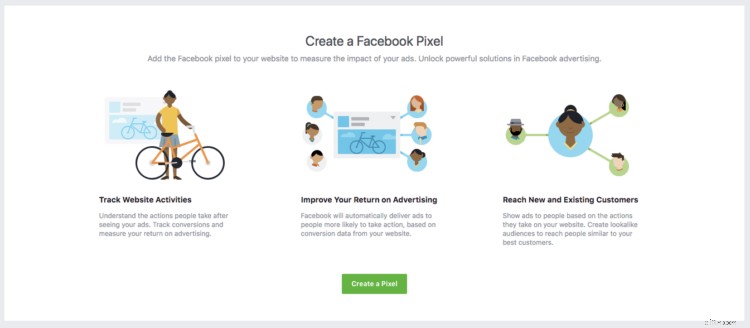
So if you have 5,000 clicks on your emails each month and 7,000 website visits, that’s 12,000 sessions.
And at $1 per 100 visitors, you’d start your budget at $120 per month for conversion remarketing.
Of course, if you sell many products to many segments in a more complex funnel, then you could adjust this up or down, largely by whether you have content for each of these audiences.
If you find that this initial budget is profitable for you, then you’d want to keep adding money until your marginal revenue equals your marginal cost.
Expect that in a healthy Facebook account, one-third of your budget should be conversion remarketing.
Recommended Posts

Create a custom audience of your biggest spenders by uploading a list of their emails to Facebook and then target ads to them. You can also use dynamic retargeting to drive sales of products that people visited in your online store, or added to their shopping cart, to drive additional sales.
Engagement Budget.
You’ll also want to have an engagement budget.
This is part of the consideration phase, as Facebook defines it, where your goal is to increase your audience reach and educate these audiences on who you are.
Your engagement budget should be triple your remarketing budget to start because you’ll be focusing on three key touch points.
The 3 Ways to Target Your Audiencens
- Lookalike Audiences: people who look like your current customers.
- Interest Targeting: people whose interest relate to your product.
- Behavioral Targeting: people whose behaviors relate to your product.
Lookalike Audiences.
One-third of your engagement budget should be for lookalike audiences.
Provided you have conversion tracking in place and have more than 30 conversions a month, Facebook will find people who look just like people who have bought from you before.
Even though these lookalikes are way bigger than your conversion sets, don’t fall into the trap of setting giant budgets here.
Increase your budgets only if the custom audiences you yield are profitable or if the lookalike audiences buy your product.
We don’t recommend running lookalikes in a conversion campaign at first until you’ve exhausted your remarketing audiences and made sure they’re profitable.
Interest and Behavioral Targeting.
One-third of your engagement budget should be for interest/behavioral targets.
This means you’re segmenting your audiences by other products they like, life stage events, competitors’ page they like, and other targeting criteria.
Your ad copy should reflect should reflect the audience’s interest and/or behavior you are targeting to make this method effective.
For example, if you are an active wear brand targeting women with an interest in Game of Thrones, then your ad could use fire and dragon imagery and copy that reads:
Remarketing for Further Engagement
Finally, the last one-third of your engagement budget should be remarketing to further engagement.
Earlier, we said to spend a dollar per 100 visitors to drive conversions via remarketing.
Here we’re saying that you spend a dollar per hundred visitors to further educate them, not to sell them.
Share customer stories, educate users on issues they care about, show how active you are in the community, and so forth.
In our example, we’re spending $120/month on conversion remarketing and $360/month on engagement. For a total budget of $480/month.
Remember, this is a starting point. You’d adjust budget up or down based on what’s profitable, your Relevance Scores, and whether you have content.
Recommended Posts

Put up an ad that generates a lot of comments or questions. We’ve noticed this to increase our “Ad Relevance” score, which in turn makes the ads display a higher number of impressions for a longer time period.
-
![Eating Out Budget: How Much Should You Spend? | [Your Brand/Website Name]](https://www.etffin.com/article/uploadfiles/202206/2022061110084360_S.png)
Eating Out Budget: How Much Should You Spend? | [Your Brand/Website Name]
Ah, the unwieldy eating out budget. Feel like it’s out of control? Well, you’re certainly not the only one. And you’ve come to the right place. The average American dines out 5.9 times per week and a
-

Wedding Budgeting: How Much to Spend & Planning Tips
If you're going to tie the knot, you'll need to have a budget.
Business
- Unlocking Your Free Time: New Data on Americans' Leisure Hours
- Food Waste Statistics: How Much Are You Really Throwing Away?
- Moving Out Costs: A Comprehensive Financial Guide
- Decoding Q3 Earnings: What Investors Need to Know
- The 50-30-20 Budget: A Simple Guide to Financial Planning
- Home Closing Costs: What to Expect & How to Budget
- Strategic Charitable Giving: How to Determine the Right Budget
- Retirement Savings Calculator: How Much Do You Really Need?
- Retirement Budgeting: A Step-by-Step Guide to Financial Security
-
 Average Wedding Cost in 2019: A Comprehensive Breakdown
Weddings are these magical things that can turn dreams into reality. We dream of having our “Best Day Ever.” However, this dream can have a hefty price tag. In 2019, the...
-
 Affordability Calculator: Determining Your Ideal Home Price
My wife and I recently moved to another state to be closer to her family. We decided to rent before buying, and we are currently assessing our wants and needs for the next house we buy. We have one ch...