
Bait and Switch: Understanding This Deceptive Sales Tactic
Bait and switch is a fraudulent activity whereby a company advertises goods at an incredibly low price with the aim of substituting for them with inferior or pricier alternatives at the time of purchaseSale and Purchase AgreementThe Sale and Purchase Agreement (SPA) represents the outcome of key commercial and pricing negotiations. In essence, it sets out the agreed elements of the deal, includes a number of important protections to all the parties involved and provides the legal framework to complete the sale of a property.. Just like the worm at the end of a fishing rod, companies use lower pricing to lure customers to their offers. However, instead of getting the item initially advertised – the item that “baited” them to come and shop, the company attempts to do a switch and sell the consumer an entirely different product.

In many instances, the item the retailer is trying to sell is either of inferior quality or more expensive than the advertised product. Either way, it is an act of fraud that is punishable in a court of law.
How a Bait and Switch Scam Works
It starts when a company advertises a product at a price that is well below its current market price. For instance, a new 10-inch Android tablet being advertised for $100 when its usual market price is $400. Even though most of the deals are usually too good to be true, a considerable number of consumersBuyer TypesBuyer types is a set of categories that describe spending habits of consumers. Consumer behavior reveals how to appeal to people with different habits fall for them. Unfortunately, once the customer visits the store, he is confronted with one of the options below:
- The tablet or other advertised product is out of stock, but the customer is informed that other, similar options are available – for a higher price. For instance, the vendor may try and sell the customer a much smaller tablet that is inferior in every aspect to the one advertised at $100. Having gone all the way to the store, a majority of consumers often end up buying the substituteSubstitute ProductsSubstitute products offer consumers choices when making purchase decisions by providing equally good alternatives, thus increasing utility. to avoid leaving the store disappointed and empty-handed.
- In an attempt to persuade the customer to purchase, the vendor will come up with excuses. The buyer will be told that the available product offers better features and works better than the initial product in the ad, or that the advertised product was only available to the first ten customers.
Offers that Don’t Fall Under the Bait and Switch Category
Buyers should be wary of sellers that employ bait-and-switch tactics. However, they should also be capable of identifying situations that are not bait and switch in nature.
A consumer who falsely accuses a vendor or company of using such a strategy can find himself facing significant legal consequences. Here are some situations that may be perceived as bait-and-switch, but that actually are not:
1. Pricing Error
Pricing errors are one of the most common complaints that customers falsely classify as bait and switch. A pricing error is a genuine mistake made by a vendor who lists the wrong product price. Fortunately, the situation is easy to figure out. Imagine a brand new 60-inch LCD TV that is incorrectly price-labeled at $50. Obviously, no retailer would ever sell such a television set for that price.
In such a situation, the customer may be able to purchase the product at the insane deal. However, once the seller discovers his mistake, he is likely to follow up on the matter by sending an email and canceling the order. He may also issue a refund if the customer has already paid for the item.
2. Few Units Available
Another instance where buyers cry “bait-and-switch” when the tactic doesn’t really apply is when there are indeed limited quantities of a particular product. A retail storeBusiness SegmentA business segment is a subsection of a company’s overall operations in which there is an established separate product line. A business segment can be owner could offer a product at a discount but also state that the offer would be available only to the first 10 customers (as he only has 10 of that particular product in stock). The event cannot be classified as a bait-and-switch strategy because the seller initially gave clear details regarding the offer.
Warning Signs of Bait and Switch
To correctly identify a bait-and-switch scam, watch out for the following red flags:
- A vendor who makes inquiries about the customer’s payment details too early. If an online retailer starts asking for payment details even before the customer can clarify specifications regarding the product, that can be a sign that the seller is not genuine.
- A company that advertises products or services at highly discounted prices without any strings attached. It’s important for a buyer to read the fine print before deciding to pay for such products.
- A seller who gives excuses for the advertised products running out of stock or being more expensive than as advertised.
- A seller who claims that the advertised product is merely an element of a much larger product or service and that one must purchase the complete package.
- Watch out for poor communication. If an individual is planning to buy a highly discounted product, he shouldn’t shy away from making inquiries regarding the product: Is it an older model that has since been replaced by a newer, better version? – Is it a refurbished product? The buyer should assess how truthfully the seller is responding to his inquiries. If the seller is reluctant to provide clear information or ignores the buyer’s concerns, then the buyer should give buying something a second thought.
Summary
Using a bait-and-switch strategy to lure buyers in is not only wrong but also unlawful. Consumers need to be wary of deals that seem too good to be true. If an individual falls prey to such tactics, then he has a right to report the offending party to the relevant authority (such as the Better Business Bureau).
Additional Resources
CFI offers the Financial Modeling & Valuation Analyst (FMVA)™Become a Certified Financial Modeling & Valuation Analyst (FMVA)®CFI's Financial Modeling and Valuation Analyst (FMVA)® certification will help you gain the confidence you need in your finance career. Enroll today! certification program for those looking to take their careers to the next level. To keep learning and advancing your career, the following CFI resources will be helpful:
- 5 P’s of Marketing5 P's of MarketingThe 5 P's of Marketing – Product, Price, Promotion, Place, and People – are key marketing elements used to position a business strategically. The 5 P's of
- Beachhead StrategyBeachhead StrategyThe beachhead strategy refers to focusing resources on a small market area to turn it into a stronghold before entering the broader market
- Caveat Emptor (Buyer Beware)Caveat Emptor (Buyer Beware)Caveat emptor is a Latin phrase that is translated as let the buyer beware. The phrase describes the concept in contract law that places the burden of due diligence
- Market PositioningMarket PositioningMarket Positioning refers to the ability to influence consumer perception regarding a brand or product relative to competitors. The objective of market
-

Understanding Standard & Poor's (S&P): Financial Ratings & Analysis
Standard & Poor’s is an American financial intelligence company that operates as a division of S&P Global. S&P is a market leader in the provision of financial market analysis, parti
-
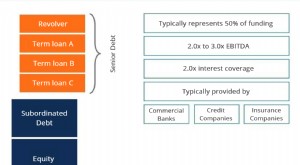
Senior vs. Subordinated Debt: Understanding the Difference
Senior and subordinated debt refers to their rank in a company’s capital stack. In the event of a liquidationLiquidation ValueLiquidation value is an estimation of the final value which wi
Business strategy
- Retail Assortment Strategies: A Comprehensive Guide
- Buy and Build Strategy: Growth Through Acquisition and Expansion
- Market Positioning: Definition, Strategy & Competitive Advantage
- What is Product Differentiation?
- What is Product Diversification?
- Understanding Profit Models: A Comprehensive Guide
- Pull Marketing Strategy: Definition, Benefits & Examples
- Push Marketing Strategy: Definition & Tactics | [Your Brand/Company]
- Value Deflation: Understanding Shrinking Product Sizes & Price Stability
-
 Insider Trading: Definition, Illegality, and Key Examples
What Is Insider Trading? An insider is a person who possesses either access to valuable non-public information about a corporation or ownership of stock equaling more than 10% of a fi...
-
 Understanding Corporate Culture: Definition, Impact & Change Strategies
By Adrian Furnham A functional corporate culture benefits both the company and its employees. In this article, the author provides an overview on the origin and concept of corporate culture and illu...