
DBA Explained: Registering a Fictitious Business Name
Doing Business As, or DBA, is simply operating a business using a name that is different from the name of the business owner. In some states, it is also referred to as “Fictitious Name Filing” because it uses a fictitious name that is not the same as the legal name of the company if it is a corporationCorporationA corporation is a legal entity created by individuals, stockholders, or shareholders, with the purpose of operating for profit. Corporations are allowed to enter into contracts, sue and be sued, own assets, remit federal and state taxes, and borrow money from financial institutions..
Who Needs to File
In most cases, companies using the DBA method are sole proprietorships. Some business owners don’t want to use their own name as their business name, so they adopt DBA.
A Doing Business As is to be filed because the ownership of the business must be made clear to both customers/clients and the state. Should there be any issues that arise concerning the business, the customers have the right to know who they are transacting with.
When to File for the Status
There are many instances wherein a business needs to file a DBA. In addition to when a business owner doesn’t want his or her name on the business name, there are other times when filing a DBA is necessary:
- In some cases, a DBA is required by the owner’s or the company’s bankRetail Bank TypesBroadly speaking, there are three main retail bank types. They are commercial banks, credit unions, and certain investment funds that offer retail banking services. All three work toward providing similar banking services. These include checking accounts, savings accounts, mortgages, debit cards, credit cards, and personal loans., especially when a sole business owner wants to open a business bank account.
- There are also instances when a client requires a contractor to file a DBA when bidding, in order to get a projectProject ManagementProject management is designed to produce an end product that will make an impact on an organization. It is where knowledge, skills, experience, and.
- In case a company is expanding its business to areas that are not covered by the current business name or operations, a DBA may be required. For example, if the current name it carries is “Jane’s Wedding Couture” and it wants to expand its reach to include many other types of party clothes, then it will need to file a DBA in such a way that customers will know that it isn’t just all about wedding gowns.
How to File a Doing Business As
It is important for business owners to understand that various states in the US follow different procedures regarding filing for a DBA. The process may be relatively simple or relatively complex, with some states simply requiring business owners to head to the nearest country clerk, register their fictitious name in the registry, and pay a license fee of $10 to $100.
1. Secure an Identification Number
An identification number is required when filing a DBA. It is used for filing business tax returns. Using one’s Social SecuritySocial SecuritySocial Security is a US federal government program that provides social insurance and benefits to people with inadequate or no income. The first Social Number is not advised because, for one thing, it exposes the owner to identity theft.
2. Register the fictitious name
Some states do not require registration of fictitious names, but that can pose a problem, especially if there is a duplication of names. Therefore, it is for the safety of everybody to get their fictitious name registered. With technology advancement, online registration is possible, wherein the form filed gets scanned for errors before being submitted to the proper agency.
Furthermore, some states require that the fictitious name be advertised in the local paper and that the owner submits an affidavit confirming the completion of all requirements for DBA status.
3. Get your trademark
When a fictitious name is registered or filed for DBA, the name needs to be registered with the U.S. Patent and Trademark Office, as well as with the Secretary of State. By doing so, the trademark rights of the name are given to the owner.
Advantages
There are many advantages to filing for DBA status, including the following:
- A great amount of privacy. Of course, when a business owner’s name is not used in its company’s name, then there is a lot of privacy to be enjoyed.
- Expand the business. With DBA, it is much easier for business owners to expand their business’ coverage or try to enter a new market.
- More value and attractiveness. If one names his ice cream business with his own name such as in “Peter Gallen’s Ice Cream House,” it would probably not sound as delicious and appealing as calling it “Cold and Creamy Ice Cream,” right?
Related Readings
CFI offers the Financial Modeling & Valuation Analyst (FMVA)™Become a Certified Financial Modeling & Valuation Analyst (FMVA)®CFI's Financial Modeling and Valuation Analyst (FMVA)® certification will help you gain the confidence you need in your finance career. Enroll today! certification program for those looking to take their careers to the next level. To keep learning and advancing your career, the following CFI resources will be helpful:
- Full Disclosure PrincipleFull Disclosure PrincipleThe Full Disclosure Principle states that all relevant and necessary information for the understanding of a company’s financial statements
- ProspectusProspectusA prospectus is a legal disclosure document that companies are required to file with the Securities and Exchange Commission (SEC). The document provides information about the company, its management team, recent financial performance, and other related information that investors would like to know.
- Types of SEC FilingsTypes of SEC FilingsThe US SEC makes it mandatory for publicly traded companies to submit different types of SEC filings, forms include 10-K, 10-Q, S-1, S-4, see examples. If you are a serious investor or finance professional, knowing and being able to interpret the various types of SEC filings will help you in making informed investment decisions.
- US – EDGARUS - EDGAREDGAR is a database where U.S. public companies file regulatory documents such as annual reports, quarterly reports, 10-K, 10-Q, prospectus
-

Business Process Outsourcing (BPO): Definition & Benefits
Business process outsourcing (BPO) is a type of outsourcing wherein a third-party service provider is employed to carry out one or more business functions in a company. The third party is responsible
-

Understanding Domestic Corporations: Definition & Key Aspects
A domestic corporation refers to a company that is incorporated in and conducts business affairs in its own country. Domestic corporations are often compared with and contrasted to foreign corporation
Business strategy
- Business Banking: Services, Accounts & Loans Explained
- Understanding Insolvency: Definition, Causes & Consequences
- Bootstrapping: How to Build a Business with Minimal Funding
- Business Plan: Definition, Importance & Funding Options
- Business Strategy vs. Business Model: Understanding the Difference
- Understanding Business Structures: A Comprehensive Guide
- Corporate Strategy: A Comprehensive Overview | [Your Company Name]
- Understanding Business Entities: Types & Legal Structures
- Executive Summary: A Concise Guide for Business & Non-Profits
-
 Business Operations: Definition, Activities & Optimization
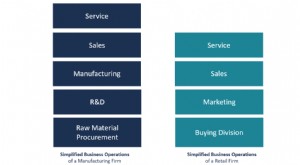
Business operations refer to activities that businesses engage in on a daily basis to increase the value of the enterprise and earn a profit. The activities can be optimized to generate sufficient rev...
-
 Crowdfunding: A Comprehensive Guide to Funding Your Ideas
Have you ever had a great business idea but no means to finance it? In those situations, people often think, “If I could get a million people to donate $1 each, I’d have a...