
Understanding Earnings Reports: A Comprehensive Guide for Investors
An earnings report is an official financial document issued by a public company that shows expenses, earnings, and overall profit of the company for a certain period. The earnings report can also be called the income statement or profit and loss (P&L) statementProfit and Loss Statement (P&L)A profit and loss statement (P&L), or income statement or statement of operations, is a financial report that provides a summary of a. Investors can analyze the earnings report of a company to access its financial health and make investment decisions.
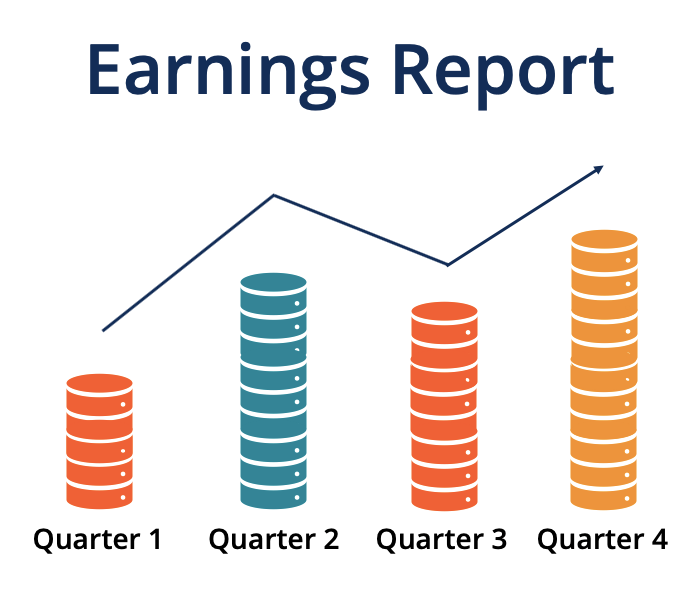
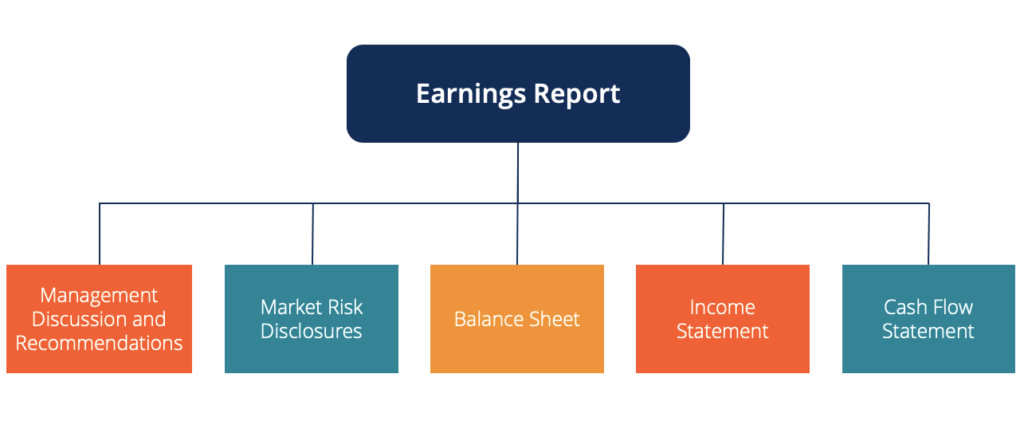
Earnings reports provide a periodic update of a company’s financial statements along with an income statement, cash flow statement, and balance sheet. Every earnings report provides a summary of sales, income, and expenses for the latest period. The reports may also include a comparison with previous periods.
Every quarter, public companies are mandated to file Form 10-K or 10-Q with the Securities and Exchange Commission (SEC)Securities and Exchange Commission (SEC)The US Securities and Exchange Commission, or SEC, is an independent agency of the US federal government that is responsible for implementing federal securities laws and proposing securities rules. It is also in charge of maintaining the securities industry and stock and options exchanges. The forms are the complete report of the company’s performance and usually support the earnings report published by the company.
Summary
- The earnings report is an official financial document released by a public company containing information on revenues, net income, and earnings for a period.
- Investors use a company’s earnings report to assess its financial position and determine whether to invest in the company’s stock or not.
- Earnings reports are usually supported by the Form 10-K or Form 10-Q that the companies are mandated to file with the SEC.
Constituents of an Earnings Report
It is a legal requirement for public companies to file quarterly and annual reports with the SEC – Form 10-K10-KForm 10-K is a detailed annual report that is required to be submitted to the U.S. Securities and Exchange Commission (SEC). The filing provides a comprehensive summary of a company’s performance for the year. It is more detailed than the annual report that is sent to shareholders is filed annually, whereas Form 10-Q is filed for the first three quarters. Both Forms 10-Q and 10-K provide a complete summary of the financial performance of a company. However, the latter is more detailed than the other reports.
Earnings reports generally contain the following:
- Information on the company, period, tax identification, and the location of the main business, followed by a summary of the earnings statement, cash flow statement, and balance sheet of the company. It provides only an overview of the company’s financial position – many details and disclosures are not included in this part.
- Synopsis of last year and the analysis of the company’s performance and operations by the management. The management also discusses its present and future expectations and the results of the business operations. The information provides the investors with an indication of the company’s direction. The past successes and future goals of a company help in determining whether to invest in the company’s stock.
- As mandated by the SEC, the company provides qualitative and quantitative disclosures about market risk. It helps investors to determine the situations that can make the market volatile. Using the policy disclosures, investors can get some insights on future risk.
- The company also includes the procedures and methods used to ensure that the financial information is accurate. The information provided does not assure that the company is strictly following the regulations, rather it provides a list of the efforts made by the company to comply.
- There is an overview of other important parts of the financial statement that investors should review, such as legal proceedings, potential risk factors, and exhibits.
Significance of Earnings Reports
Investors can use a company’s earnings report to gauge its performance and financial position. However, the earnings report usually presents an overly positive picture of the company’s financial situation. Hence, investors need to know how to decode an earnings report to examine the company’s real performance.
Companies usually highlight the contents of Form 10-QForm 10-QForm 10-Q is a report – required by the Securities and Exchange Commission (SEC) – that must be filed quarterly by all public companies. The form is similar to Form 10-K; however, it typically contains fewer details and the financial statements included are typically unaudited. Three quarterly Forms 10-Q must be filed each year through a press release that contains the executives’ statements, a summary of a few key fundamentals for investors, and other relevant information, including cash flow, net income, earnings per share, and dividends.
Public companies also prepare and issue for investors a presentation deck highlighting the company’s financials and accomplishments from the relevant period. However, as it is published for investors, the message in the presentation deck is generally very positive.
On the contrary, the filings submitted to the SEC contains a plethora of information and is of more importance to the investors. The companies are less likely to manipulate the numbers in the forms, as they cannot risk any violation leading to an SEC investigation.
Investors can use the financial information filed in either Form 10-K or 10-Q to find out the performance of the company in the latest quarter and compare it with the previous quarters.
Impact of on Stock Prices
The earnings report is one of the largest catalysts for variations in stock prices. It can even unsettle the market if bigger stocks are involved. On the day of the release of the earnings report, stock prices go through record lows and highs before settling down.
When a company’s earnings exceed the estimates of market analysts, its share price rises, whereas earnings lower than market expectations lead to a decrease in the share price. Thus, the movement in share prices is based on expectations of the market.
For example, if the market expectation is a 40% increase in income, a 20% increase may not be considered as positive, and the share price will decrease. Similarly, a 20% fall in the earnings may result in a rise in the share price if the expected decline is larger.
The earnings report can influence stock prices in the presence of market expectations. The negative reactions of the market to earnings reports are often short term, whereas the positive reactions can help investors identify stocks for long-term investment.
The market expectations significantly affect companies with a large market capitalization, as due to the investment sizes, investors can control the stock direction.
Additional Resources
CFI offers the Commercial Banking & Credit Analyst (CBCA)™Program Page - CBCAGet CFI's CBCA™ certification and become a Commercial Banking & Credit Analyst. Enroll and advance your career with our certification programs and courses. certification program for those looking to take their careers to the next level. To keep learning and advancing your career, the following resources will be helpful:
- Annual ReportAnnual ReportAn annual report is a comprehensive report detailing a company’s activities throughout the preceding year. Its purpose is to provide users, such as
- Earnings Per Share (EPS)Earnings Per Share (EPS)Earnings per share (EPS) is a key metric used to determine the common shareholder's portion of the company’s profit. EPS measures each common share's profit
- Projecting Income Statement Line ItemsProjecting Income Statement Line ItemsWe discuss the different methods of projecting income statement line items. Projecting income statement line items begins with sales revenue, then cost
- Types of SEC FilingsTypes of SEC FilingsThe US SEC makes it mandatory for publicly traded companies to submit different types of SEC filings, forms include 10-K, 10-Q, S-1, S-4, see examples. If you are a serious investor or finance professional, knowing and being able to interpret the various types of SEC filings will help you in making informed investment decisions.
-

EBITA Explained: Understanding Earnings Before Interest, Taxes, and Amortization
EBITA is an acronym that refers to the earnings of a company before interest, tax, and amortization expenses are deducted. Investors use EBITA as an indicator to measure the profitability and efficien
-
Understanding Expenditures: Definition and Types
An expenditure represents a payment with either cash or credit to purchase goods or services. An expenditure is recorded at a single point in time (the time of purchase), compared to an expenseAccrued
finance
- Acquirer Definition: Understanding Corporate Acquisitions
- Annual Reports: A Comprehensive Guide for Investors
- Understanding Earnings: A Guide to Financial Profitability
- Understanding Earnings Announcements: A Comprehensive Guide
- Understanding Earnings Calls: A Comprehensive Guide
- Understanding the Earnings Multiplier (P/E Ratio): A Comprehensive Guide
- Investment Explained: A Comprehensive Guide to Growing Your Wealth
- Understanding Normalized Earnings: A Guide for Investors
- Understanding Earnings Surprises: What Are They?
-
 Cash Earnings Per Share (Cash EPS): A Comprehensive Guide
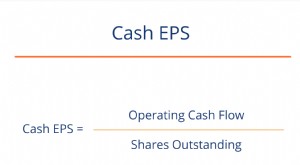
Cash earnings per share (cash EPS) is the operating cash flowCash Flow StatementA cash flow Statement contains information on how much cash a company generated and used during a given period. g...
-
 Understanding Net-Net: A Financial Health Indicator
Net-net is a term used for a company with a market capitalization that is less than the difference between the company’s current assets and total liabilities. The equation does not consider long...