
Understanding the US Dollar (USD): History, Use & Global Impact
The United States Dollar refers to the national currency of the U.S and is represented by the ISO code USD and is often abbreviated as US$. It is considered a standard currency and is the most widely used currency in international transactions. Additionally, USD is used as the main currency in many regions other than the U.S. However, many others use it along with their national currency as an alternate and unofficial currency.
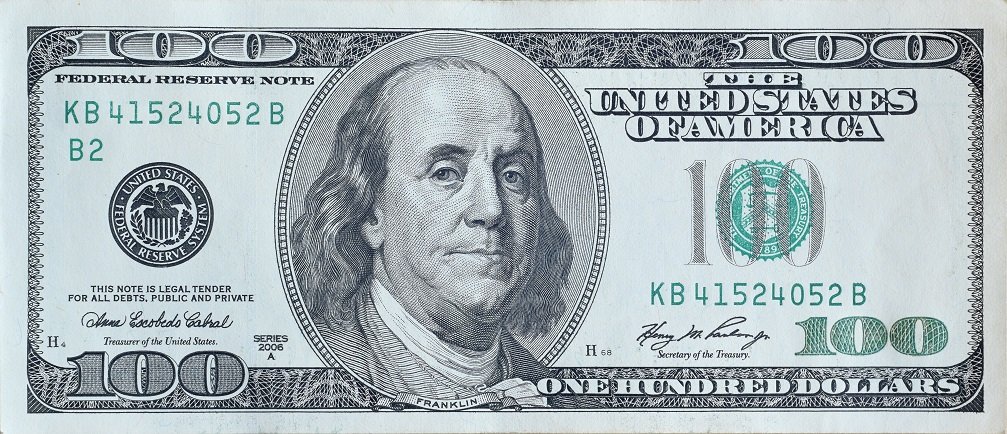
The U.S. Federal ReserveFederal Reserve (The Fed)The Federal Reserve is the central bank of the United States and is the financial authority behind the world’s largest free market economy. is responsible for ensuring that enough money is in circulation in the country. It is commissioned by the U.S. Treasury Department of Engraving and Printing for the printing of bills. It also authorizes its Mint Department to make coins available.
Summary
- The United States Dollar refers to the national currency of the U.S. and is represented by the ISO code USD.
- The U.S. Federal Reserve is accountable for ensuring that enough money is in circulation.
- The U.S. dollar was first established as a currency of the world in the Bretton Woods Agreement of 1944.
History of the United States Dollar
The United States dollar coin was originally based on the worth and appearance of the eight-dollar coin or the Spanish dollar, commonly used in Spanish America between the 16th and 19th centuries. The United States Mint, established in 1792, issued the first dollar coins. The coins were similar in scale and composition to the Spanish dollar minted in Peru and Mexico.
The Spanish coins, the Mexican pesos, and U.S. coins traded at the same time in the United States. After the Coinage Act of 1857, both the Spanish dollar and the Mexican peso were removed from circulation as legal currency in the U.S. The coinage of numerous British colonies was also circulated.
The first United States dollar notes were published as demand notes to fund the Civil War of 1861. The notes were known as greenbacks because of their green color. The legal tender, called the United States Notes, was first published in 1862, and a standardized system for printing the notes was first developed in 1869.
The U.S. dollar was first established as a currency of the world in the Bretton Woods Agreement of 1944Bretton Woods AgreementThe Bretton Woods Agreement was reached in a 1944 summit held in New Hampshire, USA on a site by the same name., becoming the most dominant currency in the world afterward. It was originally traded as a coin valued by its weight in gold or silver and later traded as a paper note, which was redeemable in gold. In the 1970s, the gold standard was removed, and the value of USD was permitted to float.
The U.S. Constitution accords the U.S. Congress the right to borrow money in the United States. Congress exerted its authority by allowing the Federal Reserve banks to circulate paper notes. The notes are U.S. commitments and can be exchanged in legal money on demand from the U.S. Treasury Department, in Washington City, Columbia District, or from other Federal Reserve banks.
Current United States Dollar Notes
The currencies currently printed are $1, $2, $5, $10, $20, $50, and $100. In 1946, the printing of notes higher than $100 was stopped, and their circulation was formally stopped in 1969. Then-President Richard Nixon introduced legislation to stop the printing of the large denominations, following their increasing usage by criminal organizations and the growing popularity of electronic banking.
While still primarily green, the post-2004 series integrates other colors to help differentiate various denominations. In 2008, the Bureau of Engraving and Printing planned to add the improved tactile feature in the subsequent redesigning of each dollar, with the exception of $1 and the new edition of the $100 bill. It also planned larger, higher-contrast numerals, more color variations, and the provision of currency readers to support visually disabled citizens.
The United States issues a variety of denominations, with the most common denominations are 1 cent, 5 cents, 10 cents, 25 cents, 50 cents, and $1. The U.S. Mint manufactures and distributes coins to pay for products and servicesProducts and ServicesA product is a tangible item that is put on the market for acquisition, attention, or consumption while a service is an intangible item, which arises from. It also issues collectible and remembrance coins for auction. The coins are used to honor an individual, event, or place.
The volume of money in circulation is enhanced (or lowered) by the activities of the Federal Reserve System. The 12-person Federal Open Market Committee (FOMC) meets eight times a year to evaluate U.S. monetary policy. The Federal Reserve System invests in open-market activities each business day to execute the monetary policy.
If the Federal Reserve needs to boost its money supply, it will acquire securities, unidentified, from banks in return for dollars. Contrarily, for getting dollars out of circulation, it would sell securities to the banks.
Additional Resources
CFI is the official provider of the global Capital Markets & Securities Analyst (CMSA)™Program Page - CMSAEnroll in CFI's CMSA® program and become a certified Capital Markets &Securities Analyst. Advance your career with our certification programs and courses. certification program, designed to help anyone become a world-class financial analyst. To keep advancing your career, the additional resources below will be useful:
- Australian Dollar (AUD)Australian Dollar (AUD)The Australian dollar refers to Australia’s official currency and is abbreviated as AUD. It is also the official currency of several regions,
- Gold StandardGold StandardIn the simplest terms, the gold standard is a monetary system that ties a currency’s value directly with gold. Therefore, the currency can be
- Monetary PolicyMonetary PolicyMonetary policy is an economic policy that manages the size and growth rate of the money supply in an economy. It is a powerful tool to
- Swiss Franc (CHF)Swiss Franc (CHF)The Swiss franc refers to Switzerland’s national currency and is represented by ISO code CHF. It was formally recognized as Switzerland's
-

Understanding Forward Rates: A Comprehensive Guide
The forward rate, in simple terms, is the calculated expectation of the yield on a bondBondsBonds are fixed-income securities that are issued by corporations and governments to raise capital. The bond
-

Hope Credit: Understanding Your Post-Secondary Education Tax Credit
The Hope Credit is one of the lifetime education tax credits in the U.S. that provides financial assistance to taxpayers or their children who are pursuing post-secondary education. The creation of th
finance
- CAD/USD Exchange Rate: Understanding the Value of the Canadian Dollar
- Australian Dollar (AUD): Currency Overview & Key Facts
- Canadian Dollar (CAD): Your Complete Guide to the Canadian Currency
- Cayman Islands Dollar (KYD): Understanding the Currency of the Cayman Islands
- Hong Kong Dollar (HKD): Currency Overview & Key Facts
- Jamaican Dollar (JMD): Currency Overview & Information
- New Zealand Dollar (NZD): A Comprehensive Overview
- Singapore Dollar (SGD): A Comprehensive Guide to the Currency
- EUR/USD Exchange Rate: A Comprehensive Guide
-
 Current Ratio: Definition, Calculation & Financial Health
The current ratio, also known as the working capitalNet Working CapitalNet Working Capital (NWC) is the difference between a companys current assets (net of cash) and current liabilities (net of debt)...
-
 U.S. Ecommerce Market: Opportunities & Strategies for Global Businesses
America is the land of opportunity and a superpower in the world of online sales. It has the world’s largest economy and it’s a global leader when it comes to cross-border ecommerce exports and ...