
Singapore Dollar (SGD): A Comprehensive Guide to the Currency
The Singapore dollar (SGD) is the official legal currency issued by the Southeast Asian sovereign island nation, the Republic of Singapore. Its dollar denominations are commonly designated with the symbol S$ to distinguish it from other dollar currencies such as the US dollar and Canadian dollar.
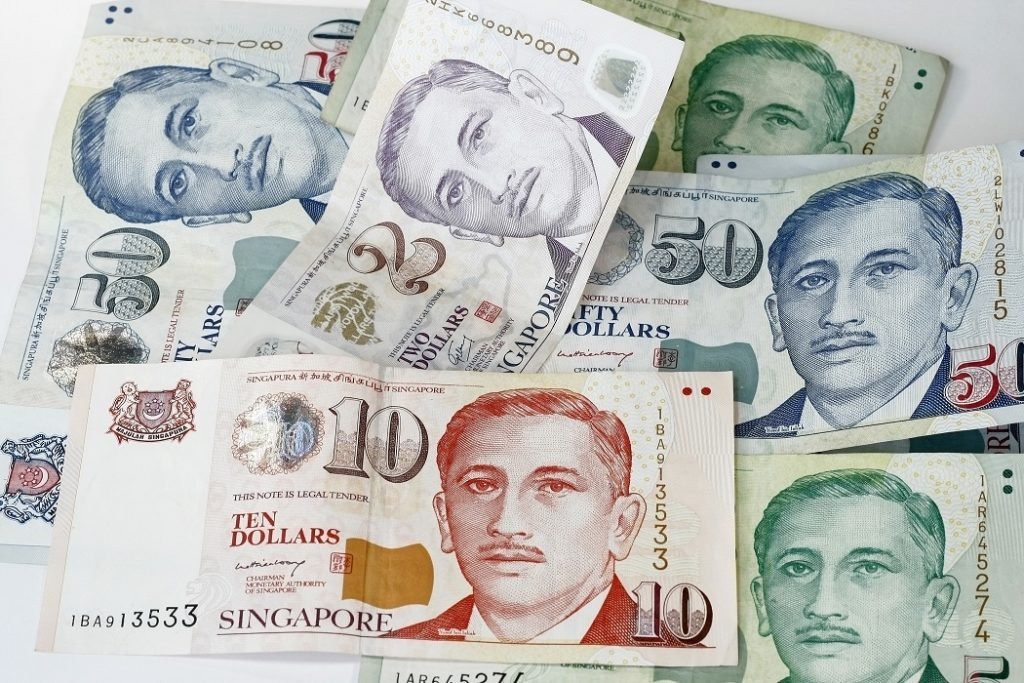
Singapore dollar coins and banknotes are issued by the Monetary Authority of Singapore, which serves as both the country’s central bank and overall financial regulatory entity. All of Singapore’s issued currency – estimated at just over S$30 billion – is fully backed by gold, silver, or other assets held by the Monetary Authority.
As of 2020, the Monetary Authority owns over US$270 billion in assets. The Singapore dollar is considered one of the strongest and most stable currencies in the world.
In the foreign exchange (forex) trading market, the symbol for the Singapore dollar is SGD. For example, the exchange rateExchange RateAn exchange rate is the rate at which one currency can be exchanged for another between nations or economic zones. It is used to determine the between the US dollar and the Singapore dollar is expressed as USD/SGD.
Summary
- The Singapore dollar is the official legal currency issued by the Republic of Singapore. The country’s economy has become one of the strongest in the world, making the Singapore dollar one of the most widely traded currencies.
- The country’s central bank, the Monetary Authority of Singapore, closely monitors the foreign exchange rates for the Singapore dollar.
A Brief History of Singapore and its Economy
In the early 1800s, the Republic of Singapore was first established as a trading post, and soon thereafter, a colony of the British Empire. Singapore was taken over and occupied by the Japanese Army during World War II but regained its place as a British crown colony in 1945.
It became an independent nation in 1963. Following a brief two-year period as a part of the federation of Malaysia, Singapore existed as an independent country since 1965, gradually building one of the strongest economies in the Asia-Pacific region.
The government of Singapore is guided by the country’s Constitution and consists of an executive branch that includes a President and a Prime Minister, a single legislative body – the Parliament, and an independent judiciary that is composed of the Singapore Supreme Court and state courts.
According to the World Economic Forum, Singapore’s economy is the most competitive economy in the world as of 2020. It attracts substantial foreign investmentForeign InvestmentForeign investment is when a domestic investor decides to purchase ownership of an asset in a foreign country. It involves cash flows moving, thanks to its favorable tax rates, skilled labor talent, and an overall business-friendly environment. It is widely recognized as a major financial services center, a center for oil refining, and as a major shipping port.
Singapore’s GDP per capita rate is the second-highest in the world. Its strong international economic standing is indicated by the fact that it is regularly invited to the summit meetings of the G20 central bank governors, though it is not a member of the group.
The Singapore Dollar Currency
Singapore first began issuing its own currency in various coin and banknote denominations in 1967. The Singapore dollar was initially pegged to the British pound, then briefly to the US dollar, before becoming pegged to a trade-weighted basket of currencies in the mid-1970s.
Starting in 1985, the Singapore dollar’s been allowed to float within a range of foreign exchange rates closely monitored by the Monetary Authority of Singapore to control inflation and support the value of Singapore exports. The country’s currency is somewhat correlated with the value of China’s yuan, but not nearly as tightly regulated as the yuan.
The country’s central bank mints coins in denominations of 1 cent, 5 cents, 10 cents, 20 cents, 50 cents, and one dollar. Banknotes are currently issued in denominations of S$2, S$5, S$10, S$50, S$100, S$500 and S$1,000.
Following the money launderingMoney LaunderingMoney laundering is a process that criminals use in an attempt to hide the illegal source of their income. By passing money through complex transfers and concerns and financial practices of many other countries, Singapore’s central bank began withdrawing its higher denomination S$10,000 banknotes from circulation in 2014 and plans to stop the printing of the S$1000 banknotes in 2021. Paper banknotes issued are gradually being replaced by polymer banknotes.
In addition to the standard currency, the Monetary Authority of Singapore issues several limited-edition commemorative banknotes in denominations ranging from S$2 to S$50. The latest is a 2019 S$20 banknote that commemorates the bicentennial of the country’s establishment as an official trading post of the British Empire.
Learn More
CFI offers the Commercial Banking & Credit Analyst (CBCA)™Program Page - CBCAGet CFI's CBCA™ certification and become a Commercial Banking & Credit Analyst. Enroll and advance your career with our certification programs and courses. certification program for those looking to take their careers to the next level. To keep learning and advancing your career, the following resources will be helpful:
- Four Asian TigersFour Asian TigersFour Asian Tigers is a term given to the economies of four countries – Hong Kong, Taiwan, Singapore, and South Korea. Driven by exports and
- Top Banks in SingaporeTop Banks in SingaporeMore than 200 banks operate in Singapore. Learn about the top banks in Singapore, and plan your career path in banking.
- United States Dollar (USD)United States Dollar (USD)The United States Dollar refers to the national currency of the U.S and is represented by the ISO code USD and is often abbreviated as US$.
- Foreign ExchangeForeign ExchangeForeign exchange (Forex or FX) is the conversion of one currency into another at a specific rate known as the foreign exchange rate. The conversion rates for almost all currencies are constantly floating as they are driven by the market forces of supply and demand.
-

Prime Rate Explained: Understanding Interest Rates for Businesses & Consumers
The term “prime rate” (also known as the prime lending rate or prime interest rate) refers to the interest rate that large commercial banks charge on loans and products held by their custo
-

Quick Ratio: Understanding Your Business's Short-Term Liquidity
The Quick Ratio, also known as the Acid-test or Liquidity ratio, measures the ability of a business to pay its short-term liabilities by having assets that are readily convertible into cashCash Equiva
finance
- CAD/USD Exchange Rate: Understanding the Value of the Canadian Dollar
- Dollar Pegged Currencies: A Comprehensive List & Explanation
- Australian Dollar (AUD): Currency Overview & Key Facts
- Canadian Dollar (CAD): Your Complete Guide to the Canadian Currency
- Cayman Islands Dollar (KYD): Understanding the Currency of the Cayman Islands
- Hong Kong Dollar (HKD): Currency Overview & Key Facts
- Jamaican Dollar (JMD): Currency Overview & Information
- New Zealand Dollar (NZD): A Comprehensive Overview
- Understanding the US Dollar (USD): History, Use & Global Impact
-
 Operating Ratio: Definition, Calculation & Importance
The operating ratio is a measure of efficiency that is used by management to determine day-to-day operational performance. This metric compares operating expenses, also known as OPEX, to net sales. Th...
-
 Understanding the Overnight Interest Rate: A Comprehensive Guide
The overnight rate refers to the interest rate that depository institutions (e.g., banks or credit unionsCredit UnionA credit union is a type of financial organization that is owned and governed by it...