
Understanding Wall Street: Geography & Financial Powerhouse
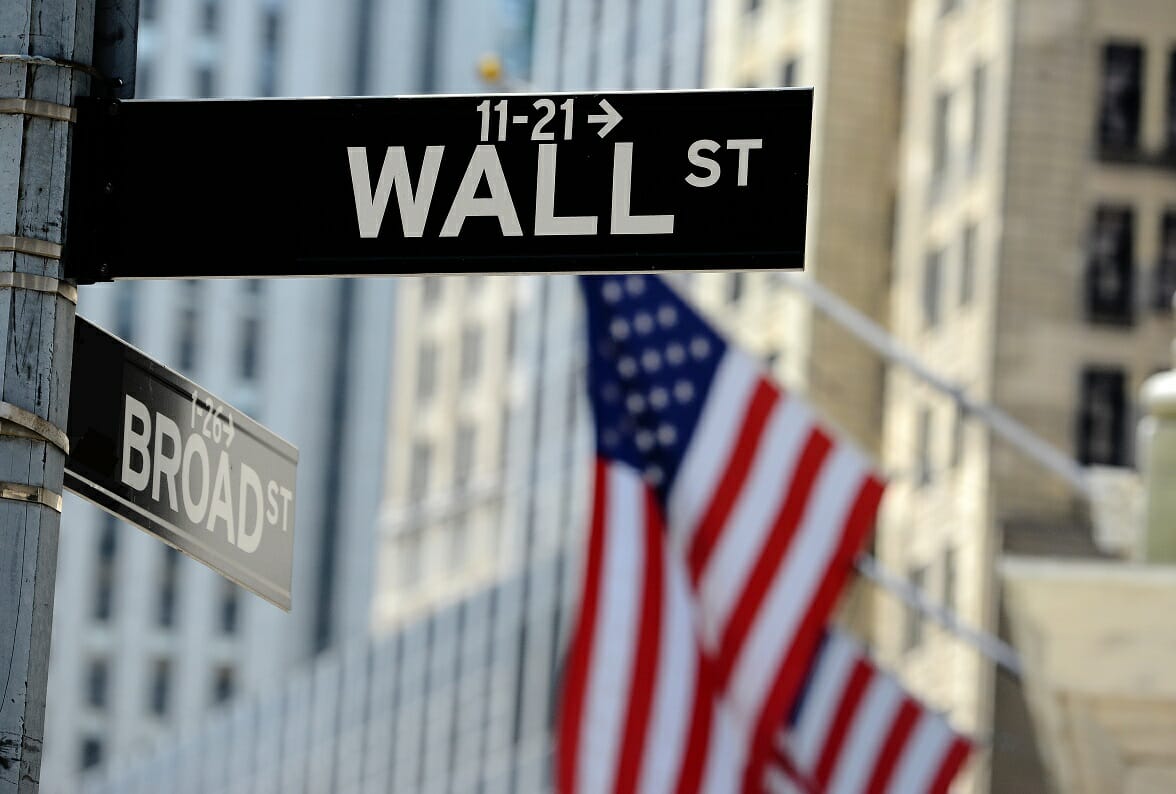
There are two ways to look at what Wall Street is. It is both a geographical location and the financial mecca of the U.S. (and, arguably, of the world). In terms of geography, Wall Street takes up eight blocks in Manhattan, New York. It runs east to west from Broadway to South Street, in the heart of the financial district. Representing the heart of capitalismCapitalismCapitalism is an economic system that allows for and encourages the private ownership of businesses that operate to generate profit. Also, Wall Street is home to the New York Stock Exchange (NYSE)Stock MarketThe stock market refers to public markets that exist for issuing, buying and selling stocks that trade on a stock exchange or over-the-counter. Stocks, also known as equities, represent fractional ownership in a company, numerous banks, other financial institutions, and corporations.
The phrase, “Wall Street,” is sometimes taken as generally representative of investment banksList of Top Investment BanksList of the top 100 investment banks in the world sorted alphabetically. Top investment banks on the list are Goldman Sachs, Morgan Stanley, BAML, JP Morgan, Blackstone, Rothschild, Scotiabank, RBC, UBS, Wells Fargo, Deutsche Bank, Citi, Macquarie, HSBC, ICBC, Credit Suisse, Bank of America Merril Lynch, securities traders, hedge funds, and portfolio managersPortfolio ManagerPortfolio managers manage investment portfolios using a six-step portfolio management process. Learn exactly what does a portfolio manager do in this guide. Portfolio managers are professionals who manage investment portfolios, with the goal of achieving their clients’ investment objectives.. It refers to both the people and places that govern the world of finance.
Early History of Wall Street
Wall Street got its name from a literal, physical wall built in New York when the town was still a Dutch colony. Governor Peter Stuyvesant called for a 10-foot wall to be built, protecting the lower part of the peninsula from Native Americans.
Later on, the street became known for being a marketplace where traders and buyers met to conduct business. In 1792, the traders and buyers formalized rules to authorize and legitimize their business, leading to the eventual formation of the NYSE.
Crashes on Wall Street
Though not the first economic depression or market crash in the U.S., the Crash of 1929 triggered what quickly became known as the Great DepressionThe Great DepressionThe Great Depression was a worldwide economic depression that took place from the late 1920s through the 1930s. For decades, debates went on about what caused the economic catastrophe, and economists remain split over a number of different schools of thought.. There’s not one specific explanation of what precisely triggered the massive stock sell-off in the fall of 1929. The sharpest stock traders – men such as Jesse Livermore – realized that the stock market had been hugely overbought for quite some time.
Eventually, a small sell-off rolled into a major panic and investors began selling indiscriminately, dropping stock prices and triggering the market as a whole to crash. The Dow Jones lost all of its previous gains for the year – and nearly 25% of its total gains for the decade – in a matter of hours at the end of October.
The event is important historically when looking at Wall Street for a number of reasons. Many individuals lost faith in the country’s entire economic system. This led to many pulling all their money from banks, subsequently causing the collapse of many financial institutions. The stock market crash and the following depression led to the first major regulation of stock market trading. Close government oversight was instituted by the newly-created Securities and Exchange CommissionThe 1933 Securities ActThe 1933 Securities Act was the first major federal securities law passed following the stock market crash of 1929. The law is also referred to as the Truth in Securities Act, the Federal Securities Act, or the 1933 Act. It was enacted on May 27, 1933 during the Great Depression. ...the law was aimed at correcting some of the wrongdoings. Though many credit Roosevelt’s “New Deal” government spending for ending the depression, it wasn’t until the outbreak of World War II made the country’s unemployment problem vanish overnight that the U.S. economy really began to recover.
Housing Market Crash
The second most significant – and most recent – market crash came in 2008. The housing market crash was the result of the collapse of hundreds of billions of dollars of mortgage-backed securities,Mortgage-Backed Security (MBS)A Mortgage-backed Security (MBS) is a debt security that is collateralized by a mortgage or a collection of mortgages. An MBS is an asset-backed security that is traded on the secondary market, and that enables investors to profit from the mortgage business many traded as credit default swaps. When the underlying mortgages went into default, the defaults piled up to the point that major lenders ran out of financing and started to go under.
The response was quick and devastating: Wall Street traders, lenders, and brokers panicked. Markets around the world started to plummet and banks stopped lending to one another to pick up the slack. Eventually, many banks filed for bankruptcy. It is, historically, the greatest economic depression since 1929. It wasn’t until the implementation of the Troubled Asset Relief Program (TARP) and the Economic Stimulus Package in 2009 that the financial mecca bounced back. Hefty federal loans bailed out many of the leading financial institutions on Wall Street.
Despite its humble beginnings and numerous ups and downs throughout history, Wall Street remains regarded as the world center for money, capitalism, and finance.
Related Readings
We hope you enjoyed reading CFI’s explanation of Wall Street. CFI is the official provider of the global Financial Modeling & Valuation AnalystBecome a Certified Financial Modeling & Valuation Analyst (FMVA)®CFI's Financial Modeling and Valuation Analyst (FMVA)® certification will help you gain the confidence you need in your finance career. Enroll today! certification program, designed to help anyone become a world-class financial analyst. The following CFI resources will be helpful in furthering your financial education:
- Financial IntermediaryFinancial IntermediaryA financial intermediary refers to an institution that acts as a middleman between two parties in order to facilitate a financial transaction. The institutions that are commonly referred to as financial intermediaries include commercial banks, investment banks, mutual funds, and pension funds.
- Key Players in the Capital MarketsKey Players in the Capital MarketsIn this article, we provide a general overview of the key players and their respective roles in the capital markets. The capital markets consist of two types of markets: primary and secondary. This guide will provide an overview of all the major companies and careers across the capital markets.
- Retail Bank TypesRetail Bank TypesBroadly speaking, there are three main retail bank types. They are commercial banks, credit unions, and certain investment funds that offer retail banking services. All three work toward providing similar banking services. These include checking accounts, savings accounts, mortgages, debit cards, credit cards, and personal loans.
- List of Top Investment BanksList of Top Investment BanksList of the top 100 investment banks in the world sorted alphabetically. Top investment banks on the list are Goldman Sachs, Morgan Stanley, BAML, JP Morgan, Blackstone, Rothschild, Scotiabank, RBC, UBS, Wells Fargo, Deutsche Bank, Citi, Macquarie, HSBC, ICBC, Credit Suisse, Bank of America Merril Lynch
-

Stock Replenishment: A Comprehensive Guide for Inventory Management
Stock replenishment is one of the most important considerations when it comes to inventory management, as it helps ensure the right stock is on the shelves at the right time, while keeping inventory h
-
TaaS Stocks: Understanding the Transportation as a Service Market & Investment Potential
Once people start making ludicrous amounts of money on something, it’s probably too late to start investing. So your profit-making potential depends on your ability to rec
finance
- Understanding Stock Performance: A Guide for Investors
- Understanding Wall Street: History, Finance & the NYSE
- Founders Stock: Definition, Vesting, and Key Differences
- What is Main Street vs Wall Street?
- Restricted Stock: Definition, Types & How It Works
- Understanding Stocks: A Beginner's Guide to Share Ownership
- Stock Dividends: Definition, Types & How They Work
- What is a Stock Option?
- Understanding Wall Street Fraud: History, Types & Prevention
-
What is a Stock Loan?
A stock loan is a type of transaction that commonly occurs between two different stock brokers. This type of transaction is also known as a securities loan. Here are the basics of a stock loan a...
-
Phantom Stock: Definition, Benefits & How It Works
Many companies today are looking for creative ways to reward their senior managers and key executives for outstanding performance. One strategy is to provide these employees with what’s commonly refer...