
Understanding Stocks: A Beginner's Guide to Share Ownership
When a person owns stock in a company, the individual is called a shareholder and is eligible to claim part of the company’s residual assets and earnings (should the company ever have to dissolve). A shareholder may also be referred to as a stockholder. The terms “stock”, “shares”, and “equity” are used interchangeably in modern financial language. The stock marketStock MarketThe stock market refers to public markets that exist for issuing, buying and selling stocks that trade on a stock exchange or over-the-counter. Stocks, also known as equities, represent fractional ownership in a company consists of exchanges where investors can buy and sell individual shares of a company.
Most finance career paths will be directly involved with stocks in one way or another, either as an advisorBanking (Sell-Side) CareersThe banks, also known as Dealers or collectively as the Sell-Side, offer a wide range of roles like investment banking, equity research, sales & trading, an issuer,Corporate InformationLegal corporate information about Corporate Finance Institute (CFI). This page contains important legal information about CFI including registered address, tax number, business number, certificate of incorporation, company name, trademarks, legal counsel and accountant. or a buyerBuy-SideInstitutional asset managers, known as the Buy Side offer a wide range of jobs including private equity, portfolio management, research. Learn about the job.

Benefits of Owning Stocks
There are many potential benefits to owning stocks or shares in a company, including the following:
#1 Claim on assets
A shareholder has a claim on assets of a company it has stock in. However, the claims on assets are relevant only when the company faces liquidation. In that event, all of the company’s assets and liabilities are counted, and after all creditors are paid, the shareholders can claim what is left. This is the reason that equity (stocks) investments are considered higher risk than debt (credit, loans, and bonds) because creditors are paid before equity holders, and if there are no assets left after the debt is paid, the equity holders may receive nothing.
#2 Dividends and Capital Gains
A stockholder may also receive earnings, which are paid in the form of dividends. The company can decide the amount of dividends to be paid in one period (such as one quarter or one year), or it can decide to retain all of the earnings to expand the business further. Aside from dividends, the stockholder can also enjoy capital gains from stock price appreciation.
#3 Power to vote
Another powerful feature of stock ownership is that shareholders are entitled to vote for management changes if the company is mismanaged. The executive board of a company will hold annual meetings to report overall company performance. They disclose plans for future period operations and management decisions. Should investors and stockholders disagree with the company’s current operation or future plans, they have the power to negotiate changes in management or business strategy.
#4 Limited Liability
Lastly, when a person owns shares of a company, the nature of ownership is limited. Should the company go bankrupt, shareholders are not personally liable for any loss.
Risks of Owning Stock
Along with the benefits of stock ownership, there are also risks that investors have to consider, including:
#1 Loss of capital
There is no guarantee that a stock’s price will move up. An investor may buy shares at $50 during an IPO, but find that the shares move down to $20 as the company begins to perform badly, for example.
#2 No liquidation preference
When a company liquidates, creditors are paid before equity holders. In most cases, a company will only liquidate when it has very little assets left to operate. In most cases, that means that there will be no assets left for equity holders once creditors are paid off.
#3 Irrelevant power to vote
While retail investors technically have voting rights in executive board meetings, in practice they usually have very limited influence or power. The majority shareholder typically determines the outcome of all votes at shareholder meetings.
Modern Stock Trading
In the past, shares were represented on a piece of paper as a certificate. When a person wanted to purchase shares, they needed to physically visit the office of a broker and make the transaction there, where they would receive the actual share certificates. Today, physical share certificates are rarely seen. Brokers keep documents electronically, and an investor needs only click through online trading platforms to purchase shares.

What Affects Share Prices?
There are many factors that affect share prices. These may include the global economy, sector performance, government policies, natural disasters, and other factors. Investor sentiment – how investors feel about the company’s future prospects – often plays a large part in dictating the price. If investors are confident about a company’s ability to rapidly grow and eventually produce large returns on investment, then the company’s stock price may be well above its current intrinsic, or actual, value.
Two of the most examined financial ratios used to evaluate stocks are the following:
- Revenue growth
- Earnings growth
Revenue growth tells analysts about the sales performance of the company’s products or services and generally indicates whether or not its customers love what it does. Earnings reveal how efficiently the company manages its operations and resources to produce profits. Both are very high-level indicators that can be used as references on whether or not to purchase shares. However, stock analysts also use many other financial ratios and tools to help investors profit from equity trading.
No matter what your job in the financial industry, you will be involved with stocks in one way or another.
Additional resources
Thank you for reading CFI’s guide to understanding what a stock is, and the pro and cons, potential risks and rewards, of owning shares. To keep learning and advancing your career, these additional CFI resources will be a big help:
- Stock market guideStock MarketThe stock market refers to public markets that exist for issuing, buying and selling stocks that trade on a stock exchange or over-the-counter. Stocks, also known as equities, represent fractional ownership in a company
- Investing for beginnersInvesting: A Beginner's GuideCFI's Investing for Beginners guide will teach you the basics of investing and how to get started. Learn about different strategies and techniques for trading
- Exchange-Traded Funds (ETFs)Exchange Traded Fund (ETF)An Exchange Traded Fund (ETF) is a popular investment vehicle where portfolios can be more flexible and diversified across a broad range of all the available asset classes. Learn about various types of ETFs by reading this guide.
- What is financial modeling?What is Financial ModelingFinancial modeling is performed in Excel to forecast a company's financial performance. Overview of what is financial modeling, how & why to build a model.
-

Restricted Stock: Definition, Types & How It Works
Restricted stock refers to an award of stock to a person that is subject to conditions that must be met before the stockholderStockholders EquityStockholders Equity (also known as Shareholders Equity)
-

Stock Dividends: Definition, Types & How They Work
A stock dividend, a method used by companies to distribute wealth to shareholders, is a dividend payment made in the form of shares rather than cash. Stock dividends are primarily issued in lieu of ca
finance
- Understanding Common Stock: Ownership and Basics
- Share Repurchase: Definition, Benefits & How It Works
- Shareholders: Understanding Ownership and Dividends
- Stock Splits Explained: Understanding Share Division & Impact
- Allotment Explained: Resource & Equity Distribution in Business
- Stock Analysis: A Comprehensive Guide for Investors
- Understanding the Stock Market: A Beginner's Guide
- Understanding Stock Prices: A Comprehensive Guide
- Stock Buybacks: Understanding Share Repurchases and Their Impact
-
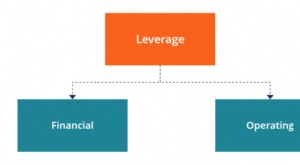 Leverage in Finance: Strategies, Types & Risks
In finance, leverage is a strategy that companies use to increase assets, cash flows, and returns, though it can also magnify losses. There are two main types of leverage: financial and operating. To ...
-
 Parent Company Explained: Definition, Control & Examples
A parent company is a company that owns more than 50% of the outstanding voting shares of another company. Therefore, it controls the other company or companies and can directly influence the business...