
Unconventional Investments: Exploring High-Reward Opportunities
 For the past 21 years, several blue-chip wines have outperformed many stocks.
A few years back, a man bought a $4 picture frame at a Pennsylvania flea market. When he took the frame apart, out popped a copy of the Declaration of Independence. The document was a so-called "Dunlap print," one of only a handful produced by the 18th-century Philadelphia printer John Dunlap [source: Reif]. In 2000, a separate Dunlap Declaration of Independence sold for $8.14 million [source: Gregory].
When people hear such stories, they often scour attics, antique shops and flea markets hoping to find that one item that will make them rich. It's not a bad idea. As the economy sours and investments in stocks, bonds and real estate skid, unusual investments can often net a financial windfall.
Whether they're sinking their money in to coins, antiques or high-end wines, the best investor is a knowledgeable investor. They can spot fakes and forgeries. They buy high-quality items at good prices, but specialize in only a few. A smart investor buys with their head, not with their heart.
If you're thinking about investing in unusual items, there are many things to remember. Become an expert. Pick the brains of other dealers and collectors, and then buy the best that you can afford. Make sure items are signed or in their original boxes. Look at an item's condition. The more perfect the piece, the more money you can make. Buy an item with a good provenance. Also, become adept at knowing where and when to sell.
Turn the page and start your journey for 10 unusual investments.
10. Art
If "Dogs Playing Poker" is your idea of a priceless painting, then investing in art might not be for you. But if you hit the books and do your homework, you might be able to make a bit of cash. High-end art has held up well in this economic downturn. In fact, art has been an attractive investment for decades. But you have to know what you're doing. Don't study one artist. Become familiar with various mediums and styles. More importantly, invest in art that moves you. If your gut tells you it's a nice work of art, it probably is, but that doesn't mean it's valuable.
Like all investments, the price of art fluctuates. Since most people don't have money to invest in a Picasso, they tend to buy artists that lack lofty pedigrees. That's a great idea. The struggling artist of today could be the Van Gogh of tomorrow. Always look at the perspective, color and composition of a work of art. These tell-tale signs will never change with a major artist. If you find flaws, chances are it's a bad copy or a painting done by a student. If you're buying a sculpture, make sure you have a written provenance. It will be worth more. Buy reasonably priced items. Take care of the art you buy. A damaged piece will lose much of its value [source: Credit Advisor].
9. Sports Memorabilia/Collectibles
It has happened more than once. You move out of the house and your mom throws your vaunted baseball card collection into the trash. She might as well have thrown out a sack filled with money because over the last 30 years or so, the value of rare sports memorabilia and collectibles has steadily risen.
Keep in mind that serious investors don't fall in love with the objects they buy and sell. The key to making money is to sever any emotional attachment. Like any investment, supply and demand dictate price. No matter the sport, learn what has increased in value. Start small and spend what you can afford. Invest in a variety of sports items. Autographed items by valued players always bring in good prices. Be on the lookout for rarities, such as 19th-century baseball memorabilia. Very few objects from this era have survived [source: Wong]. Know which athletes are hot, which are not. Know who is on their way up. And know there are risks: Today's hot player might be a bust next season.
8. Comic Books
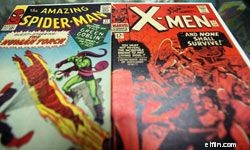 In March 2010, a mint copy of Action Comics Superman No. 1 sold at auction for $1.5 million.
Let's hope mom didn't throw out your comic books along with the baseball cards. If she did, pray there wasn't a Superman No. 1 in the pile. If there was, you could have been a millionaire. In March 2010, a mint copy of Action Comics No. 1, the debut of Superman, sold at auction for $1.5 million. The comic was in pristine condition. It was squirreled away for 50 years inside a movie magazine [source: cnn.com].
Why are comic books such a good investment? Back in the day, kids read comic books and generally tossed them in the trash or shared them with a buddy. Very few survived. As the years passed, people began placing a value on comics. Condition and scarcity hugely impact the comic book market. Missing pages, loose centerfolds and other defects will devalue a comic book, as will page quality. Comic books that mark the first appearance of a popular character are pricey, as are comic books with important storylines.
7. Coins
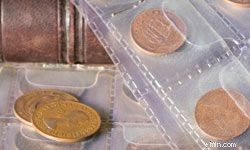 Coin collectors search for rare coins that are in good condition.
How much is a penny worth? If it's a 1943 bronze Lincoln penny then it's worth $1.7 million. That's what a southwestern businessman bought the coin for at auction in September 2010. The penny is so valuable because the U.S. Mint in Denver mistakenly struck the coin in bronze rather than zinc. The government needed copper -- the metal of choice for pennies -- for the war effort during World War II [source: Auction News Network].
Still, before you break open the piggy bank or check behind the sofa for loose change, there are some things you ought to know. Numismatists, or coin collectors, look for rare coins that are in good condition, freshly minted or old [source: Richards].
Beware! Some coin dealers will often tell you something is rare, when it's really not. According to the American Numismatic Association, price guides are indispensible. If you don't take the time to educate yourself, you'll pay more than the coin is worth. Buying from the U.S. Mint is a good idea. The government has struck a number of commemorative coin sets. Nearly all have increased in value [source: usmint.gov].
6. Wine
The price of high-end wine has skyrocketed in recent years. In fact, for the past 21 years, several blue-chip wines have outperformed many stocks, and held steady with the Dow Jones Industrial Average [source: Stock Market Newsletters]. Experts say if you want to make money in the wine business you need to target top wines with the best vintages. You also need to properly store wines, preferably in a climate-controlled environment, and be able to recognize counterfeits. And buy early when prices are low [source: money.cnn.com].
5. Toys
Investing in toys is not child's play. Many people invest in games, dolls and other toys for nostalgic reasons. Older toys never seem to lose their appeal. For example, stuffed bears made by Germany's Margarete Steiff are the crème de la crème of the plush world. A circa 1905 16-inch Steiff cinnamon bear is worth as much as $10,000 [source: Miller].
A good thing to remember is that what is in demand today may not be in demand tomorrow (think Beanie Babies). Use your noggin. Decide which toys you want. Read price guides. Keep up on trends. Rummage through antique stores, flea markets and tag sales. When you find a toy, keep it in its box or container because condition is everything. Chipped, broken or well-used toys are not as valuable as the same toy in mint condition. Attend auctions and know your market. One last tip: Don't play with your toys. Keep them out of harm's way (read: your children's hands).
4: Rare Books
If you're investing over the long haul and have a bit of money to spend, rare books and other literary treasures could prove highly profitable. In 2002, the National Library of Ireland acquired a trove of papers from author James Joyce for $11.7 million [source: Lavery]. Even contemporary authors can command a huge price.
The key is to buy books that interest you and to buy them in the best possible condition. Don't expect to find too many rare books in your local antique store or at the neighborhood garage sale, however. Book dealers and auctions are the best source of acquiring rare books. Moreover, a book that is popular is a better investment than an older unpopular book [source: The Independent]. Signed books are also in demand, as are first editions. Some book dealers make money by investing in new authors, betting the value of these works will increase over time [source: The Independent].
3. Antique Firearms and Militaria
As with all investments, you have to be careful in the world of firearms and militaria. A pair of 20-century infantry books from the Argentine army isn't worth much, but a full set of medieval body armor can net tens of thousands of dollars. One of the most lucrative investments a person can make is in U.S. Civil War artifacts. Flags are especially valuable. A Confederate battle flag can be worth as much as $100,000. Civil War dealers are always on the lookout for artifacts with good provenance. Groupings of such items -- uniforms, letters and medals -- from the same soldier are expensive but hold their value well.
When it comes to antique firearms, the buyer has to beware. One of the main concerns collectors have about buying rifles, muskets and other weapons, is how much repair and restoration work the piece has had. Some repair work won't impact the value of a firearm, while too much work could greatly influence the price. The key is to know the difference, and that mostly comes from experience.
2. Classic Cars
 Classic cars like this fully restored 1958 Corvette can make good investments.
Jay Leno collects them, and so does Jerry Seinfeld. Both entertainers are classic car enthusiasts. Their collections are worth millions. What do they know that we don't? As a rule, cars are not good investments. But, classic cars are different. A car's scarcity has a major impact on the vehicle's value. For example, you can buy a run-of-the-mill 1967 Mustang for a few thousand dollars or a much rarer 1969 Shelby for $185,000 [source: Shelby Mustang].
Experts say that vintage cars have outperformed stocks in the past few years [source: Lubove]. Determining the value of a classic car is not an exact science. Cars that originally commanded high prices, such as Ferrari and Rolls Royce, tend to appreciate more than cars whose original value was moderate. In addition, the more original parts a car has, the more the vehicle is worth. Repairing body damage and painting the car its original factory color will also enhance its price.
1. Instruments
Stradivarius, Fender, Gibson, Steinway. Such names are music to the ears of investors. The rarity and quality of various types of musical instruments, especially violins made by Antonio Stradivari, are often worth millions. Stradivari made 1,100 violins in the 17th century; 650 still survive. A 1699 Stradivarius sold at a public auction in 2005 for $2.03 million. The amount could have been higher had the sale been private [source: Roney].
If a Stradivarius is too high-end, a good provenance can make any ordinary instrument worth thousands. Anyone can buy a Fender or Les Paul for a song, but put that same guitar in the hands of a rock star, and the price balloons. For example, Eric Clapton paid a few hundred dollars and put together a makeshift guitar using parts from other guitars. The instrument sold for $959,500 in 2004 [source: Roney]. In 2000, British pop star George Michael bought the Steinway piano that John Lennon used to compose his hit "Imagine." Michael paid $2.08 million. In 2004, Christie's London auctioned a part of The Who's Keith Moon's drum set for $252,487 [source: Roney].
When buying an instrument keep these things in mind: the maker; the quality; the condition; and the history. The return on your investment will be melodious [source: Roney].
-

Understanding High-Yield Investments: Risks & Opportunities
We’ve collected everything you need to know about high yield investments. Just read on to learn more.What are high yield investments?High yield investments are investments that promise to make a lot o
-
Bitcoin: 4 Key Reasons to Invest in the Future of Finance
Bitcoin is a piece of digital currency. Bitcoin is controlling its clients through money managers. Even a solitary man, higher specialists, and government never doing interference in it. Globally, B
finance
- Understanding Short-Term Investments: A Comprehensive Guide
- Alternative Investments: A Comprehensive Guide to Tangible & Financial Assets
- Understanding Investments: A Beginner's Guide to Growth & Income
- Understanding Risk Aversion: A Comprehensive Guide
- ETFs vs. Alternative Investments: A Comprehensive Comparison
- Top 10 Cryptocurrencies for Short-Term Trading in 2022
- Buy Art Blocks in Canada: A Comprehensive Guide
- Aggressive Investments: Understanding Risk & Growth Strategies
- Alternative Investments: 10 Safer Alternatives to Stocks & Bonds
-
Investing in Stocks: A Beginner's Guide to Getting Started
If you’re serious about increasing your wealth, sooner or later you will have to overcome your hesitations and buy stocks. It might seem scary at first. You might think you need special training or in...
-
15 Alternative Investments to Diversify Your Portfolio
When people start their investing journey, they often opt for traditional investments (like investing in the stock market) – and then stick to them for the rest of their lives. But alternative investm...