
Understanding Risk Aversion: A Comprehensive Guide
Someone who is risk averse has the characteristic or trait of preferring avoiding loss over making a gain. This characteristic is usually attached to investors or market participants who prefer investments with lower returns and relatively known risks over investments with potentially higher returns but also with higher uncertainty and more risk. A common concept tied to risk, one which compares the risk level of an individual investment or portfolio to the overall risk level in the stock market, is the concept of beta.Unlevered Beta / Asset BetaUnlevered Beta (Asset Beta) is the volatility of returns for a business, without considering its financial leverage. It only takes into account its assets.
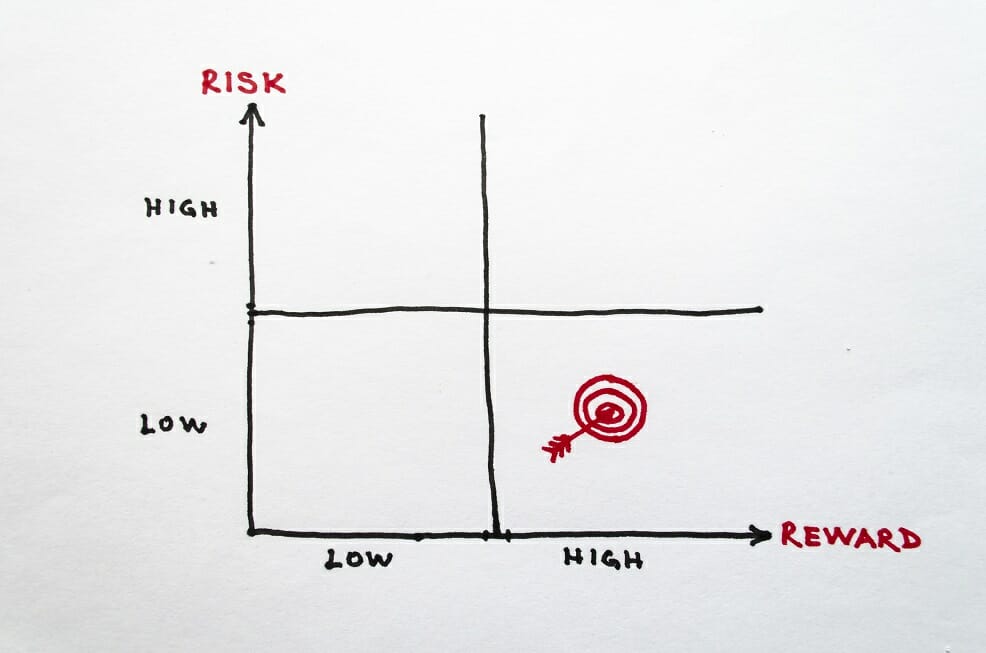
Types of Investments Risk Averse Investors Choose
A risk averse investor tends to avoid relatively higher risk investments such as stocks, options, and futures. They prefer to stick with investments with guaranteed returns and lower-to-no risk. These investments include, for example, government bonds and Treasury bills. Below are two lists that classify lower and higher risk investments. Keep in mind that while the relative risk levels of various types of investments generally remain constant, there can be situations where a usually low-risk investment has a higher risk or vice versa.
Safer, low-risk investments
- Bonds
- Certificates of Deposit
- Treasury securities
- Life Insurance
- Investment Grade Corporate Bonds
- Bullet LoansBullet LoanA bullet loan is a type of loan in which the principal that is borrowed is paid back at the end of the loan term. In some cases, the interest expense is
- ETFs*
In addition to these specific investments, any type of debt instrument issued by a company will generally be considered a safe, low-risk investment. These debt instruments are typically well-suited for a risk averse investing strategy.
These instruments are lower risk at least partly due to their characteristic of absolute priority. In the event of dissolution or bankruptcy of a company, there is a definite order of payback to the company’s creditors and investors. Legally, the company must first pay off debtors before paying off preferred shareholders and common shareholders (equity investors).
Higher risk investments
- Stocks
- Penny Stocks
- Mutual Funds
- Financial Derivatives (Options, warrant, futures)
- Commodities
- ETFs*
*Some ETFs come with a higher risk, but most ETFs, especially those invested in market indexes, are considered quite safe, especially when compared to investments in individual stocks. This is because they typically experience relatively lower volatility, due to their diversified nature. Keep in mind, however, that some ETFs are invested in significantly higher risk securities. Hence, the inclusion of ETFs in both the low- and high-risk categories.
Additional resources
Thanks for reading this guide to understanding the risk averse definition for investors. CFI’s mission is to help you advance your career in the financial services industry. With that goal in mind, these additional CFI resources will be very helpful:
- Risk and returnRisk and ReturnIn investing, risk and return are highly correlated. Increased potential returns on investment usually go hand-in-hand with increased risk. Different types of risks include project-specific risk, industry-specific risk, competitive risk, international risk, and market risk.
- Systematic riskSystematic RiskSystematic risk is that part of the total risk that is caused by factors beyond the control of a specific company or individual. Systematic risk is caused by factors that are external to the organization. All investments or securities are subject to systematic risk and therefore, it is a non-diversifiable risk.
- Systemic riskSystemic RiskSystemic risk can be defined as the risk associated with the collapse or failure of a company, industry, financial institution or an entire economy. It is the risk of a major failure of a financial system, whereby a crisis occurs when providers of capital lose trust in the users of capital
- Financial modeling guideFree Financial Modeling GuideThis financial modeling guide covers Excel tips and best practices on assumptions, drivers, forecasting, linking the three statements, DCF analysis, more
-

Understanding Business Risk: Threats & Mitigation
Business risk refers to a threat to the company’s ability to achieve its financial goalsEarnings GuidanceAn earnings guidance is the information provided by the management of a publicly traded c
-
Understanding CAPM: A Comprehensive Guide to Capital Asset Pricing
The Capital Asset Pricing Model (CAPM) is a model that describes the relationship between the expected returnExpected ReturnThe expected return on an investment is the expected value of the proba
finance
- Understanding Risk Grades: An Investor's Guide
- Understanding Risk Preference: A Comprehensive Guide
- Understanding Investments: A Beginner's Guide to Growth & Income
- Understanding Operating Risk: A Key Component of Business Risk
- Understanding Financial Risk: A Comprehensive Guide
- Understanding Risk Aversion: A Comprehensive Guide
- Risk Shifting: Definition, Examples & Implications
- Understanding Infrastructure Investments: A Guide to Real Asset Returns
- Asset Allocation: A Comprehensive Guide to Portfolio Diversification
-
 Understanding Risk Acceptance: A Comprehensive Guide
Accepting risk is a concept where an individual or business identifies risk and renders it acceptable, thereby making no effort to reduce or mitigate it. The potential loss from the identified and acc...
-
 Alternative Investments: A Comprehensive Guide to Tangible & Financial Assets
An alternative investment is an investment in assets different from cash, stocks, and bonds. Alternative investments can be investments in tangible assetsTangible AssetsTangible assets are assets with...