
Understanding Investments: A Beginner's Guide to Growth & Income
A financial investment is any asset or instrument purchased with the intention of selling said asset for a price higher than the purchase price at some future point in time (capital gains), or with the hope that the asset will directly bring in income (such as rental income or dividends). This guide will review the three main investment methods (or asset classes).
The exact criteria for a transaction to be considered an investment, however, is not so concrete. From a broad perspective, there are many different categories of investments. Especially in terms of accountingAccountingPublic accounting firms consist of accountants whose job is serving business, individuals, governments & nonprofit by preparing financial statements, taxes, different transactions may be constituted as investments by different people. For example, a lease transaction may be seen as an investment by some but not by others.
In a very broad definition, an investment can encapsulate any action or operation undertaken with the intention of generating some form of future income. As such, even the act of producing goods with the intention of reselling them in the future can be seen as an investment.

There are certain types of transactions that are easily seen as financial investments. These are the focus of this article and are described below.
What are the Different Investment Methods?
A simple way of classifying investments is to divide them into three categories or “investment methods” which include:
- Debt investments (loans)
- Equity investments (company ownership)
- Hybrid investments (convertible securities, mezzanine capital, preferred shares)
Debt Investments
Debt-based investments can be further broken down into two sub-categories – public and non-public (private) investments.
Public debt investments are any investments that can be purchased or traded in open debt markets. These are such things as bonds, debenturesDebentureA Debenture is an unsecured debt or bonds that repay a specified amount of money plus interest to the bondholders at maturity. A debenture is a long-term debt instrument issued by corporations and governments to secure fresh funds or capital. Coupons or interest rates are offered as compensation to the lender., and credit swaps, among others. A company will often classify public securitiesPublic SecuritiesPublic securities, or marketable securities, are investments that are openly or easily traded in a market. The securities are either equity or debt-based. as held-to-maturity, available-for-sale, or held-for-trading. Each of these classifications has certain criteria and specific treatments under accounting standards.Accounting For Income TaxesIncome taxes and their accounting is a key area of corporate finance. There are several objectives in accounting for income taxes and optimizing a company's valuation.
Private debt investments are any transactions that generate an asset on the balance sheet and are not openly or easily traded in markets. An example is the purchasing of another entity’s accounts receivablesAccounts ReceivableAccounts Receivable (AR) represents the credit sales of a business, which have not yet been collected from its customers. Companies allow or loan receivables, which are expected to generate some form of future income.
Equity Investments
Equity investments can also be categorized as public and non-public investments. The latter is commonly known as Private EquityPrivate Equity Career ProfilePrivate equity analysts & associates perform similar work as in investment banking. The job includes financial modeling, valuation, long hours & high pay. Private equity (PE) is a common career progression for investment bankers (IB). Analysts in IB often dream of “graduating” to the buy side,, which is considered a high risk, high reward investment. In fact, equity investments are generally seen as riskier than debt investments, with the advantage of potentially generating higher returns.
Public equity investments are any equity-based investments that can be purchased or traded in markets. These are often the type of investments that someone has in mind when discussing investments. This covers such instruments as common stockStockWhat is a stock? An individual who owns stock in a company is called a shareholder and is eligible to claim part of the company’s residual assets and earnings (should the company ever be dissolved). The terms "stock", "shares", and "equity" are used interchangeably., preferred stock, stock options, and stock warrants.
Private equity investments are often larger-scale investments that are not within the scope of a small investor. Leveraged buyoutsLeveraged Buyout (LBO)A leveraged buyout (LBO) is a transaction where a business is acquired using debt as the main source of consideration., mergers and acquisitions, and venture capital investments are just some of the more commonly undertaken types of private equity transactions.
Hybrid Investment Methods
Let’s look at some additional investment methods. There are investment types that mix elements of both debt and equity. An example of this is mezzanine debt, in which an investor provides a loan to a second party in exchange for equity. Another example is a convertible bond, in which an investor has purchased a bond that has a feature whereby it is exchangeable for a certain number of stock shares of the issuing company.
There are also investment types that possess neither debt nor equity components. An example of this type is any investment into the asset side of the balance sheet, such as the purchase of equipment or property under PP&E. Alternatively, purchasing intangible assets such as a brand or patent can also be classified as an investment, depending on the strategy.
Finally, there is a large class of investments called derivatives, which – as the name implies – are derived from other securities. There are many kinds of derivatives, all of which merit an article of their own. However, examples of commonly known derivatives are futures and optionsStock OptionA stock option is a contract between two parties which gives the buyer the right to buy or sell underlying stocks at a predetermined price and within a specified time period. A seller of the stock option is called an option writer, where the seller is paid a premium from the contract purchased by the stock option buyer., which are investment instruments that base their value off an underlying stock or commodity.
Read more about Investing!
CFI offers the Commercial Banking & Credit Analyst (CBCA)™Program Page - CBCAGet CFI's CBCA™ certification and become a Commercial Banking & Credit Analyst. Enroll and advance your career with our certification programs and courses. certification program for those looking to take their careers to the next level. To keep learning and advancing your career, the following resources will be helpful:
- Investment BankingInvestment BankingInvestment banking is the division of a bank or financial institution that serves governments, corporations, and institutions by providing underwriting (capital raising) and mergers and acquisitions (M&A) advisory services. Investment banks act as intermediaries
- Valuation MethodsValuation MethodsWhen valuing a company as a going concern there are three main valuation methods used: DCF analysis, comparable companies, and precedent transactions
- DCF ModelDCF Model Training Free GuideA DCF model is a specific type of financial model used to value a business. The model is simply a forecast of a company’s unlevered free cash flow
- Public SecuritiesPublic SecuritiesPublic securities, or marketable securities, are investments that are openly or easily traded in a market. The securities are either equity or debt-based.
-

Capital Preservation: A Guide to Protecting Your Investments
Capital preservation is an investment strategy that promotes saving, i.e., preserving capital and avoiding loss of value. The strategy adopts a conservative approach towards investing specifically in
-
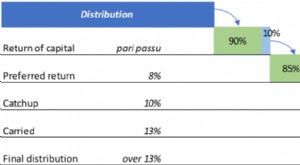
Understanding Distribution Waterfalls in Equity Investing
A distribution waterfall is a popular term in equity investing that refers to the way in which capital gainsCapital GainA capital gain is an increase in the value of an asset or investment resulting f
finance
- Alternative Investments: A Comprehensive Guide to Tangible & Financial Assets
- Understanding Drawdowns: A Key Investment Risk
- Understanding Investment Horizon: A Comprehensive Guide
- Investment Portfolio: Definition, Types & Building a Strong One
- Non-Qualifying Investments: Understanding Tax Implications
- Brownfield Investment: Definition, Benefits & Examples
- Understanding Independent Investment Advice: A Comprehensive Guide
- Understanding Investment Alpha: A Guide for Investors
- Aggressive Investments: Understanding Risk & Growth Strategies
-
 Understanding Investment Opportunities: A Comprehensive Guide
What Is an Investment Opportunity? An investment opportunity is any situation where you have the option of purchasing something that has a chance to gain value in the future. Business investm...
-
 Annual Return: Definition, Calculation & Understanding
The annual return is the return on an investment generated over a year and calculated as a percentage of the initial amount of investment. If the return is positive (negative), it is considered a gain...