
Litecoin (LTC): A Comprehensive Overview - History, Features & Purpose
Sounds Like Bitcoin. Why So Similar?
Because it is. While it wasn’t the first cryptocurrency to mimic and/or copy Bitcoin’s code, it was certainly one of the earliest and most significant, serving as the third largest cryptocurrency in existence, under XRP.
For this reason, there are many similarities and borrowed traits from the core code of Bitcoin, which have been modified to work in a way that would be best suited for large-scale adoption of the currency. Think of Litecoin as the best of both worlds (Bitcoin and a sibling).
Litecoin is Fast. But How Fast?
Litecoin was specifically designed to help reduce transaction times and fees, a major downside to Bitcoin transactions, which took approximately 6-10 minutes (up to 1 hour of wait time) for a block to be confirmed and a transaction to be concluded. Serving to expedite a user transactions, Litecoin takes Bitcoin’s 10 minute block confirmation time and reduces it to 2.5 minutes. As a result, users only wait 2.5 minutes for a Litecoin block to be mined, generating up to 25 coins.
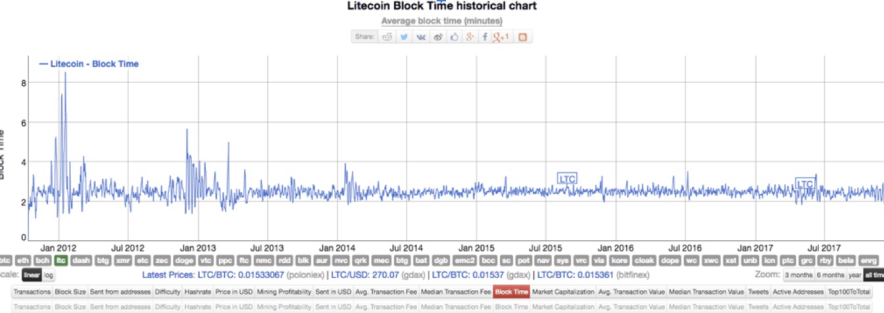
It is for this reason that Litecoin is considered to be 4x faster than Bitcoin and an extremely attractive alternative to Bitcoin. It is important to note that network congestion time across the board does play a role in block mining times, bringing wait time to approximately 29 minutes.
-
PrimeXBT: Your Leading Bitcoin Margin Trading Platform | Crypto, Forex & More
Serving clients in more than 150 countries, PrimeXBT is a Bitcoin-based margin trading platform that offers instant access to over 30+ assets, including Crypto, Forex, Commodities, and Indices with re
-

Bitcoin Cash CFDs: A Comprehensive Guide for Traders
The Bitcoin Cash (BCH) cryptocurrency is a peer-to-peer electronic currency for the internet. Just as it is with other cryptocurrencies, it is a decentralized platform with no central bank or govern
Fund information
- Bitcoin Dominance Explained: Understanding BTC Market Share & Trends
- Bitcoin Cash (BCH): A Comprehensive Overview - Features, History & Future
- Blockchain Explained: A Beginner's Guide to Distributed Ledgers
- Bitcoin Explained: A Simple Guide to Digital Currency
- Bitcoin Gold (BTG): Understanding the 2017 Hard Fork & Implications
- Bitcoin Explained: The History & Future of Cryptocurrency
- Bitcoin Cash (BCH): A Comprehensive Overview - What You Need to Know
- Tether (USDT): Understanding the Stablecoin & Its Role in Crypto
- Litecoin (LTC): A Comprehensive Overview of the Silver to Bitcoin's Gold
-
 Cryptocurrency Explained: A Beginner's Guide to Digital Currency
By definition, “cryptocurrency” is a digital or virtual currency that is secured by cryptography, which makes it almost impossible to counterfeit or double-spend. Almost all cryptocurrencies that curr...
-
 Ethereum (ETH): A Beginner's Guide to Decentralized Applications
Think of Ethereum as Android OS or Linux, open-source platforms where you can write code, create, and build, without a set of rules, so to speak. Think of Ethereum as Android OS or Linux, ...