
Understanding Performance Fees: How Investment Managers Get Paid
What is a Performance Fee?
A performance fee is a payment made to an investment manager for generating positive returns. This is as opposed to a management fee, which is charged without regard to returns. A performance fee can be calculated many ways. Most common is as a percentage of investment profits, often both realized and unrealized. It is largely a feature of the hedge fund industry, where performance fees have made many hedge fund managers among the wealthiest people in the world.
Understanding Performance Fees
The basic rationale for performance fees is that they align the interests of fund managers and their investors, and are an incentive for fund managers to generate positive returns. A "2 and 20" annual fee structure—a management fee of 2% of the fund's net asset value and a performance fee of 20% of the fund's profits—is a standard practice among hedge funds.
Example of a Performance Fee
Imagine an investor takes a $10 million position with a hedge fund and after a year the net asset value (NAV) has increased by 10% (or $1 million) making that position worth $11 million. The manager will have earned 20% of that $1 million change, or $200,000. That fee reduces the NAV to $10.8 million which equals an 8% return independent of any other fees.
The highest value of a fund over a given period is known as a high-water mark. If the fund falls from that high, generally a performance fee isn't incurred. Managers tend to charge a fee only when they surpass the high-water mark.
Hurdles and Performance Fees
A hurdle would be a predetermined level of return a fund must meet to earn a performance fee. Hurdles can take the form of an index or a set, predetermined percentage. For example, if NAV growth of 10% is subject to a 3% hurdle, a performance fee would be charged only on the 7% difference. Hedge funds have been popular enough in recent years that fewer of them utilize hurdles now compared to the years after the Great Recession.
Critics of performance fees, including Warren Buffett, opine that the skewed structure of performance fees — where managers share in the funds' profits but not in their losses — only tempts fund managers to take greater risks to generate higher returns.
Performance Fee Regulation
Performance fees charged by U.S. registered investment advisors fall under the Investment Advisers Act of 1940 and fees charged to pension funds governed by the Employee Retirement Income Security Act (ERISA) must satisfy special requirements. Hedge funds are, of course, outside of this group.
-

Understanding Management Fees: What They Are and How They Work
A management fee is charged by an investment manager when they assist a client with investing. Fees are charged when a person uses a firm to handle their investments. The client pays out managem
-
ETF Performance Tracking: A Guide for Investors
Tracking your ETF performance is critical if you want to be a successful investor. ETFs can be a great investment tool for your money. They are diversified, easy to buy and sell and can pre
Hedge Fund
- Nominal Fee Explained: What It Is and What It Covers
- Understanding Tender Fees: Costs in Corporate Takeovers
- Understanding Stock Performance: A Guide for Investors
- Understanding Retainer Fees: What They Are & How They Work
- Understanding Incentive Fees: How Fund Managers Get Paid
- Understanding Stock Market Indexes: A Comprehensive Guide
- Understanding Investment Management Fees: What You Need to Know
- Understanding High-Water Marks in Investing: A Comprehensive Guide
- Understanding 12b-1 Fees in Mutual Funds: What You Need to Know
-
 Loan Reconveyance Fee: Understanding Costs & Purpose
When you refinance your mortgage, expect to pay a number of fees. A loan reconveyance fee is a typical charge when you refinance a mortgage, collected when you have a full reconveyance document prepar...
-
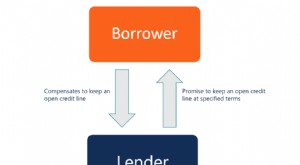 Commitment Fees Explained: What They Are & How They Work
A commitment fee is a fee that is charged by a lender to a borrower to compensate the lenderTop Banks in the USAAccording to the US Federal Deposit Insurance Corporation, there were 6,799 FDIC-in...