
Understanding Tender Fees: Costs in Corporate Takeovers
The term "tender" refers not just to something soft or sentimental, but it also has a financial meaning. When an individual or company attempts to purchase a publicly traded company by offering payment to its shareholder, this is known as making a "tender offer." Fees associated with this offer, particularly if the company is purchased and the shares owned by a shareholder change, are known as "tender fees."
Tender Fee
A tender fee will often be applied by a stockbroker when one group of securities has to be converted into another group of securities. This is a fee that is not applied by the companies issuing the stocks or purchasing them, but by the broker that is managing an investor's stock portfolio. This fee is generally applied for the performance of so-called "back room" work.
Example
As a means of providing an example, if one publicly traded company purchases another publicly traded company, then the first publicly traded company will usually wish to issue new shares replacing the second publicly traded company's old shares. As a fee for converting one set of shares to another set of shares, the broker will charge the investor a small amount of money, usually assessed depending on the number of shares the person holds.
Legal Tender
The term "legal tender", sometimes shortened to "tender", refers to legal currency that can be used to to pay for a good or service. The "tender fee" can therefore also be used to make a distinction between a fee in which the person is paying with or for tender, as opposed to a fee in which the person is paying with or for another asset, such as securities.
Other Uses
Tender can also refer to a type of boat. These boats are generally used to provide services to other boats. For example, a boat that offers supplies to other boats may be called a tender. In some cases, the term "tender fee" can apply to payments made to these boats for services rendered or to the harbor that keeps the boats in service.
-

Jumbo CDs: Higher Rates & Deposits Explained
A jumbo CD is similar to a conventional CD although the former generally requires a higher deposit and accrues interest at a higher rate. A CD is a certificate of deposit that is offered by banks for
-
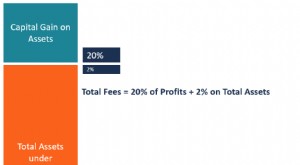
Understanding Hedge Fund Fees: The 2 and 20 Structure
The 2 and 20 is a hedge fund compensation structure consisting of a management fee and a performance fee. 2% represents a management fee which is applied to the total assets under management. A 20% pe
investing
- Understanding Surcharge Fees: What They Are & Why You Pay Them
- Understanding Non-Mandatory Tender Offers: A Comprehensive Guide
- IRA CDs: Secure Retirement Savings with FDIC Insurance
- Loan Reconveyance Fee: Understanding Costs & Purpose
- Commitment Fees Explained: What They Are & How They Work
- Understanding High-Water Marks in Investing: A Comprehensive Guide
- Understanding Non-Competitive Treasury Tenders: A Comprehensive Guide
- Understanding Overdraft Fees: How They Work & How to Avoid Them
- Understanding Loan Origination Fees: What They Are & How to Save
-
 Understanding Performance Fees: How Investment Managers Get Paid
What is a Performance Fee? A performance fee is a payment made to an investment manager for generating positive returns. This is as opposed to a management fee, which is charged without regard ...
-
Understanding Tender Offers: A Comprehensive Guide
What Is a Tender Offer? A tender offer is a bid to purchase some or all of the shareholders stock in a corporation. Tender offers are typically made publicly and invite shareholders to sell the...