
Calculating Developer Fees: A Comprehensive Guide
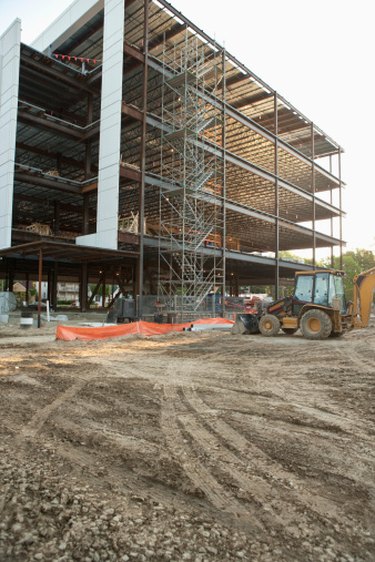
A developer's fee is compensation for the developer's time and for taking on the risk of developing a commercial or residential construction project. There are many variables that determine the exact amount of the fee. If you do not know the exact fee you can estimate it, taking into account the size, risk and total cost of the project. Also consider the developer's interest in the property. For example, if the developer will be helping to manage the property and will be making a profit on it, this will decrease the fee. The fee is a percentage of the total cost of development. You can use this method to estimate the dollar amount.
Step 1
Convert the developer's fee percentage into decimal format. For example, if the fee is 5 percent, you would have a percentage of .05.
Step 2
Calculate the total cost of the project. This includes all labor, the cost of the land, materials and time. If you are unsure, consult the developer.
Step 3
Multiply the total cost of development by the percentage in decimal form. For example, if the cost of development is $500,000 and the developer's fee is 5 percent, your equation would be 500,000 x .05.
Step 4
Double-check your multiplication. The result of multiplying the total cost of development by the percentage in decimal form is the developer's fee in dollars. For example, 500,000 x .05 = 25,000. The developer's fee is $25,000.
-

PMI Calculation for Conventional Loans: A Comprehensive Guide
Low down-payment mortgages help cash-strapped borrowers get into a home. Rather than put all of your reserves toward the purchase, you can save on the down payment, paying as little as 3 percent for a
-

Understanding Housing Affordability: A Comprehensive Guide
The affordability of the housing market can be understood as the ratio between the median family income and the qualifying income needed to own a median single-family home.The Housing Affordability In
home finance
- Understanding Loss Severity: Impact on Foreclosures & Short Sales
- Depreciation for Rental Properties: A Step-by-Step Guide
- Calculate Months of Inventory: A Real Estate Guide
- Origination Fee Calculator: Understanding & Calculating Costs
- MRTA Explained: Mortgage Reducing Term Assurance in Malaysia
- Understanding Transfer Tax: A Step-by-Step Calculation Guide
- Mortgage Constant: Calculation & Importance for Real Estate Investors
- Bridge Loans: A Guide to Securing Your Next Home
- Understanding Retainer Fees: What They Are & How They Work
-
 Understanding Dwelling Coverage: How to Calculate It
Homeowner's insurance, which most mortgage lenders will require homeowners to have, pays for replacing a home damaged by natural or man-made disasters. The term "dwelling coverage" refer...
-
 Understanding Triple Net Leases: A Comprehensive Guide
A triple net lease is an agreement between a tenant and landlord that makes the tenant responsible for all costs of the property in addition to rent. This style of lease is common for commercial prope...