
American Stock Exchange (AMEX): History, Overview & Key Facts
The American Stock Exchange (AMEX) started operations in 1908 as the New York Curb Market Agency. The AMEX was originally composed of traders and brokers that would get together to buy and sell stocks at an open location in New York City. It was a self-regulated and very rudimentary market, where most transactions were done by shouting.
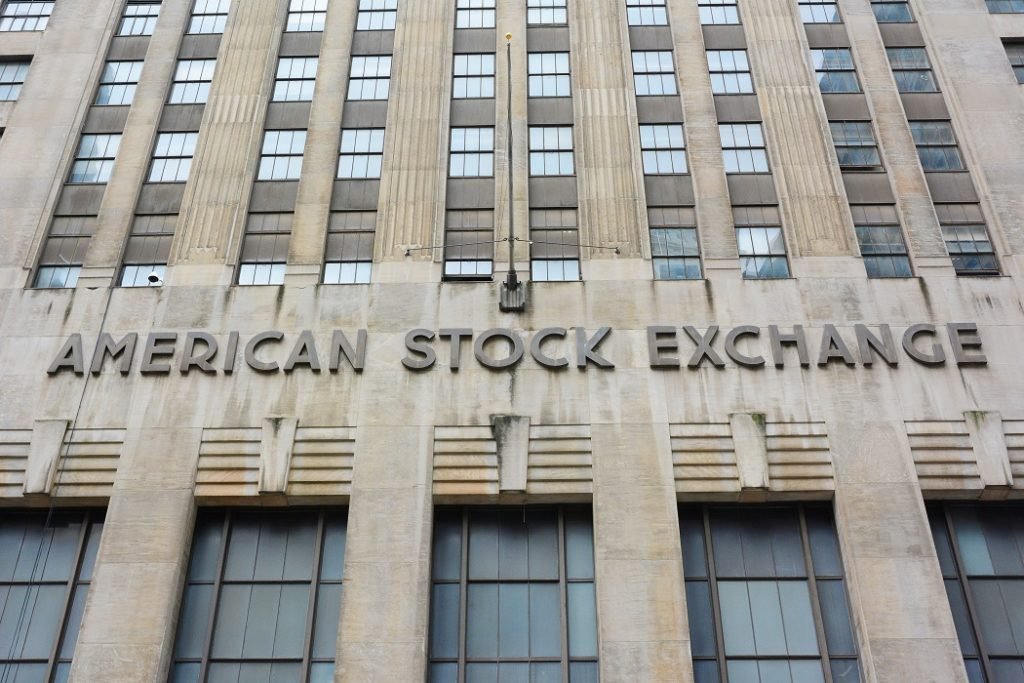
The market became more structured with time and, in 1921, became the New York Curb Exchange, which was a co-operatively owned by its members. The change brought more rules to the exchangeStock MarketThe stock market refers to public markets that exist for issuing, buying and selling stocks that trade on a stock exchange or over-the-counter. Stocks, also known as equities, represent fractional ownership in a company, but it remained relatively unorganized. The exchange continued to operate outside until 1921 when it moved into a building in Lower Manhattan.
The exchange took its modern form in 1953 when it was named the American Stock Exchange (AMEX).
The Res Scandal
Even after its modernization, the AMEX was not free from problems. In 1962, its reputation was badly tarnished by a major controversy called the Res scandal. The father-son duo of Gerard A. Re and Gerard F. Re, collectively known as the Res, were at the core of the scandal. Both were AMEX specialists who abused the rules of the exchange to indulge in all kinds of market malpractices.
For example, they would buy the stock of unregistered companies directly from insiders then sell them to the public. To accomplish this, they would bribe brokers to push certain stocks or use dummy accounts to purchase a large amount of stock to artificially increase the prices. They also used their network company management to access insider information and trade on it.
The scandal went on from 1954 until 1962 when investigations by the SEC found evidence of widespread market manipulation. The scandal cost the public $10 million in losses, which was a very large amount in the 1960s.
Revival and Modernization
In the aftermath of the Res scandal, the AMEX underwent several changes. Paul Kolton, formerly of the New York Stock Exchange (NYSE)New York Stock Exchange (NYSE)The New York Stock Exchange (NYSE) is the largest securities exchange in the world, hosting 82% of the S&P 500, as well as 70 of the biggest, joined AMEX as its executive vice president. Under Kolton’s leadership, AMEX was able to recover from the scandal and grew to become the second-largest exchange in the United States. He also introduced options trading on the exchange and went on to become the president of AMEX in 1971. He served as the CEO of AMEX until 1977 when he retired.
Kolton was succeeded by Thomas Peterffy, who introduced essential technical reforms, such as electronic trading to the exchange. Peterffy later went on to establish the well-known electronic trading platform, Interactive Brokers. During Peterffy’s tenure, AMEX was considered one of the best trading venues in America.
Merger with the NYSE
In October 2008, the NYSE Euronext group acquired AMEX for $260 million. Under the NYSE, it went through many rebranding exercises. It was first rebranded as NYSE Alternext U.S. upon acquisition. It became the venue for small-cap stocks, much like the Vancouver Stock Exchange (VSE)Vancouver Stock Exchange (VSE)The Vancouver Stock Exchange (VSE) started operations out of Vancouver, British Columbia in 1907. The VSE continued to function as a standalone exchange, after its merger with TMX Group.
In 2009, it was rebranded as NYSE Amex Equities – probably as a way to use the brand value that AMEX originally built for itself beginning in the 1960s. Again, in 2012, it was rebranded as NYSE Market.
The last rebranding took place in 2017 when it was renamed as NYSE American. NYSE used AMEX or NYSE American as a competitor to a new exchange called IEX. The IEX was set up to address some of the problems in high-frequency tradingHigh-Frequency Trading (HFT)High-frequency trading (HFT) is algorithmic trading characterized by high speed trade execution, an extremely large number of transactions,, such as front-running orders and misuse of complex order types.
To counter such practices, IEX introduced a secular delay of 320 microseconds to all orders. NYSE American offered a 350-microsecond speed bump in electronic trading in line with IEX, which pioneered the technique.
Related Readings
CFI is the official provider of the Commercial Banking & Credit Analyst (CBCA)™Program Page - CBCAGet CFI's CBCA™ certification and become a Commercial Banking & Credit Analyst. Enroll and advance your career with our certification programs and courses. certification program, designed to transform anyone into a world-class financial analyst.
To keep learning and developing your knowledge of financial analysis, we highly recommend the additional resources below:
- Investing: A Beginner’s GuideInvesting: A Beginner's GuideCFI's Investing for Beginners guide will teach you the basics of investing and how to get started. Learn about different strategies and techniques for trading
- Algorithmic TradingAlgorithmic TradingAlgorithmic trading strategies involve making trading decisions based on pre-set rules that are programmed into a computer.
- London Stock Exchange (LSE)London Stock Exchange (LSE)The London Stock Exchange (LSE), which is based in London, the United Kingdom, is one of the leading stock markets in the world. Owned by the London Stock Exchange Group, the LSE was established in 1571, making it one of the oldest stock exchanges in the world
- Types of Markets – Dealers, Brokers, ExchangesTypes of Markets - Dealers, Brokers, ExchangesMarkets include brokers, dealers, and exchange markets. Each market operates under different trading mechanisms, which affect liquidity and control. The different types of markets allow for different trading characteristics, outlined in this guide
-

Understanding Adjusted Closing Price: A Comprehensive Guide
The adjusted closing price is a calculation adjustment made to a stock’s closing price. The original closing price is the final price in which a stock, or any other particular kind of security,
-

Major U.S. Stock Exchanges: A Comprehensive Guide
U.S. Stock Exchanges in the U.S. Stock exchanges are marketplaces in which U.S. financial securities, commodities, derivatives and other financial instruments are traded. While in the past, tra
invest
- Understanding the Core Functions of Stock Exchanges
- Decoding Stock Exchange Numbers: A Beginner's Guide
- Understanding Stock Exchanges: A Beginner's Guide to Stocks & Bonds
- Hong Kong Stock Exchange (HKEX): Overview & Key Facts
- Jakarta Stock Exchange (IDX): History & Overview
- London Stock Exchange (LSE): History, Overview & Key Facts
- New York Stock Exchange (NYSE): History, Facts & Overview
- Vancouver Stock Exchange (VSE): History & Overview | [Your Company Name]
- Understanding the Saudi Stock Exchange (Tadawul): A Comprehensive Overview
-
Understanding Stock Exchange Trading Mechanisms: NYSE vs. NASDAQ
Stock exchanges are organized to facilitate trading between buyers and sellers. The New York Stock Exchange and NASDAQ are the two major stock exchanges in the U.S. While they share many features, the...
-
 SEDOL: Understanding the UK Stock Exchange Security Identifier
The stock exchange daily official list (SEDOL) is a seven-digit code used to identify all securities listed and trading on the United Kingdom securities market. Companies and issuers use SEDOL to iden...