
London Stock Exchange (LSE): History, Overview & Key Facts
The London Stock Exchange (LSE), which is based in London, the United Kingdom, is one of the leading stock markets in the world. Owned by the London Stock Exchange Group, the LSE was established in 1571, making it one of the oldest stock exchanges in the world. The LSE’s market capitalizationMarket CapitalizationMarket Capitalization (Market Cap) is the most recent market value of a company’s outstanding shares. Market Cap is equal to the current share price multiplied by the number of shares outstanding. The investing community often uses the market capitalization value to rank companies is estimated at US$4.59 trillion as of April 2018.
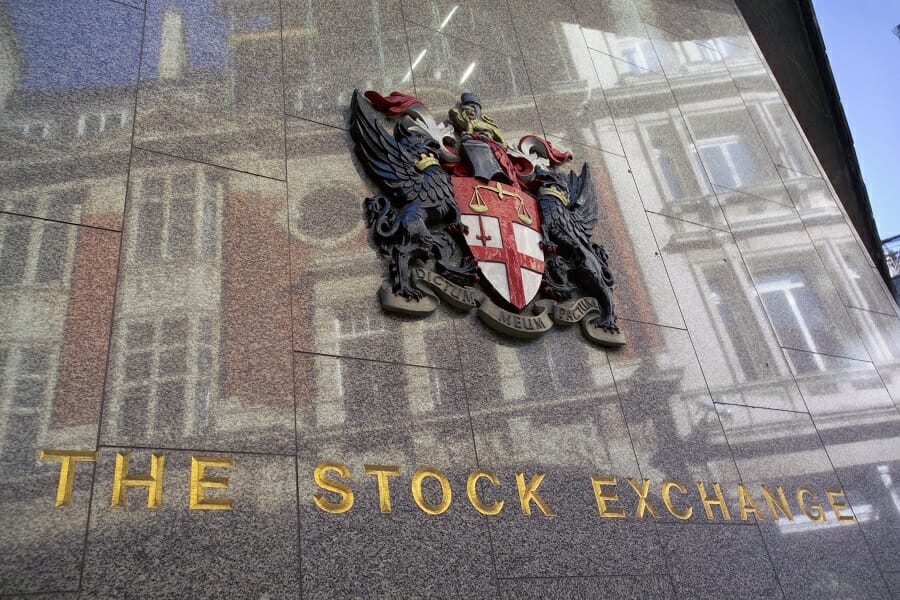
In October 2007, the London Stock Exchange merged with Milan Stock Exchange (Borsa Italiana) and created the London Exchange Group. The London-based group is a stock exchange and financial information company that owns MillenniumIT, Russell Indexes, FTSE International, and Exactpro. It also owns majority stakes in LCH and MTS. It also operates in North America, Italy, France, and Sri Lanka.
Primary Markets of the London Stock Exchange
The London Stock Exchange enables companies to join the equity market to raise capital and increase their profile. Companies of different sizes can list on the LSE as the bourse runs several markets for listing. It also offers different ways to raise capital.
For instance, international companies can list their shares and depositary receipts on the exchange. In 2004, the LSE began operating in Hong Kong, allowing it to tap over 200 companies in the Asia-Pacific region.
The LSE operates the Premium Listed Main Market. It is designed for the biggest companies and follows a Super Equivalence method, which states that the London Stock Exchange’s criteria and UK Listing Authority’s conditions must be met. In May 2011, Glencore International Plc raised $10 billion at admission, making it one of the largest IPOs completed on the LSE.
For small and medium-sized enterprises, the London Stock Exchange operates the Alternative Investment Market (AIM)Alternative Investment Market (AIM)The Alternative Investment Market (AIM) was launched on 19 June 1995 as a sub-exchange market of the London Stock Exchange (LSE). The market was designed to. Different businesses such as startups join AIM to gain access to growth capital. It is classified as a Multilateral Trading Facility. Its simpler admission process makes it easier for companies to join the market and become publicly listed.
For international companies outside of the European Union, the LSE runs the Depositary Receipt scheme where a depository bank-issued certificate, which is used to buy shares of foreign companies, creates a security on the local exchange that is backed by those shares.
Specialized Markets
1. Professional Securities Market
The Professional Securities Market operates as a Recognized Investment Exchange, which is responsible for raising capital through the issuance of specialist debt securities or depositary receiptsExamples of ADRAmerican Depository Receipts (ADRs) are stocks that are sold in the US market but represent ownership of the underlying shares in a foreign company. An ADR trades in US dollars and they allow investors to avoid the risk of transacting in a foreign currency. to investors.
2. Specialist Fund Market
The Specialist Fund Market is an EU Regulated Market, which means that securities that are admitted to the market are eligible for most investor mandates. It is designed only for institutional and highly knowledgeable investors.
Secondary Markets
Stocks, bonds, derivatives, debt securities, exchange-traded fundsExchange Traded Fund (ETF)An Exchange Traded Fund (ETF) is a popular investment vehicle where portfolios can be more flexible and diversified across a broad range of all the available asset classes. Learn about various types of ETFs by reading this guide., structured products, covered warrants, global depositary receipts, as well as gilt-edged securities, are also available for trading on the London Stock Exchange.
Related Readings
Thank you for reading CFI’s explanation of the London Stock Exchange. CFI is the official provider of the global Financial Modeling & Valuation Analyst (FMVA)™Become a Certified Financial Modeling & Valuation Analyst (FMVA)®CFI's Financial Modeling and Valuation Analyst (FMVA)® certification will help you gain the confidence you need in your finance career. Enroll today! certification program, designed to help anyone become a world-class financial analyst. To keep advancing your career, the additional resources below will be useful:
- Investing: A Beginner’s GuideInvesting: A Beginner's GuideCFI's Investing for Beginners guide will teach you the basics of investing and how to get started. Learn about different strategies and techniques for trading
- Initial Public Offering (IPO)Initial Public Offering (IPO)An Initial Public Offering (IPO) is the first sale of stocks issued by a company to the public. Prior to an IPO, a company is considered a private company, usually with a small number of investors (founders, friends, family, and business investors such as venture capitalists or angel investors). Learn what an IPO is
- Trading MechanismsTrading MechanismsTrading mechanisms refer to the different methods by which assets are traded. The two main types of trading mechanisms are quote driven and order driven trading mechanisms
- Types of Markets – Dealers, Brokers and ExchangesTypes of Markets - Dealers, Brokers, ExchangesMarkets include brokers, dealers, and exchange markets. Each market operates under different trading mechanisms, which affect liquidity and control. The different types of markets allow for different trading characteristics, outlined in this guide
-

Understanding the Money Market: Short-Term Debt & Lending
The money market is an organized exchange market where participants can lend and borrow short-term, high-quality debt securities with average maturities of one year or less. It enables governments, ba
-

NASDAQ Explained: A Comprehensive Guide to the Stock Market Exchange
The NASDAQ is a U.S.-based stock market exchange and the second-largest stock exchange by market cap globally. NASDAQ stands for National Association of Security Dealers Automated Quotations and is ow
invest
- Understanding Stock Exchange Trading Mechanisms: NYSE vs. NASDAQ
- American Stock Exchange (AMEX): History, Overview & Key Facts
- Hong Kong Stock Exchange (HKEX): Overview & Key Facts
- Jakarta Stock Exchange (IDX): History & Overview
- The Presidential Cycle: Understanding Market Trends After Elections
- Understanding the Stock Market: A Beginner's Guide
- Vancouver Stock Exchange (VSE): History & Overview | [Your Company Name]
- Understanding the Stock Market: A Beginner's Guide
- Footsie (FTSE): Understanding the UK's Leading Stock Index
-
 Understanding the Call Market: Trading Hours & Price Determination
The call market refers to a market where trading does not take place continuously, but only at specified times during the trading day. Prices are dictated by the exchange rather than by bids and offer...
-
 Understanding the Equity Market: A Comprehensive Guide
An equity market is a hub in which shares of companies are issued and traded. The market comes in the form of an exchange – which facilitates the trade between buyers and sellers – or over...