
Understanding Durability Bias: Why Past Performance Doesn't Guarantee Future Results
Durability bias is the subconscious inclination to forecast past events or occurrences forward to the future. In other words, durability is a type of cognitive biasCognitive BiasA cognitive bias is an error in cognition that arises in a person’s line of reasoning when making a decision is flawed because of their personal beliefs. Cognitive errors play a major role in behavioral finance theory with the assumption that past trends will continue into the future. The term durability bias is commonly used in behavioral financeBehavioral FinanceBehavioral finance is the study of the influence of psychology on the behavior of investors or financial practitioners. It also includes the subsequent effects on the markets. It focuses on the fact that investors are not always rational and forecasting.
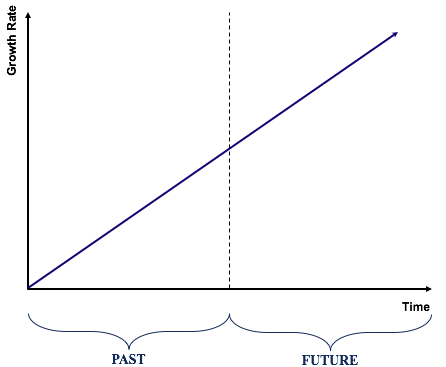
Implications of the Durability Bias
The durability bias can have a significantly adverse effect on decision-making for investors. To illustrate the point, imagine an investor who believes a company that has regularly outperformed analyst estimates for Earnings per Share (EPS)Earnings Per Share (EPS)Earnings per share (EPS) is a key metric used to determine the common shareholder's portion of the company’s profit. EPS measures each common share's profit will continue to do so indefinitely. Imagine then that the competitive landscape in an industry changes, and the company doesn’t alter its business modelIB Pitchbook - Business Model, Forecast, OwnershipEvery company's business model is unique, and their execution of key activities is how a company derives its competitive advantage. It is imperative that an investment banker gains a strong understanding of the business, how it in response. Over time this company would start underperforming and prove to be a bad investment.
In this example, using the past as a reference for the future was not a good idea. Instead, an investor should look forward to what may happen in the future, independent of the past.
Example of Durability Bias
US marketsDow Jones Industrial Average (DJIA)The Dow Jones Industrial Average (DJIA), also referred to as "Dow Jones” or "the Dow", is one of the most widely-recognized stock market indices. are seeing significant growth, with stocks yielding unprecedented returns due to a booming market and expanding economyMarket EconomyMarket economy is defined as a system where the production of goods and services are set according to the changing desires and abilities of. John is a retail investor and current business student who recently took an interest in investing. He notices the impressive gains in a stock called “CFIAbout Corporate Finance Institute® (CFI)CFI - Corporate Finance Institute® - is a global leader in online finance courses and certifications in financial modeling, valuation, financial analysis,” which has seen a price surge of 15% year-over-year. John concludes that if he invests $10,000 in the stock today, given the year-over-yearYoY (Year over Year)YoY stands for Year over Year and is a type of financial analysis used for comparing time series data. It is useful for measuring growth and detecting trends. gain of 15% on the stock, he will end up with $20,000 in five years’ time.
In the example above, John is exhibiting durability bias. He assumes that since the stock of CFI has seen a gain of 15% yearly, it will continue to do so into the foreseeable future. The truth is that the past performance of the stock is not necessarily indicative of future performance.
Case Studies of Durability Bias
Listed below are two well-known companies that failed to innovate or change their business model in an ever-changing business environment, which was attributed to durability bias, leading to their demise:
Blockbuster
Founded in 1985, Blockbuster was one of the most iconic brands in the video rental space. Blockbuster, at its peak, employed over 84,000 people worldwide and boasted over 9,000 stores. The company, blindsided by its success in the video rental space, failed to transition towards a digital business model and filed for bankruptcy in 2010.
Ironically, Netflix approached Blockbuster in 2000 with an offer to sell their company for US$50 million. However, the CEOCEOA CEO, short for Chief Executive Officer, is the highest-ranking individual in a company or organization. The CEO is responsible for the overall success of an organization and for making top-level managerial decisions. Read a job description of Blockbuster thought that Netflix was a very small niche business. Today, Netflix counts over 100 million subscribers worldwide with revenue upwards of $9 billion.
Toys R Us
Founded in 1957, Toys R Us was a world-renowned toy store chain. In the early 2000’s, Toys R Us was doing extremely well in its brick-and-mortar stores. But even with the emergence of e-commerce companies such as Amazon, Toys R Us decided to stick to its traditional business model and not pursue an e-commerce presence. Toys R Us missed the opportunity to build up its own e-commerce platform, and as a result, the company filed for bankruptcy in September 2017.
Key Takeaways
Durability bias can exert an adverse influence on both investors and businesses. Companies and individuals who are able to avoid the durability bias constantly question future growth rate assumptions. Companies that are caught up in the durability bias and do not alter their business models in a changing environment are subject to failing.
Related Readings
Thank you for reading CFI’s explanation of Durability Bias. CFI is the official provider of the Financial Modeling and Valuation Analyst (FMVA)™Become a Certified Financial Modeling & Valuation Analyst (FMVA)®CFI's Financial Modeling and Valuation Analyst (FMVA)® certification will help you gain the confidence you need in your finance career. Enroll today! certification program, designed to transform anyone into a world-class financial analyst.
To keep learning and developing your knowledge of financial analysis, we highly recommend the additional resources below:
- Confirmation BiasConfirmation BiasConfirmation bias is the tendency of people to pay close attention to information that confirms their belief and ignore information that contradicts it. This is a type of bias in behavioral finance that limits our ability to make objective decisions.
- Narrative FallacyNarrative FallacyOne of the limits to our ability to evaluate information objectively is what’s called the narrative fallacy. We love stories and we let our preference for a good story cloud the facts and our ability to make rational decisions. This is an important concept in behavioral finance.
- List of Cognitive BiasesCognitive BiasA cognitive bias is an error in cognition that arises in a person’s line of reasoning when making a decision is flawed because of their personal beliefs. Cognitive errors play a major role in behavioral finance theory
- Guide to Financial ModelingFree Financial Modeling GuideThis financial modeling guide covers Excel tips and best practices on assumptions, drivers, forecasting, linking the three statements, DCF analysis, more
-

Understanding Regulation Z: Your Rights as a Borrower
Regulation Z is a consumer-protection regulation that compels lenders to disclose the cost of credit in a clear way for consumers. Whether you’re applying for a mortgage or dealing
-

DeFi Explained: A Beginner's Guide to Decentralized Finance
The Beginner’s Guide to Decentralized FinanceIf you’re diving deep into the world of cryptocurrency, you have probably heard the term “DeFi” used to describe a variety of new protocols and assets. Fi
invest
- Understanding Look-Ahead Bias: Causes, Effects & Examples
- Anchoring Bias: Understanding How First Impressions Influence Decisions
- Understanding Cognitive Bias: How It Impacts Decisions
- Confirmation Bias: Understanding How It Affects Financial Decisions
- Framing Bias: Understanding How Presentation Influences Decisions
- Herd Mentality Bias: Understanding Investor Psychology
- Hindsight Bias: Understanding the Illusion of Knowing Better After the Fact
- Understanding Home Bias in Investing: A Comprehensive Guide
- Overconfidence Bias: Understanding Its Impact & How to Mitigate It
-
Understanding Survivorship Bias: A Comprehensive Guide
Survivorship bias occurs because over a certain period there are those companies or funds that go out of business, making those who survived a better performer. Therefore, the survivorship bias ...
-
DB(k) Plans: A Hybrid Retirement Solution for Employers & Employees
The DB(k) plan is a type of retirement plan that is available for employers. This type of retirement plan combines features from the 401(k) plan with features from a defined benefit pension plan...