
Understanding Cognitive Bias: How It Impacts Decisions
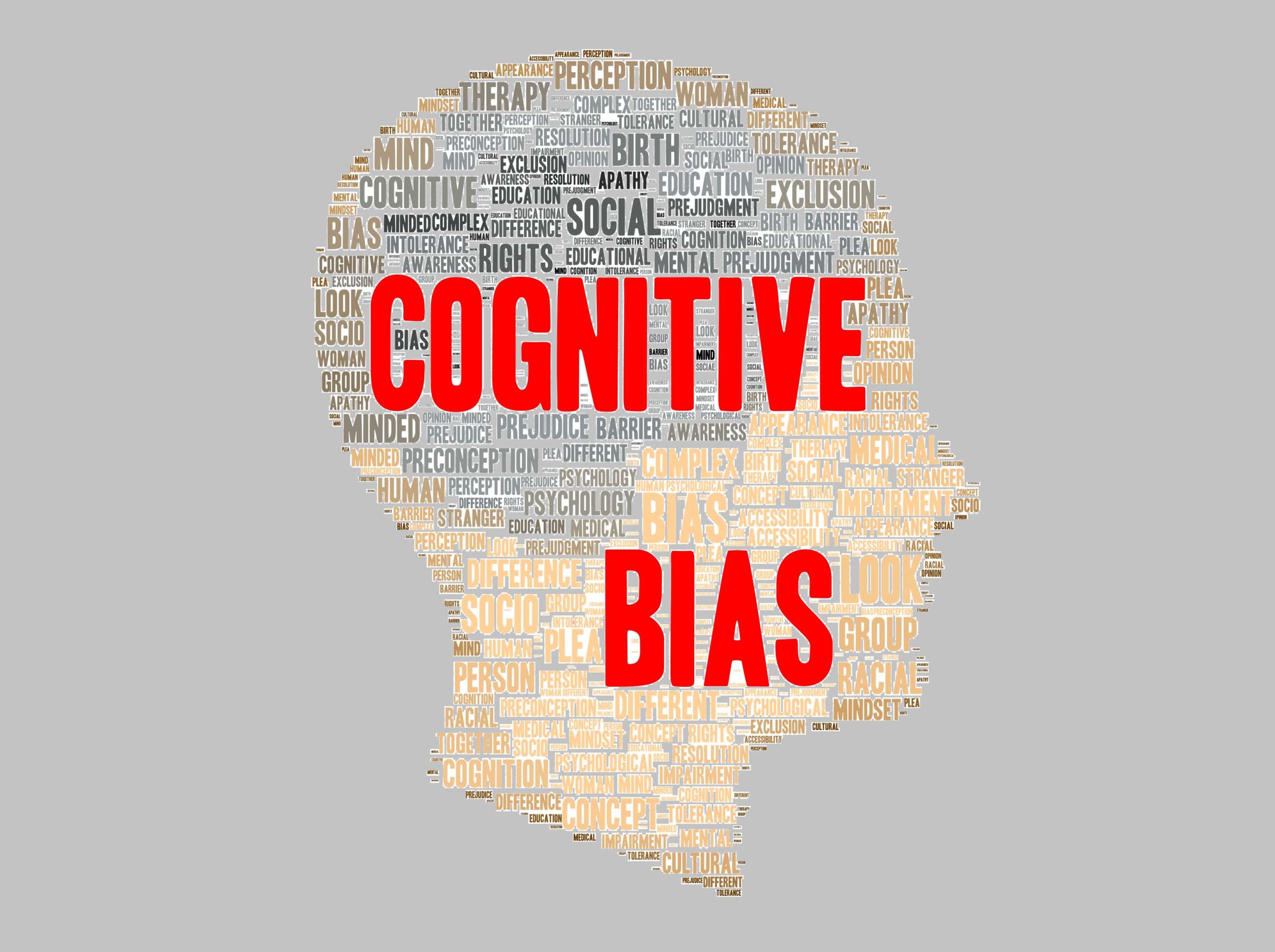
A cognitive bias is an error in cognition that arises in a person’s line of reasoning when making a decision is flawed by personal beliefs. Cognitive errors play a major role in behavioral finance theoryBehavioral FinanceBehavioral finance is the study of the influence of psychology on the behavior of investors or financial practitioners. It also includes the subsequent effects on the markets. It focuses on the fact that investors are not always rational and are studied by investors and academics alike. This guide will cover the top 10 most important types of biases.
List of Top 10 Types of Cognitive Bias
Below is a list of the top 10 types of cognitive bias that exist in behavioral finance.
#1 Overconfidence Bias
OverconfidenceOverconfidence BiasOverconfidence bias is a false and misleading assessment of our skills, intellect, or talent. In short, it's an egotistical belief that we're better than we actually are. It can be a dangerous bias and is very prolific in behavioral finance and capital markets. results from someone’s false sense of their skill, talent, or self-belief. It can be a dangerous bias and is very prolific in behavioral finance and capital markets. The most common manifestations of overconfidence include the illusion of control, timing optimism, and the desirability effect. (The desirability effect is the belief that something will happen because you want it to.)
#2 Self Serving Bias
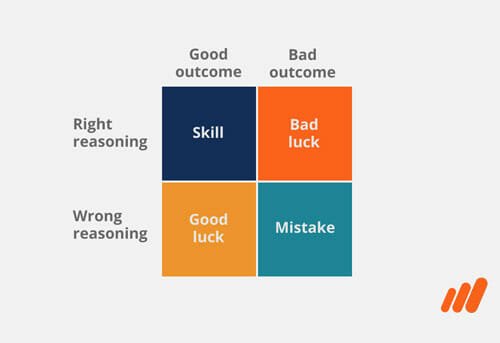
Self-serving cognitive biasSelf Serving BiasA self serving bias is a tendency in behavioral finance to attribute good outcomes to our skill and bad outcomes to sheer luck. Put another way, we chose how to attribute the cause of an outcome based on what makes us look best. is the propensity to attribute positive outcomes to skill and negative outcomes to luck. In other words, we attribute the cause of something to whatever is in our own best interest. Many of us can recall times that we’ve done something and decided that if everything is going to plan, it’s due to skill, and if things go the other way, then it’s just bad luck.
#3 Herd Mentality
Herd mentalityHerd MentalityIn finance, herd mentality bias refers to investors' tendency to follow and copy what other investors are doing. They are largely influenced by emotion and instinct, rather than by their own independent analysis. This guide provides examples of herd bias is when investors blindly copy and follow what other famous investors are doing. When they do this, they are being influenced by emotion, rather than by independent analysis. There are four main types: self-deception, heuristic simplification, emotion, and social bias.
#4 Loss Aversion
Loss aversionLoss AversionLoss aversion is a tendency in behavioral finance where investors are so fearful of losses that they focus on trying to avoid a loss more so than on making gains. The more one experiences losses, the more likely they are to become prone to loss aversion. is a tendency for investors to fear losses and avoid them more than they focus on trying to make profits. Many investors would rather not lose $2,000 than earn $3,000. The more losses one experiences, the more loss averse they likely become.
#5 Framing Cognitive Bias
FramingFraming BiasFraming bias occurs when people make a decision based on the way the information is presented, as opposed to just on the facts themselves. The same facts presented in two different ways can lead to different judgments or decisions from people. is when someone makes a decision because of the way information is presented to them, rather than based just on the facts. In other words, if someone sees the same facts presented in a different way, they are likely to come to a different conclusion about the information. Investors may pick investments differently, depending on how the opportunity is presented to them.
#6 Narrative Fallacy
The narrative fallacyNarrative FallacyOne of the limits to our ability to evaluate information objectively is what’s called the narrative fallacy. We love stories and we let our preference for a good story cloud the facts and our ability to make rational decisions. This is an important concept in behavioral finance. occurs because we naturally like stories and find them easier to make sense of and relate to. It means we can be prone to choose less desirable outcomes due to the fact they have a better story behind them. This cognitive bias is similar to the framing bias.
#7 Anchoring Bias
AnchoringAnchoring BiasAnchoring bias occurs when people rely too much on pre-existing information or the first information they find when making decisions. Anchors are an important concept in behavioral finance. is the idea that we use pre-existing data as a reference point for all subsequent data, which can skew our decision-making processes. If you see a car that costs $85,000 and then another car that costs $30,000, you could be influenced to think the second car is very cheap. Whereas, if you saw a $5,000 car first and the $30,000 one second, you might think it’s very expensive.
#8 Confirmation Bias
Confirmation biasConfirmation BiasConfirmation bias is the tendency of people to pay close attention to information that confirms their belief and ignore information that contradicts it. This is a type of bias in behavioral finance that limits our ability to make objective decisions. is the idea that people seek out information and data that confirms their pre-existing ideas. They tend to ignore contrary information. This can be a very dangerous cognitive bias in business and investing.
#9 Hindsight Bias
Hindsight biasHindsight BiasHindsight bias is the misconception, after the fact, that one "always knew" that they were right. Someone may also mistakenly assume that they possessed special insight or talent in predicting an outcome. This bias is an important concept in behavioral finance theory. is the theory that when people predict a correct outcome, they wrongly believe that they “knew it all along”.
#10 Representativeness Heuristic
Representativeness heuristicRepresentativeness HeuristicRepresentativeness heuristic bias occurs when the similarity of objects or events confuses people's thinking regarding the probability of an outcome. People frequently make the mistake of believing that two similar things or events are more closely correlated than they actually are. is a cognitive bias that happens when people falsely believe that if two objects are similar then they are also correlated with each other. That is not always the case.
Cognitive Bias in Behavioral Finance
To learn more about the important role cognitive biases play in behavioral finance and business, check out CFI’s Behavioral Finance Course. The video-based tutorials will teach you all about errors in cognition and the types of traps investors can fall into.
Additional Resources
Thank you for reading this CFI guide about the impact a cognitive bias can have. CFI is the official provider of the FMVA financial analyst certification programBecome a Certified Financial Modeling & Valuation Analyst (FMVA)®CFI's Financial Modeling and Valuation Analyst (FMVA)® certification will help you gain the confidence you need in your finance career. Enroll today!, designed to help anyone become a world-class analyst. To learn more, check out these additional resources below:
- Behavioral Finance GlossaryBehavioral Finance GlossaryThis behavioral finance glossary includes Anchoring bias, Confirmation bias, Framing bias, Herding bias, Hindsight bias, Illusion of control
- Behavioral Interview QuestionsBehavioral Interview QuestionsBehavioral interview questions and answers. This list includes the most common interview questions and answers for finance jobs and behavioral soft skills. Behavioral interview questions are very common for finance jobs, and yet applicants are often under-prepared for them.
- What is Financial Modeling?What is Financial ModelingFinancial modeling is performed in Excel to forecast a company's financial performance. Overview of what is financial modeling, how & why to build a model.
- Types of Financial ModelsTypes of Financial ModelsThe most common types of financial models include: 3 statement model, DCF model, M&A model, LBO model, budget model. Discover the top 10 types
-

Understanding Hot Issues: IPOs with Exceptional Demand
A hot issue is an initial public offering (IPO) with overwhelming public demand that sells more than its initial offer price on the first day of the public price immediately after it starts trading. P
-

Master-Feeder Structures: A Hedge Fund Investment Overview
A master-feeder structure is an investment structure used by hedge fundsHedge FundA hedge fund, an alternative investment vehicle, is a partnership where investors (accredited investors or institution
invest
- Anchoring Bias: Understanding How First Impressions Influence Decisions
- Coattail Investing: How to Follow Successful Investors
- Confirmation Bias: Understanding How It Affects Financial Decisions
- Dark Pools Explained: A Guide for Investors
- Understanding Durability Bias: Why Past Performance Doesn't Guarantee Future Results
- Framing Bias: Understanding How Presentation Influences Decisions
- Hindsight Bias: Understanding the Illusion of Knowing Better After the Fact
- HODL Explained: Understanding the Cryptocurrency Investment Strategy
- Understanding Home Bias in Investing: A Comprehensive Guide
-
 Understanding Look-Ahead Bias: Causes, Effects & Examples
Look-ahead bias is a type of bias that occurs when a study or simulation relies on data or information that was not yet available or known during the time period being studied. It generally leads to i...
-
 Herd Mentality Bias: Understanding Investor Psychology
In behavioral finance, herd mentality bias refers to investors’ tendency to follow and copy what other investors are doing. They are largely influenced by emotion and instinct, rather than by th...