
Understanding Earnings Estimates: A Guide for Investors
An earnings estimate is the estimate of a firm’s earnings per share (EPS) for the upcoming quarter or fiscal yearFiscal Year (FY)A fiscal year (FY) is a 12-month or 52-week period of time used by governments and businesses for accounting purposes to formulate annual and is reported by an analyst. Earnings estimates are developed by analysts who are working for investment research firms.

Using the earnings estimate, analysts can evaluate the cash flowCash FlowCash Flow (CF) is the increase or decrease in the amount of money a business, institution, or individual has. In finance, the term is used to describe the amount of cash (currency) that is generated or consumed in a given time period. There are many types of CF and find the approximate value of the firm. They research a firm’s operations and assess management guidance, along with other information to form an estimate of the firm’s future earnings per share.
Investors use the earnings estimates to predict the growth potential of the firm and to make trading decisions.
Summary
- An earnings estimate is a firm’s expected future earnings per share, as estimated by professional analysts.
- Investors rely on the earnings estimates to analyze the stocks of a firm and to make buy or sell decisions.
- Consensus earnings estimates are used as a standard to evaluate a firm’s performance.
Understanding Earnings Estimates
A consensus earnings estimate is the average estimates of market professionals covering a public firm. It is used as a standard for evaluating the performance of the firm.
When a firm reports earnings that are different from the consensus earnings estimates, it is called earnings surprise. Public firms need to submit quarterly reports to the Securities and Exchange Commission (SEC)Securities and Exchange Commission (SEC)The US Securities and Exchange Commission, or SEC, is an independent agency of the US federal government that is responsible for implementing federal securities laws and proposing securities rules. It is also in charge of maintaining the securities industry and stock and options exchanges within 40 days of the end of a financial quarter.
For most firms, the financial quarters may be the same as the calendar ones. Earnings surprises can be positive or negative. If the firm manages to beat the earnings estimate, it is called a positive or upside surprise. If the firm fails to reach the earnings estimate, it is called a negative surprise.
It’s been found that the stocks of firms with substantial positive earnings surprises tend to perform above average, and the stock prices with substantial negative earnings surprises perform below average.
Firms manage their earnings to make sure that they do not miss earnings estimates. Firms that consistently beat earnings estimates are said to perform better than the market.
Therefore, some companies provide forward guidance to set the expectations low. The forward guidance results in a lower consensus estimate than the probable earnings. As a result, the firm consistently beats the consensus earnings estimates, and the earnings surprises become less surprising.
Revisions in Earnings Estimates
Market analysts may revise earnings estimates to reflect the changes in the expectations of the company’s performance in the future. It occurs in cases the economic conditions look better than expected or during the higher-than-expected sales of a new product.
Revisions in earnings estimates lead to adjustments in price in the following manner:
- Shares tend to perform better than average when earnings estimates are adjusted upward substantially by 5% or more.
- Shares of firms with downward adjustments show sub-standard performance.
Impact of Earnings Estimates on Stock Prices
Earnings estimates are an important component to consider while analyzing and selecting stocks of firms. They are the quantitative views of estimations, and prices are driven by changes in the expectations.
Firms with high earnings estimates tend to underperform, as it becomes difficult for the firms to meet the high estimations of the market. Conversely, firms with low earnings estimates tend to perform better than anticipated.
Consensus earnings estimates are reflected in the stock prices. If a stock is highly recommended, the basis of such a recommendation will be the earnings estimates, which should be significantly above the current option.
Additional Resources
CFI is the official provider of the global Commercial Banking & Credit Analyst (CBCA)™Program Page - CBCAGet CFI's CBCA™ certification and become a Commercial Banking & Credit Analyst. Enroll and advance your career with our certification programs and courses. certification program, designed to help anyone become a world-class financial analyst. To keep advancing your career, the additional CFI resources below will be useful:
Earnings Per Share (EPS)Earnings Per Share (EPS)Earnings per share (EPS) is a key metric used to determine the common shareholder's portion of the company’s profit. EPS measures each common share's profit
Market PositioningMarket PositioningMarket Positioning refers to the ability to influence consumer perception regarding a brand or product relative to competitors. The objective of market
Stock OptionStock OptionA stock option is a contract between two parties which gives the buyer the right to buy or sell underlying stocks at a predetermined price and within a specified time period. A seller of the stock option is called an option writer, where the seller is paid a premium from the contract purchased by the stock option buyer.
Economic ConditionsEconomic ConditionsEconomic conditions are the present state of affairs in the overall economy of a country or geographical region. Economic conditions evolve
-

Retained Earnings: Definition, Calculation & Significance
Retained earnings is the amount of money that a corporation keeps of its profit instead of distributing it to the shareholders in the form of dividends. How much money a company retains can tell
-
Understanding Earnings Estimates: A Guide for Investors
Analysts each have their own models for calculating the earnings estimate of a company. Analysts create this information in order to recommend securities for purchase. They weigh different stati
invest
- Understanding Appraisals: A Comprehensive Guide
- Understanding Earnings: A Guide to Financial Profitability
- Understanding Earnings Announcements: A Comprehensive Guide
- Earnings Management: Definition, Techniques & Impact
- Understanding Earnings Volatility: Risk & Stock Price Prediction
- Earnings Power Value (EPV): A Sustainable Earnings Valuation Method
- Investment Explained: A Comprehensive Guide to Growing Your Wealth
- Earnings Estimates: Understanding & Using EPS for Valuation
- Retained Earnings: Definition, Calculation & Importance
-
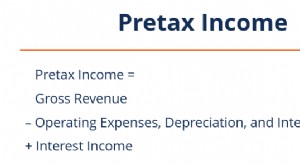 Understanding Pretax Income: Definition & Calculation
Pretax income, also known as earnings before tax or pretax earnings, is the net incomeNet IncomeNet Income is a key line item, not only in the income statement, but in all three core financial stateme...
-
 Earnings Per Share (EPS): A Comprehensive Guide for Investors
EPS stands for earnings per share, and it’s the easiest way for investors to quickly assess how much a company is earning relative to its stock price.EPS gives investors a standardized way to ...