
Understanding Margin Loan Availability: How Much Can You Borrow?
Margin loan availability refers to the funds currently available in a margin account that can be used to purchase additional securitiesTrading SecuritiesTrading securities are securities purchased by a company for the purpose of realizing a short-term profit. The securities are issued within the company's industry,. An investor can also withdraw the funds for personal use.
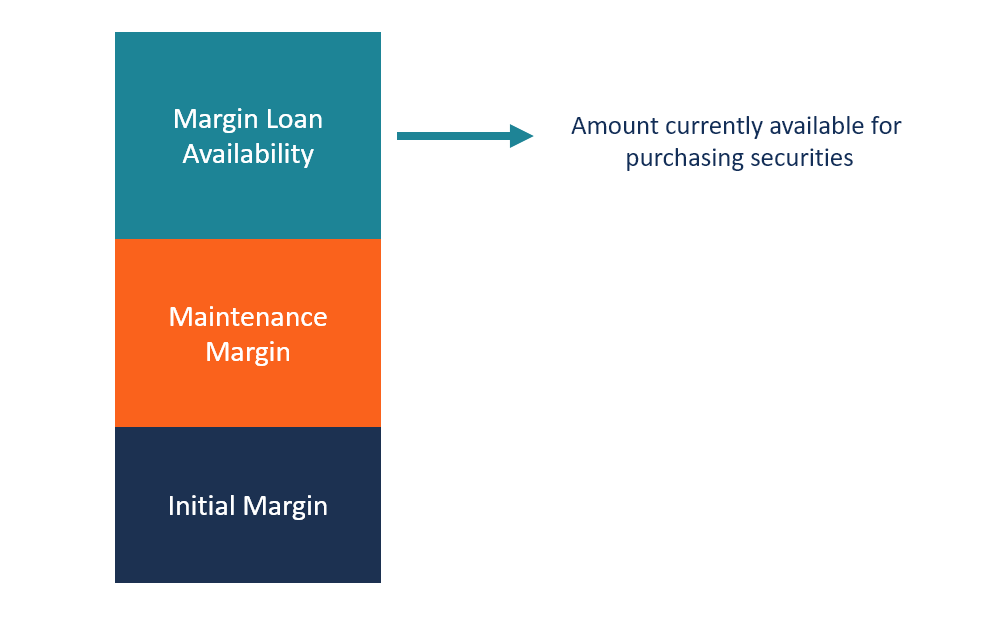
A margin account allows investors to purchase more securities than they would’ve purchased using their actual deposits. When investors use margin loans to purchase more securities, they use the cash deposits and purchased securities in their margin account as collateral.
Summary
- Margin loan availability refers to the amount currently available in a margin account for use in purchasing securities.
- It also tells the broker the amount of money in a customer’s margin account that is currently available for withdrawal.
- Any changes in the value of securities held in the margin account affect the margin loan availability.
Understanding Margin Loan Availability
Brokerage firms use margin loan availability to determine the amount of money in a margin account that a customer can use to purchase securities. This amount changes over time as the value of securities purchased changes.
For example, if the value of Company ABC shares changes from $5 to $8 per share, the margin loan availability also increases by a similar margin. In contrast, if the price per share falls from $5 to $3 per share, the number of funds available to the customer also takes a hit.
Generally, brokerages must impose a 25% maintenance margin on customer accounts; however, such a requirement can be higher depending on the brokerage. If a decline in the value of securities purchased causes the margin account balance to fall below the maintenance requirement, the broker will issue a margin call.
A margin call requires the customer to increase their account value by selling some of the securities in the account or depositing additional funds into the account to meet the minimum balance requirement. The investor is allowed up to three days from the date of the margin call to fulfill the maintenance margin requirements.
How Margin Lending Works
Margin lending is a form of financing to purchase financial products, and it is backed by cash deposited into the margin account, as well as the collateral in the form of shares, commodities, derivativesDerivativesDerivatives are financial contracts whose value is linked to the value of an underlying asset. They are complex financial instruments that are, and other financial products in the account. Margin financing is available to both individual and corporate borrowers, and it helps them borrow up to 50% of the purchase price of an investment.
Simply stated, margin lending allows investors to leverage the amount of marginable stocks they can own. The amount of funds that an investor can borrow depends on their loanable value, the value of assets in their portfolio, and the credit limit set by the brokerage based on the customer’s level of risk.
Practical Example
If John keeps $5,000 in cash deposits in his margin account, his total purchasing power is $10,000. It means that he can spend up to $10,000 in marginable stocks to add to his portfolio. The $10,000 comprises $5,000 (50%) paid in cash and another $5,000 (50%) paid using the brokerage loan.
For most brokerages, customers can borrow up to 50% of the value of marginable stocks, but not many customers are willing to risk that much, especially for high value transactions.
Margin accounts also allow customers to borrow against their marginable securities. For example, if John has $5000 in marginable stocks in their margin account, he can purchase another batch of stocks worth $5000. The marginable securities act as collateral for 50% ($2500) of the newly purchased stocks, while the purchased marginable stocks provide collateralCollateralCollateral is an asset or property that an individual or entity offers to a lender as security for a loan. It is used as a way to obtain a loan, acting as a protection against potential loss for the lender should the borrower default in his payments. for the other 50% ($2500).
Therefore, the customer’s securities will be worth $10,000, with a margin loan of 50% without an additional cash investment.
What is a Margin Call?
When a margin-approved brokerage account is opened, a customer is required to maintain a specific minimum balance in the account. Usually, the minimum balance is 30% to 40% of the value of securities they own and may vary depending on the broker. The customer’s stocks in the margin account act as collateral, and any changes in the value of the securities affect the value of the collateral.
If a decline in the value of securities causes the equity to fall below the minimum required margin, the brokerage will issue a margin call alert. A margin call requires the customer to immediately deposit additional funds into the margin account to meet the required maintenance margin.
Practical Example
Assume that John owns 100 shares of Company ABC worth $5,000 in his margin-approved account and buys an additional 100 shares at $50 per share on margin. It means that John now owns $10,000 worth of stocks at a 50% margin.
However, a lawsuit filed against Company ABC triggered panic among investors, causing Company ABC shares to fall from $50 to $35 per share. As a result, John’s shares are now worth $7,000. John’s equity is now worth $2,000 ($7,000 less $5,000 margin loan).
Assuming that the brokerage imposes a 40% maintenance requirement, it means that John is required to keep a minimum balance of $2,800 (40% x 7,000) compared to his current balance of $2,000. Therefore, the brokerage will issue a margin call for $800. John will be required to deposit an additional $800 to meet the maintenance margin.
Additional Resources
CFI is the official provider of the global Capital Markets & Securities Analyst (CMSA)®Program Page - CMSAEnroll in CFI's CMSA® program and become a certified Capital Markets &Securities Analyst. Advance your career with our certification programs and courses. certification program, designed to help anyone become a world-class financial analyst. To keep advancing your career, the additional CFI resources below will be useful:
- Maintenance MarginMaintenance MarginMaintenance margin is the total amount of capital that must remain in an investment account in order to hold an investment or trading position and avoid a
- Margin TradingMargin TradingMargin trading is the act of borrowing funds from a broker with the aim of investing in financial securities. The purchased stock serves as collateral for the loan. The primary reason behind borrowing money is to gain more capital to invest
- BrokerageBrokerageA brokerage provides intermediary services in various areas, e.g., investing, obtaining a loan, or purchasing real estate. A broker is an intermediary who
- Margin AccountMargin AccountA margin account refers to a type of brokerage account that investors use where they can borrow funds to purchase financial products.
-

Understanding Account Balances: A Comprehensive Guide
An account balance is the amount of money present in a financial repository during the current accounting period. It is the net difference between the credits and debits posted in any given accounting
-

Understanding Account Numbers: Your Key to Financial Records
An account number is a unique code composed of numbers, letters, or other characters, and is assigned to the account owner for ease of reference in a financial institution’s accounting records.&
invest
- Understanding Maintenance Margin: A Guide for Investors
- Margin Trading Explained: Borrowing Money to Invest
- Margin Accounts: Borrowing to Invest & Increase Buying Power
- Margin Debt Explained: Understanding Brokerage Loans for Investing
- Understanding Margin Loan Availability: How Much Can You Borrow?
- Margin Trading Explained: Risks, Benefits & How It Works
- Understanding Sellouts in Investing: Non-Economic Forced Liquidations
- Variation Margin Explained: A Comprehensive Guide for Futures Traders
- Commodity Margin Explained: Understanding Initial & Maintenance Requirements
-
 Homestead Loans: Definition, Eligibility & How to Apply
Homestead loans is a term used for loans made available to lower-income households for the purpose of buying houses or bringing substandard housing up to local building codes. They are managed by city...
-
 HSA Loan: A Solution to Avoid Mortgage Foreclosure
Commonly referred to as an HSA loan, the HomeSaver Advance loan is an option that allows some homeowners to avoid foreclosure if they fall behind on their mortgage payments. If you are now able to mak...