
Variation Margin Explained: A Comprehensive Guide for Futures Traders
The term variation margin refers to a margin payment made by a clearing member to a clearinghouse based on the price movements of futures contractsFutures ContractA futures contract is an agreement to buy or sell an underlying asset at a later date for a predetermined price. It’s also known as a derivative because future contracts derive their value from an underlying asset. Investors may purchase the right to buy or sell the underlying asset at a later date for a predetermined price. held by the clearinghouse members.
Clearing members are required to pay variation margins on a day-to-day or an intraday basis in order to reduce the risk exposure of high-risk positions carried by clearinghouses. Thus, collecting variation margin from its members enables a clearinghouse to maintain the overall risk exposure at suitable levels such that orderly payments for all traders are facilitated.
The variation margin is used to bring up the capital inflow of a margin account up to the predetermined margin level. It is known as the maintenance marginMaintenance MarginMaintenance margin is the total amount of capital that must remain in an investment account in order to hold an investment or trading position and avoid a is an important factor to consider while calculating the variation margin. The amount is usually lesser than the initial margin needed for making trades. It must be sustained by liquid funds so that it can be used as collateral in case of future losses. It ensures the smooth functioning of that clearinghouse.
Variation margin is dependent on multiple factors, such as the type of asset, prevailing market conditions, and expected price movements. The variation margin payment is deemed necessary once the funds in a trading account drop lower than the maintenance margin. The call for additional funds is known as the margin callMargin CallA margin call occurs when the value of a margin account falls below the account’s maintenance margin requirement. A margin call is a demand by a brokerage.
Summary
- Variation margin refers to a margin payment made by a clearing member to a clearinghouse based on the price movements of futures contracts held by the clearing members.
- Variation margin is dependent on multiple factors, such as the type of asset, prevailing market conditions, and expected price movements.
- When a broker needs its investor to contribute additional funds to its trading account in order to fulfill the minimum criteria of margin amount, a margin call is made.
What are Clearing Members and Clearinghouses?
A clearing member is a brokerage firm that fulfills the following criteria: it must be a member of any self-regulatory organizationSelf-Regulatory Organization (SRO)A Self-regulatory Organization or SRO is an organization that is formed to regulate certain professions or industry. They are usually non-governmental, and it must hold one or more membership in any major US stock exchange. A futures broker would be an example of a clearing member.
A clearinghouse is an intermediary organization that ensures that both parties to a transaction, i.e., the buyer and the seller, honor the obligations of a contract. A clearinghouse may act as a third party to futures contracts and options contracts, and perform several functions, such as clearing trades, settling trading accounts, reporting trading data, collecting margin monies, and regulating the delivery of freshly purchased instruments.
Example of Variation Margin
Consider a situation where a trader purchases a futures contract. On the contract, the initial margin, which is the minimum capital required in order to execute a trade, is $5,000. The maintenance margin may be $4,000. It means that if the total account balance falls to $4,000, the trader is required to top the account back up to $5,000. It is because the buffer amount in the trader’s account has been reduced to a level that is unacceptable.
The difference between the initial margin and the maintenance margin, i.e., $1,000, is the variation margin. Thus, the variation margin is the amount of funds required to ensure the account reaches a minimum level to ensure future trades.
What is a Margin Call?
When a broker needs its investor to contribute additional funds to its trading account in order to fulfill the minimum criteria of margin amount, a margin call is made. Usually, the need for a margin call arises when the equity balance of the account falls under the minimum amount required, such as when an account loses money or takes on additional positions.
In case the investors are unable to meet the margin call, the broker must either reduce the risk to an acceptable level or sell some of the securities part of the account.
Rules Regarding Variation Margin
According to the Financial Industry Regulation Authority (FINRA)Financial Industry Regulatory Authority (FINRA)The Financial Industry Regulatory Authority (FINRA) acts as a self-regulatory organization for securities firms operating in the United States., the maintenance margin must be set at 25% or above in the case of stocks. Other brokerages are allowed to keep higher minimums after considering the degree of risk and investor involved.
A variation margin transfer below a certain amount is not needed. The amount is called the minimum transfer amount (MTA). Under European Union (EU) regulations, the amount is 500,000 euros.
For example, consider a situation where a trader buys 100 shares for $50 each. The broker sets the initial margin for the purchase at 50%. It means that the broker is required to maintain a fund of $2,500 (50% of 100*50) at all times.
Assume that the maintenance margin is $2,000. If the price of the share drops to $30 each, then the $2,000 brings the balance down to $500, which is $1,500 lesser than the maintenance margin. The new initial margin amount becomes $1,500 (50% of 100*30). It means that a margin call of $1,000 would be required to top up the account to the new margin level.
Related Readings
CFI is the official provider of the global Commercial Banking & Credit Analyst (CBCA)™Program Page - CBCAGet CFI's CBCA™ certification and become a Commercial Banking & Credit Analyst. Enroll and advance your career with our certification programs and courses. certification program, designed to help anyone become a world-class financial analyst. To keep advancing your career, the additional resources below will be useful:
- Banking and Securities Industry Committee (BASIC)Banking and Securities Industry Committee (BASIC)The Banking and Securities Industry Committee (BASIC) was established in 1970 with the goal of standardizing, automating, and streamlining the processing
- EurozoneEurozoneAll European Union countries that adopted the euro as their national currency form a geographical and economic region known as the Eurozone. The Eurozone forms one of the largest economic regions in the world. Nineteen of the 28 countries in Europe use the euro
- Financial IntermediaryFinancial IntermediaryA financial intermediary refers to an institution that acts as a middleman between two parties in order to facilitate a financial transaction. The institutions that are commonly referred to as financial intermediaries include commercial banks, investment banks, mutual funds, and pension funds.
- Trading MechanismsTrading MechanismsTrading mechanisms refer to the different methods by which assets are traded. The two main types of trading mechanisms are quote driven and order driven trading mechanisms
-
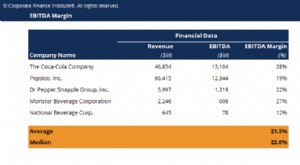
EBITDA Margin: Definition, Calculation & Importance
EBITDA margin is a profitability ratio that measures how much in earnings a company is generating before interest, taxes, depreciation, and amortization, as a percentage of revenue. EBITDA Margin = EB
-
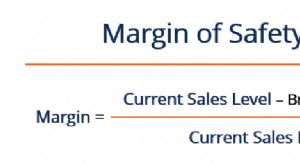
Margin of Safety: Definition, Calculation & Importance
The margin of safety is the difference between the amount of expected profitability and the break-even point. The margin of safety formula is equal to current sales minus the breakeven point, divided
invest
- Understanding Variation Margin: A Guide for Futures Brokers
- Understanding Maintenance Margin: A Guide for Investors
- Margin Trading Explained: Borrowing Money to Invest
- Margin Accounts: Borrowing to Invest & Increase Buying Power
- Margin Debt Explained: Understanding Brokerage Loans for Investing
- Understanding Margin Loan Availability: How Much Can You Borrow?
- Understanding Sellouts in Investing: Non-Economic Forced Liquidations
- Wrap Accounts: A Comprehensive Guide for Investors
- Commodity Margin Explained: Understanding Initial & Maintenance Requirements
-
![Understanding Deposits: Bank Accounts & Security Funds | [Your Brand/Company Name]](https://www.etffin.com/article/uploadfiles/202110/2021100815141020_S.jpeg) Understanding Deposits: Bank Accounts & Security Funds | [Your Brand/Company Name]
Understanding Deposits: Bank Accounts & Security Funds | [Your Brand/Company Name]Deposit is a term used to denote the money kept or held in any bank account, especially to accumulate interest. The fund used as a security to get the goods delivered can also be called a deposit. Any...
-
 Understanding Dormant Accounts: Definition, Implications, and State Regulations
A dormant account refers to an account that has shown no activities – such as deposits and withdrawals – for a long period of time. Financial institutions need to make attempts to contact ...