
Understanding the S&P 500: A Beginner's Guide
The S&P 500 is one of the most commonly used financial index is in the world today. If you plan on getting involved in the stock market, you will need to have a basic understanding of what the Standard & Poor's 500 is and how it works. Here are the basics of the S&P 500.
S&P 500
The S&P 500 was developed by a financial company known as Standard & Poor's. This is essentially a group of 500 of the largest companies in the United States economy. The index is comprised of stock from all 500 of these companies. The index is weighted towards the largest companies within the S&P 500. This means that more stock is purchased from the larger companies with less stock coming from the smaller companies in the index.
What It Tells You
By tracking the movements of 500 of the biggest companies in the country, the S&P 500 can give you a good indication of what the stock market is doing overall. As the S&P 500 moves, the stock market as a whole moves as well. This can tell you whether the country is doing well or in a recession. It can also help you with individual investment decisions.
-
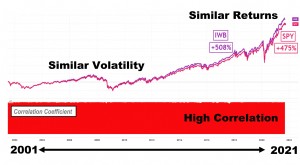
S&P 500 vs. Russell 1000: Key Differences Explained
S&P 500 vs. Russell 1000: An Overview The Standard & Poors 500 Index (S&P 500) and the Russell 1000 Index both track stocks of publicly traded companies and are both consi
-

S&P 500 vs. Dow Jones ETFs: Which Investment is Right for You?
S&P 500 ETF vs. Dow Jones ETF: An Overview The exchange traded funds (ETF) that track the S&P 500 Index and the Dow Jones Industrial Average (DJIA) are some of the most widely trad
invest
- S&P 500 Dividend Aristocrats: Definition & Investment Insights
- Understanding the S&P 500: A Comprehensive Guide
- SPY ETF: Understanding the SPDR S&P 500 - Performance & Investment
- Standard Mileage Rate: IRS Deduction for Business Vehicle Use
- Understanding the S&P 500: Top Holdings & Long-Term Performance
- Sharpe Ratio: Understanding Investment Risk & Performance
- S&P 500: Understanding the U.S. Stock Market's Leading Indicator
- Gold Standard: Definition, History, and Implications
- Investing in the S&P 500: A Beginner's Guide
-
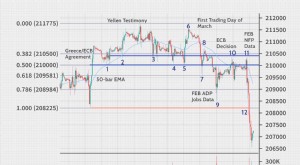 Understanding S&P 500 Futures: A Beginner's Guide
S&P 500 index futures surged in popularity in the past decade after the SEC’s pattern day trading rule triggered an exodus of retail capital out of equities and into Globex, CME’s 24-hour e...
-
S&P 500 vs. Russell 2000 ETFs: A Comprehensive Comparison
S&P 500 vs. Russell 2000 ETFs: An Overview If you find yourself on the conservative end of the active vs. passive spectrum, then investing in exchange-traded funds (ETFs) may be one way to ...