
Understanding Commodity Markets: Characteristics & History
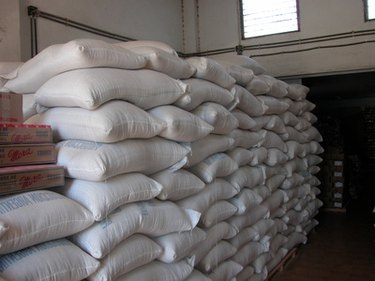
The modern commodity market originated during the 19th century when American farmers began using "forward" contracts. These were agreements to deliver agricultural products at a future date in return for a guaranteed price. In the form of standardized futures contracts traded on exchanges like the Chicago Board of Trade, those forward contracts are the primary securities traded on the commodity market.
Commodities
In financial markets, a commodity is a raw product, rather than a finished good. The earliest materials traded on what developed into the commodities market were agricultural products like wheat and corn. Today the list includes livestock, base and precious metals, minerals and energy sources like crude oil and natural gas. In addition, futures contracts on some securities like currency are also traded on the commodity market.
Futures
In a futures contract a trader agrees to buy ("going long") or sell ("going short") a specified amount of a commodity (3,000 bushels of wheat, for instance) at the current market price but for delivery at a future date. If the trader goes long (also called a call) and the price goes up, the trader can buy the wheat and then resell it at the higher price, making a profit. If the trader goes short and the price falls, he or she buys the wheat at the lower market price and uses it to complete the contract. The other party has to pay the original price. Of course, if the market goes in the wrong direction the trader loses money. In practice, few futures contracts involve physical delivery of the product. Instead they are normally settled for cash.
Margin
The vast majority of futures contracts are traded on margin. A margin is a "good faith deposit" the trader puts up and is a small percentage of the actual value of the futures contract. Exchange rules normally set minimum margins for commodities futures at 5-10 percent of the market value. This allows traders to leverage (control) contracts worth much more than the money they invest, increasing their potential profit percentage. However, the potential losses are magnified just as much.
-

Understanding Commodity Classes: A Comprehensive Guide
When people talk about commodities classes, they are not using the word in the same way it applies to other types of investments. For most types of investments, such as mutual funds or stocks, t
-
Selecting a Reputable Commodity Futures Broker: A Comprehensive Guide
Working with a commodity futures broker provides you with a way to gain access to the futures market. If you plan on getting involved with this market, you will need to choose a good commodity f
investing
- Understanding Money Market Securities: Risks, Benefits & Types
- Understanding the Stock Market: Key Characteristics & Exchanges
- Futures Market: Definition & How Commodity Contracts Work
- Commodity Markets: Definition, Types & Trading
- Commodity Futures Contracts: Understanding & Investing
- Forex vs. Futures: Key Differences for Investors
- Commodity Futures Market: Key Players & Investor Profiles
- Navigating Commodity Futures: Understanding the Challenges
- Gold Futures Trading: A Beginner's Guide to Investing in Gold
-
Commodity Investing: A Beginner's Guide to Futures Contracts
Many investors would like to get involved in hot commodities in some capacity. However, investing in commodities is not as widely understood as investing in stocks. Here are the basics of how yo...
-
Commodity Market Research: A Beginner's Guide to Getting Started
You can invest in the commodity market in either very straightforward or very complicated methods. For example, you can purchase shares in a commodities mutual fund in the same way you would pur...