
Vinegar in Fish Aquariums: Safe Uses & pH Adjustment

The short answer is, "Yes, vinegar can be used in a fish aquarium." To clean with vinegar or to use vinegar as an additive for adjusting pH, the aquarist is advised to learn how vinegar affects the water chemistry. Let's look at the amounts and dilution that are safe for the aquarium residents.
Types of Vinegar
Distilled white vinegar is best for use with fish aquariums. Wine vinegar and apple cider vinegar can contain other organic materials that could be harmful to aquarium fish.
Cleaning Aquariums with Vinegar
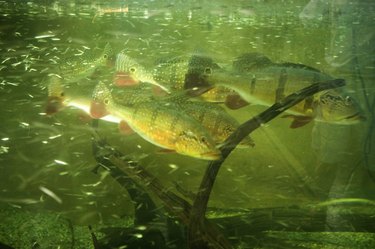
Vinegar can clean mineral deposits off aquarium hoods and aquarium glass above the water. Create a solution of vinegar and water in a ratio of 1 cup vinegar to 1 gallon water. Rather than spraying a vinegar solution directly on the deposits to be cleaned, pour the diluted vinegar first on a rag or scrubbie and apply to the area to be cleaned with gentle pressure. The small amount of vinegar that might dribble into the aquarium water should be neutralized by the buffers (carbonates) in the water and will not harm the fish.
Lowering pH with Vinegar

Commercially distilled white vinegar, often 5 percent acetic acid, has a pH of 2.4 and can be used to lower the pH in salt water aquariums. When acetic acid combines with oxygen in the water, it converts to carbon dioxide, water and bicarbonate. The increase in carbon dioxide reduces the pH of the aquarium water. Experts at Reefkeeping Online Magazine recommend no more than 1mL of vinegar per gallon of water added to the sump or an area of high water-flow and few creatures, to allow proper dilution. This amount should lower the tank pH by about 0.3 points.
Considerations
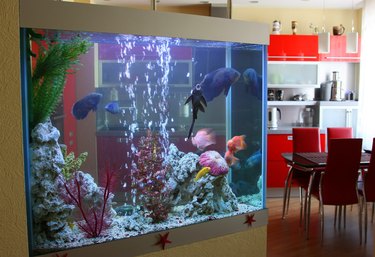
Too much carbon dioxide in the water, along with the reduction in the amount of oxygen, can be damaging to fish. If using vinegar to reduce system pH, measure alkalinity and pH before and several hours after adding any vinegar. Begin this process with small amounts and allow plenty of time for the system to equalize before attempting to add more.
Benefits
Vinegar has long been held in esteem as a "green" cleaning product. It is generally non-toxic and rinses clean without residue. In a fish aquarium, you want to use only clean-rinsing methods to clean your tank such as salt for scrubbing or vinegar for mineral deposit removal.
-

Understanding Dividend Yield: Why It Can't Be Negative
You may purchase shares of stock within a corporation to improve your long term living standards. Capital gains alongside cash dividends from stocks, form your total returns as part of this wealth cre
-
Investing in Evian Water: Exposure Through Danone (DN)
Invest in Evian Water Evian is one of the most recognized brands of bottled mineral water around the world. The brand is owned by the Danone Group, a French multinational corporation. While i
investing
- Buying a Car Without a Title: Risks and Solutions
- Boat Loan Terms: How Long Can You Finance a Boat?
- 10 Effective Ways to Conserve Fresh Water - Save Resources & Money
- Social Security Number Theft: How Identity Thieves Exploit Your Information
- Collateral for Loans: What Assets Can You Use?
- Netting Explained: A Comprehensive Guide for Financial Markets
- Using Personal Loans for Down Payments: Risks & Considerations
- Personal Loans for Business: A Comprehensive Guide
- Safe Fish Buying Guide: Avoiding Contamination & Ensuring Quality
-
401(k) to 529 Rollover: What You Need to Know
Funds from an employee 401k plan can only be rolled over into one of two types of accounts without incurring costly tax penalties. Those two rollover options include transfer into a new 401k account w...
-
 Understanding Short Selling by Mutual Funds: SEC Regulations
Special SEC rules allow long-short mutual funds to sell stock short. Mutual funds are regulated by the Securities and Exchange Commission under the provisions of the Investment Company Act of...