
Vertical Spreads: Calculate Risk & Profit Potential
Option traders will often trade a consistent quantity when initiating vertical spread trades. Although this method keeps the contract numbers orderly, it ignores the fact that each vertical spread has a different risk profile based on a few considerations:
- Is it a debit spread or a credit spread?
- How wide is the spread (the difference between the strikes)?
- How much did you pay (for a debit spread) or collect (for a credit spread)?
With this information, you can determine the amount of risk and potential reward per contract.
After that we’ll take it one step further and show you how to choose your trade size by looking at a trade’s risk parameters in the context of your overall portfolio risk.
Remember the Multiplier
For the examples below, remember to multiply the option premium by 100, the multiplier for standard U.S. equity option contracts. So an option premium of $1 is really $100 per contract.Debit Spread
When placing a debit spread, the risk amount is the price of the spread plus any transaction costs. The potential reward equals the spread width minus the debit price, minus transaction costs. For example, let’s look at a spread in XYZ consisting of the purchase of the 40-strike call and the sale of the 42-strike call of the same expiration date (the “XYZ 40-42 call vertical” in trader parlance). Let’s assume a trade price of $0.60.
In this case, the risk amount would be $60 per contract. The potential reward would be the difference between the strikes ($2.00) minus the debit amount ($0.60), which equals $1.40 or $140 per contract (minus transaction costs).
Credit Spread
To determine the risk amount of a credit spread, take the width of the spread and subtract the credit amount. The potential reward on a credit spread is the amount of the credit received minus transaction costs. To illustrate, let’s say you sold the XYZ 36-strike put and bought the XYZ 34-strike put (the “XYZ 36-34 put vertical”) for a $0.52 credit. To calculate the risk per contract, you’d subtract the credit received ($0.52) from the width of the vertical ($2.00), which equals $1.48 or $148 per contract (plus transaction costs). Your potential reward would be your credit of $0.52 or $52 per contract (minus transaction costs).
Need a visual description of vertical spread risk parameters? Scroll the gallery in figure 1 below to see each of the four types of vertical spreads: long call, short call, long put, and short put.
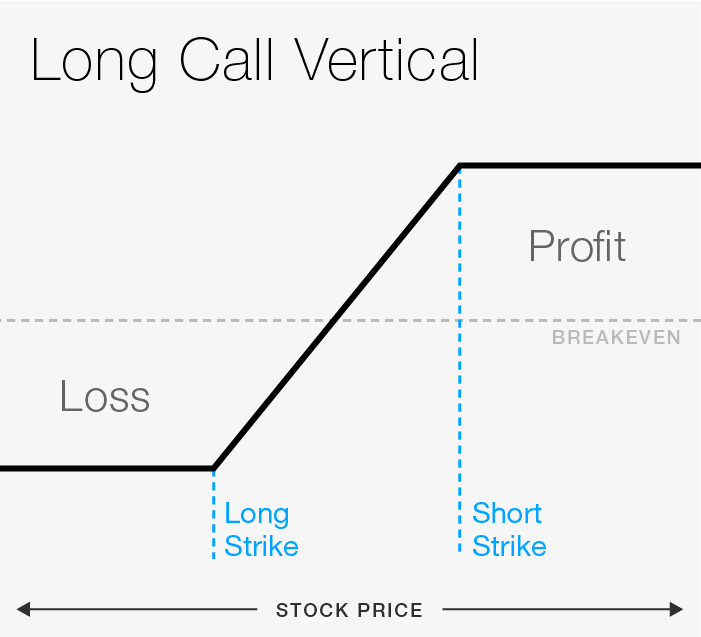
FIGURE 1: LONG CALL VERTICAL. For illustrative purposes only.
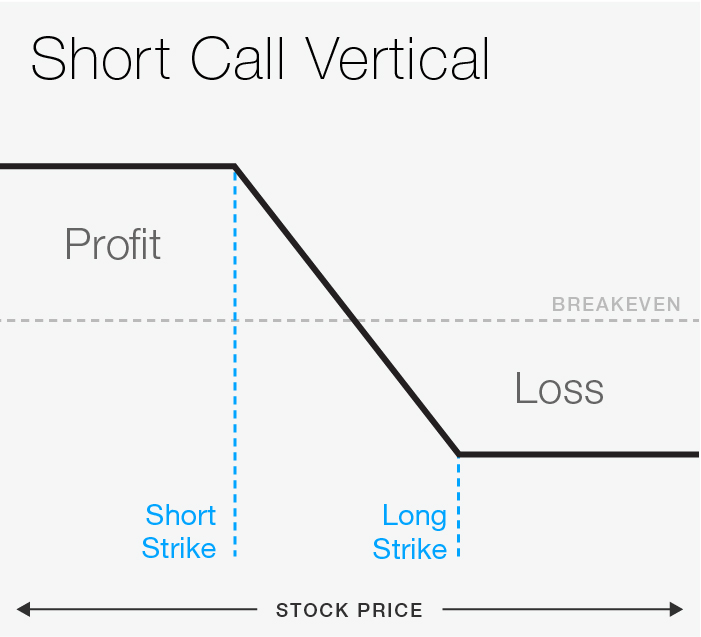
FIGURE 1: SHORT CALL VERTICAL. For illustrative purposes only.
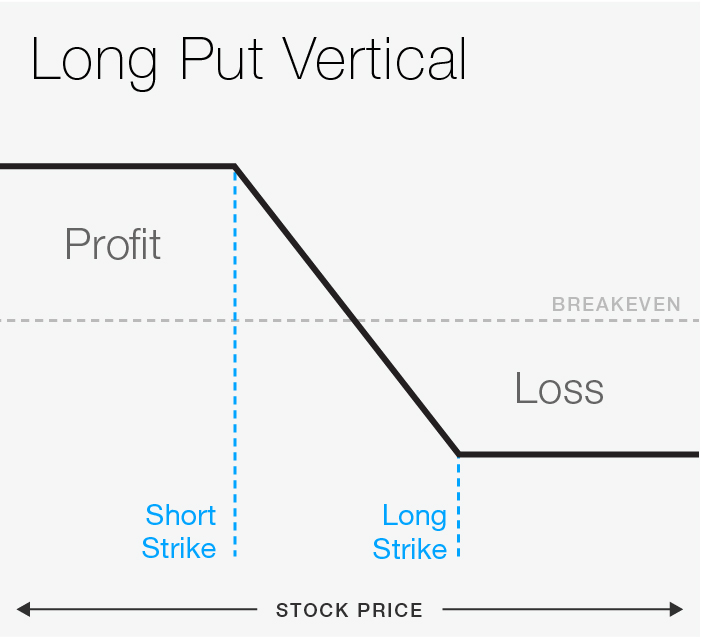
FIGURE 1: LONG PUT VERTICAL. For illustrative purposes only.
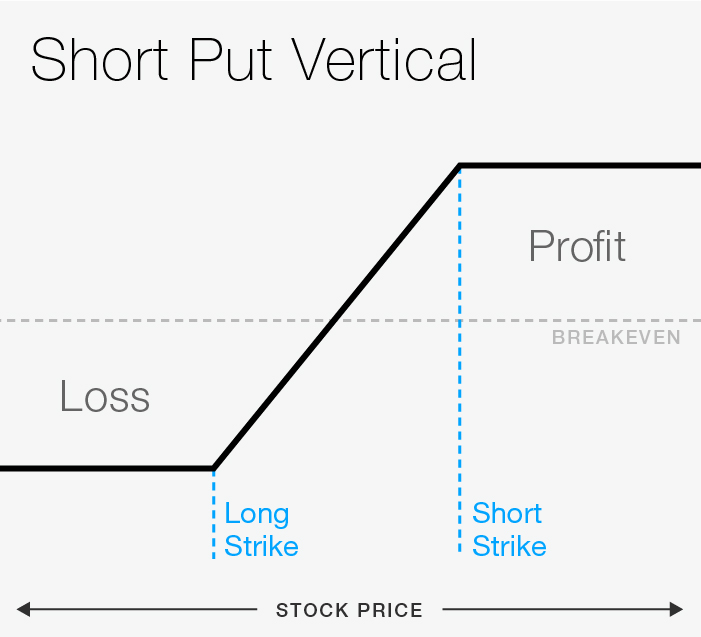
FIGURE 1: SHORT PUT VERTICAL. For illustrative purposes only.
Using Dollars Risked to Determine Trade Size
Now let’s take it a step further. Once you know your risk per contract on a vertical spread, you need to determine how much you’re willing to risk on the trade.
After you’ve set that dollar amount, you can calculate the maximum number of contracts you’re able to trade and still stay within your risk parameters. It’s a simple calculation of dividing the number of dollars you’re comfortable risking by the total risk of the vertical.
Debit Spread Example
Suppose you’ve set $1,000 as the maximum amount you’re willing to risk on a trade. Let’s take a look at the debit vertical spread above—the XYZ 40-42 call spread which was purchased for $0.60 ($60 with the multiplier).
Because $60 represents your maximum risk per contract, you could buy 16.66 contracts ($1,000/$60). And because you can’t trade partial contracts, and you don’t want to exceed your maximum risk, you can round down to 16 contracts.
At expiration, if XYZ stock stays below $40, the spread would expire worthless, and would lose $960 ($60 x 16), which is less than our $1,000 risk amount. This debit spread’s potential profit would be $2,240 ($140 x 16), if XYZ is above $42 at expiration. And don’t forget those transaction costs.
Credit Spread Example
For the credit spread, determining the number of contracts to sell would be calculated by dividing $1,000 by the $148 per contract risk amount, which equals 6.76 contracts, rounded down to six contracts. If the spread went to its full value of $2.00—if XYZ stock falls below $34 at expiration—the loss would be $888 ($148 x 6 contracts). The potential reward would be $52 x 6 contracts or $312 (minus transaction costs).
Knowing your maximum risk and potential profit is one of the foundations of sound trading. Running through these simple calculations before you initiate a trade can help you keep your strategy in perspective.
The Bottom Line on Vertical Risk Parameters and Trade Size
As a final note, for this exercise, we assumed a maximum trade risk of $1,000, but really, this number should be determined by asking yourself how much of your total trading capital you’re willing to risk on any one trade. Many veteran option traders would tell you to keep that number relatively low. Some trades will go your way and some will go against you, but no one trade should take you out of the game entirely.
Doug Ashburn is not a representative of TD Ameritrade, Inc. The material, views, and opinions expressed in this article are solely those of the author and may not be reflective of those held by TD Ameritrade, Inc.
-

Bull Call Spread: A Comprehensive Guide for Investors
A bull call spread is a involves engaging in two sides of a call option simultaneously. The individual involved in the process has one call option to buy at a certain strike price and one call o
-
Box Spread Trading Strategy: A Beginner's Guide
The box spread is a trading strategy that seeks to accumulate a rate of return near that of an interest-rate bond. Using the box spread entails buying puts and calls. Given it is an arbitrage st
Option
- Vertical Spreads vs. Single-Leg Options: A Risk & Reward Comparison
- TD Ameritrade thinkorswim: Using the Risk Profile for Options Strategies
- Understanding Vertical Credit Spreads: A High-Probability Options Trading Strategy
- Option Butterfly Spread: A Beginner's Guide to Range Trading
- Profit & Loss Statement (P&L): Definition & Key Components
- Debit Spreads: Understanding & Calculating the Risk
- Iron Condor Spread: A Comprehensive Guide to Risk-Defined Options Trading
- Credit Spread Options: A Limited Risk, Limited Reward Strategy
- Bull Vertical Spread Strategy: A Beginner's Guide to Profitable Options Trading
-
 Futures Spreads: A Risk Management Strategy for Sophisticated Traders
The leverage and flexibility of the futures markets is a magnet for some traders. But large, directional moves are also in play. That leaves the unprepared at risk of ending up on the wrong side of a ...
-
Understanding Risk and Return in Investing
Risk and return are two terms that you will have to become familiar with if you plan on having success in the investment world. These two terms always go together with any type of investment. He...